


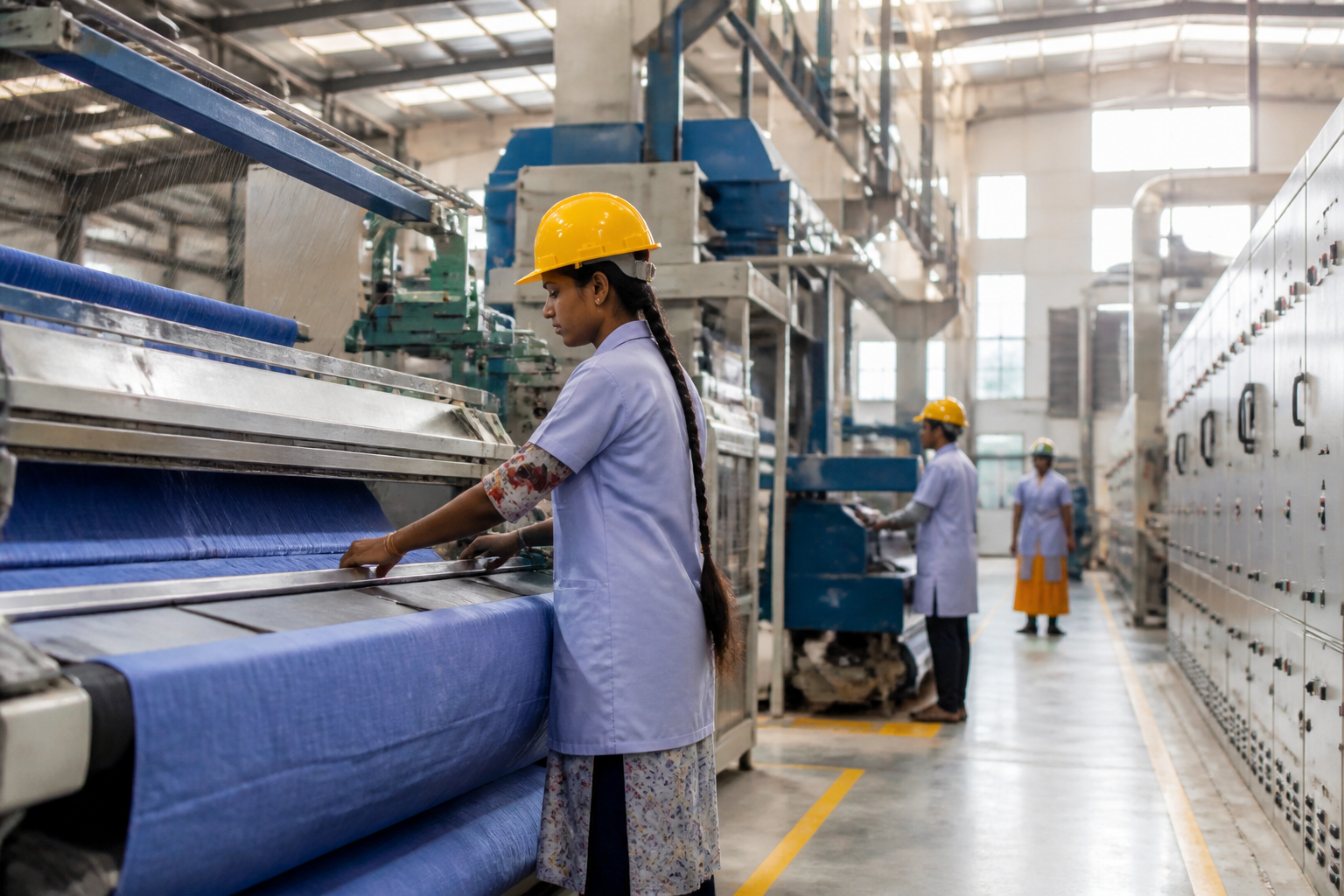
The push for MSME energy efficiency in Telangana is moving beyond the question of reducing electricity bills. Discussions at the 25th CII Energy Efficiency Summit 2026 in Hyderabad linked cleaner technologies to industrial productivity, competitiveness, job creation and climate resilience, placing small and medium enterprises at the centre of a wider urban and economic transition.
The summit’s central message was that government, industry and institutions will need to work together if energy-efficient technologies are to reach businesses at scale. Experts argued that climate pressures—including rising temperatures, heatwaves, floods in some regions and severe droughts in others—are already increasing pressure on economies and natural resources. For industrial cities, that makes energy efficiency part of a broader resilience question rather than a narrowly technical intervention.
This distinction matters because MSMEs are embedded in the everyday functioning of urban economies. They provide manufacturing capacity, employment and supply-chain support across sectors, but often operate with limited room for large capital investments. The summit discussion identified textiles, printing, pharmaceuticals and granite processing as sectors with significant potential for energy savings. The emphasis was therefore not on a single technology or industry, but on improving the efficiency of existing production systems across a diverse industrial base.
The discussion also highlighted the institutional challenge. Energy efficiency adoption involves more than making equipment available. It requires coordination between central agencies, state governments, industrial units and institutions that can help businesses identify viable technologies and implement them. The participation of the Bureau of Energy Efficiency, the Ministry of Power, Energy Efficiency Services Limited and the Confederation of Indian Industry reflected this multi-level structure.
The policy architecture already includes a national programme aimed at this gap. The Bureau of Energy Efficiency is implementing the Assistance in Deploying Energy Efficient Technologies in Industries and Establishments programme to promote the adoption of energy-efficient technologies across the MSME sector. The summit placed this programme within a broader effort to help businesses move towards cleaner production.
The evidence presented at the event suggests that the intended benefits are cumulative. More efficient technology could reduce operating costs, improve productivity and competitiveness, create jobs and lower greenhouse-gas emissions, according to the experts cited in the report. These outcomes are interconnected: lower operating costs can strengthen a firm’s ability to compete, while improved productivity can reduce the energy intensity of production. The supplied material, however, does not provide a quantified estimate of the potential savings or the number of enterprises already covered by the programme.
That absence of detailed performance data is important. Telangana is described as having more than 2.6 million MSME units, giving the state a substantial potential base for cleaner and more efficient technologies. But the figure alone does not establish how many units are energy-intensive, how many have adopted modern equipment or what barriers they face. It does show the scale of the implementation challenge: even a programme that reaches a fraction of the state’s MSMEs could have implications for industrial energy demand and emissions.
The role proposed for EESL is significant in this context. The organisation has partnered with Gujarat, Maharashtra, Rajasthan, Uttar Pradesh, Andhra Pradesh and Karnataka to encourage sustainable manufacturing practices. It has also identified Telangana and the Hyderabad metropolitan region as important destinations for facilitating the adoption of globally proven technologies in the MSME sector. This positions Hyderabad not only as the venue for the summit, but as a potential coordination point for technology deployment across a major industrial ecosystem.
EESL’s previous national initiatives were also cited during the summit. The organisation has played a major role in programmes such as the LED Street Lighting Programme and Ujala. Those initiatives are different in their design and target users from industrial technology adoption, but they provide the institutional background for EESL’s proposed role in aggregating demand and supporting energy-efficient solutions. The source material does not specify which technologies, financing mechanisms or implementation models will be used for Telangana’s MSMEs.
That missing detail points to the difference between policy intent and industrial uptake. A state partnership or national programme can create an enabling framework, but individual enterprises still need access to suitable equipment, technical advice and a workable path to investment. The summit called for stronger government-industry cooperation, indicating that the participants view coordination as an unresolved requirement rather than a completed system.
For Hyderabad, the issue is also linked to the geography of metropolitan growth. The city’s industrial and commercial systems depend on networks of power, transport, land, workers and suppliers that extend beyond municipal boundaries. Improving the efficiency of firms within that system could reduce pressure on operating costs and resources, while cleaner production could support the region’s response to climate-related stresses. The available report does not establish a specific emissions reduction target for Hyderabad or Telangana, so the scale of that potential impact remains unquantified.
The climate context raised at the summit adds urgency to the institutional discussion. El Nino-related weather patterns, heatwaves, floods and droughts were cited as evidence of mounting pressure on economies and natural resources. For businesses, these pressures can affect energy use, production conditions and the reliability of surrounding infrastructure. Yet the summit’s framing was not limited to adaptation. It connected climate resilience with productivity and competitiveness, presenting energy efficiency as a measure that could serve both environmental and economic objectives.
The participation of senior officials—including BEE director general KC Panigrahy, BEE secretary Milind Deore and EESL head-finance Aravind Talan—also indicates that the issue is being discussed at the level of programme design and institutional delivery. CII’s involvement provides an industry channel, which may be necessary for identifying sector-specific needs. The summit did not announce a quantified rollout schedule, funding allocation or technology procurement plan, leaving those elements to be clarified through subsequent government and industry action.
The larger urban question is whether energy efficiency can become part of the normal operating infrastructure of smaller enterprises. Large industrial users may have greater capacity to assess equipment upgrades and absorb upfront costs. MSMEs, by contrast, require programmes that connect technical solutions with their operational and financial realities. The source material establishes the policy ambition, but not yet the mechanisms that will determine whether adoption becomes widespread.
What the summit confirms is the growing policy convergence around cleaner technology, industrial productivity and climate resilience. It also identifies Telangana and the Hyderabad metropolitan region as important sites for expanding that work, against a stated base of more than 2.6 million MSME units. What remains uncertain is the pace of implementation, the financing structure, the number of enterprises that will be reached and the measurable energy and emissions outcomes. Those indicators will determine whether the current call for coordinated action develops into a durable industrial transition.
