


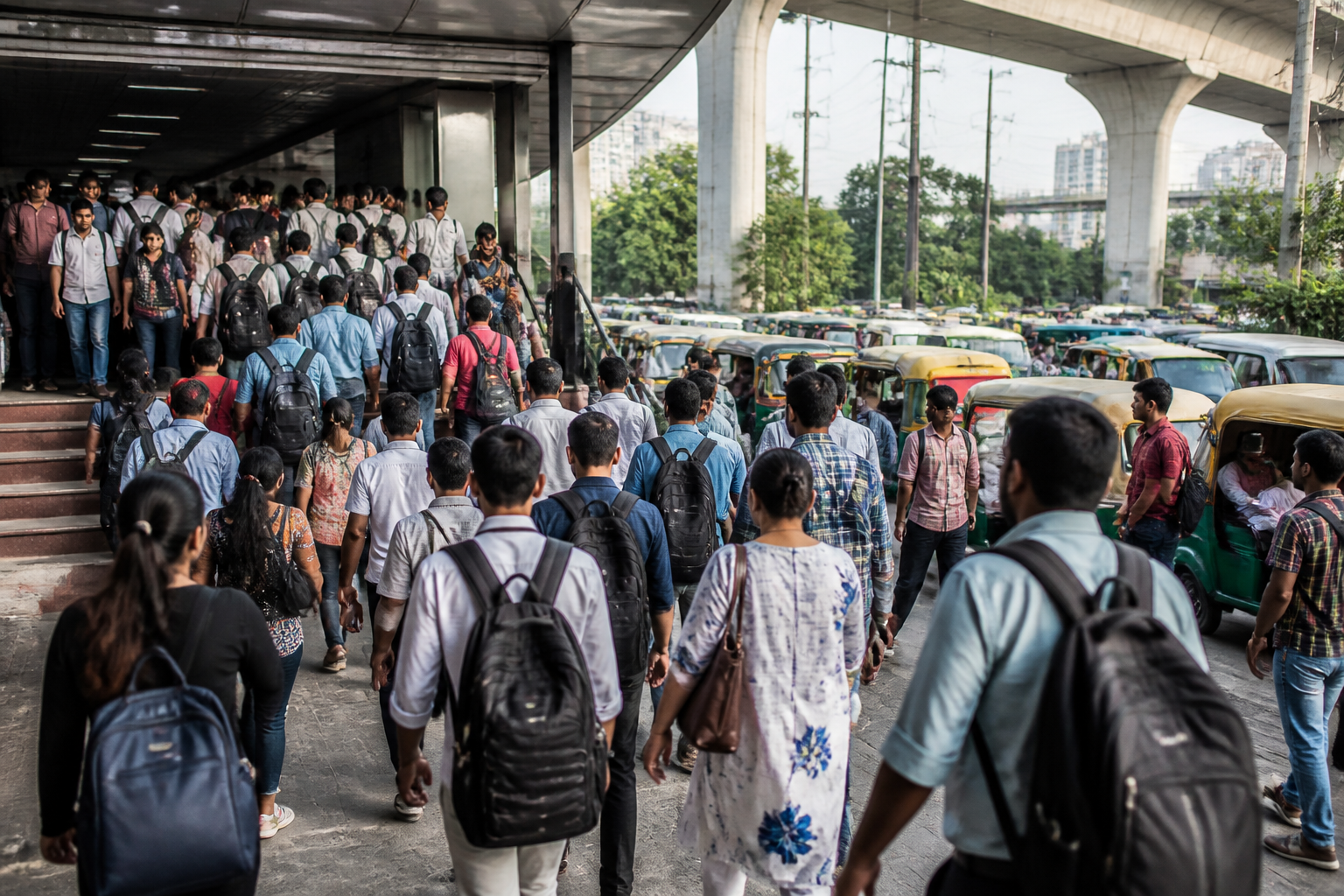
The DTC bus strike entered its fourth day in Delhi on Friday, September 18, pushing more commuters towards the Delhi Metro and increasing crowding on trains and at stations, according to a report by Jagran – New Delhi. Working professionals, students, tourists and shoppers were among those affected as bus services remained disrupted.
The heaviest impact reported was on the Metro route connecting Central Secretariat with Delhi University. The increase in passengers was particularly visible on a day when the Delhi University Students’ Union elections were also taking place, adding to movement towards the university area.
The continuing absence of DTC buses has shifted a significant share of daily travel to the Metro network. The report said trains were considerably more crowded than on regular days, with passengers choosing rail services for longer journeys and using e-rickshaws to reach nearby Metro stations.
For many commuters, the availability of Metro connectivity across more parts of the city has reduced the disruption compared with earlier transport stoppages. Passengers cited in the report said the Metro’s expanded reach was helping them continue their journeys despite the bus strike.
The shift has also affected Delhi’s last-mile transport economy. E-rickshaw drivers operating near Metro stations reported a sharp increase in earnings, with the report stating that their income had risen several times during the disruption. Their services have become an important link for passengers travelling between residential areas, markets, workplaces and Metro stations.
The disruption highlights the way Delhi’s transport systems absorb pressure from one another during service interruptions. The Metro is carrying additional passengers, while e-rickshaws are handling more short-distance trips. At the same time, commuters whose destinations or neighbourhoods are not directly served by the Metro remain dependent on road-based public transport and last-mile connections.
The DTC strike was still continuing on the fourth day when the report was published. The immediate commuter response remained centred on the Metro and e-rickshaw network, while the effects of the stoppage continued to be visible across key interchange points and routes serving central Delhi and the university district.
