


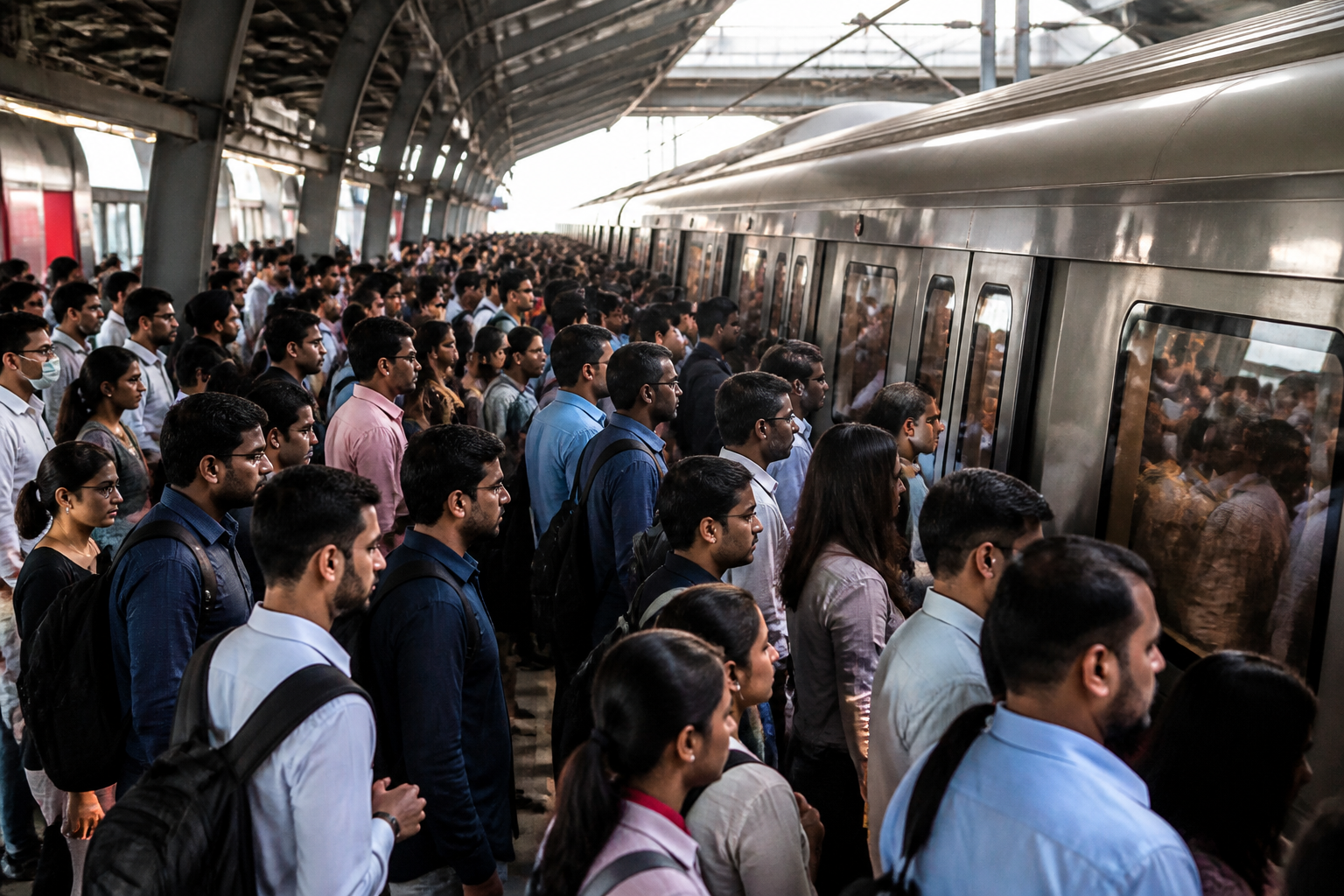
The DTC bus strike entered its fourth day in Delhi on Friday, September 18, increasing pressure on the Metro network as office-goers, students, tourists and shoppers shifted to rail-based public transport, according to a report by Jagran – New Delhi.
The heaviest crowding was reported on the Metro route connecting Central Secretariat with Delhi University. The increase coincided with the Delhi University Students’ Union election, adding another large group of passengers to a system already absorbing commuters affected by the stoppage of DTC bus services.
The reported disruption highlights the role of buses in Delhi’s public transport network, particularly for passengers who depend on direct services or use buses to reach Metro stations. With DTC drivers continuing their strike, commuters have been using the Metro for longer parts of their journeys, resulting in trains running heavily crowded compared with ordinary days.
Passengers cited in the report said the expansion of Metro connectivity across Delhi had reduced the severity of the disruption for some travellers. Instead of abandoning their journeys, many commuters were using e-rickshaws to reach nearby Metro stations and completing the rest of the trip by train.
That shift has also changed demand in the city’s last-mile transport market. E-rickshaw drivers reported a sharp increase in earnings during the strike as passengers used their services to connect residential areas, commercial locations and educational institutions with Metro stations. The report described their income as rising several times over normal levels, though it did not provide a specific figure.
The disruption is therefore being felt unevenly across Delhi’s transport system. Metro services are carrying additional passengers, while e-rickshaws are seeing increased demand on station approach routes. Commuters with access to a nearby Metro station have an alternative, but those dependent on bus corridors without convenient rail connectivity remain more exposed to the continuing strike.
The latest report does not provide a confirmed end date for the DTC drivers’ strike or details of an administrative resolution. For commuters, the immediate travel situation remains linked to how long bus services remain suspended and how much additional demand the Metro network must absorb, particularly around university areas and major interchange points.
