


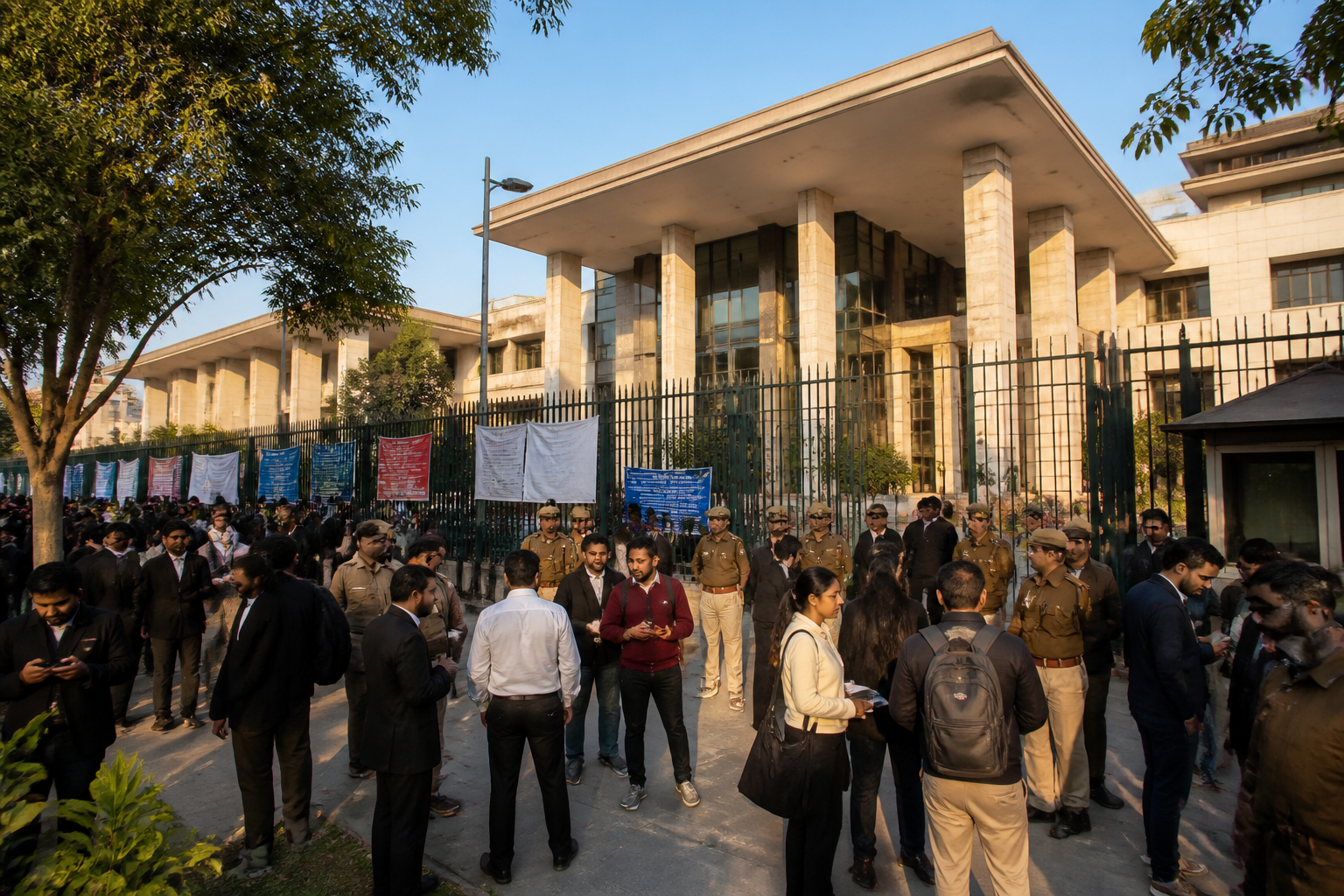
The Delhi High Court has issued notices to 140 candidates contesting the Delhi University Students’ Union (DUSU) election over violence during the campaign and asked why action, including damages, should not be taken against them. The court has also barred victory processions in view of the reported violence.
A bench comprising Chief Justice Devendra Kumar Upadhyay and Justice Tejas Karia directed the candidates and student organisations to respond within two weeks. The notices seek explanations about the conduct of the candidates and whether compensation should be imposed for the damage and disruption linked to the election-related violence.
The bench said individual show-cause notices were being issued to candidates, while student organisations could face collective liability for the damage. The court also questioned the repeated occurrence of such incidents despite rules and directions governing university elections.
“Is this what students are?” the bench asked student organisations, including the ABVP and NSUI, according to the report cited by Live Hindustan. The court said organisations participate in meetings to ensure that elections are conducted according to the recommendations of the Lyngdoh Committee, but incidents of violence continue to take place.
The judges referred to an incident in which a professor was allegedly slapped by a student after the election and questioned how such conduct could be reconciled with the responsibilities of students and elected representatives. The bench said victory should make a person humble, while making clear that it was not commenting on how Delhi University had issued notices or reached its conclusions.
The court directed Delhi University and other responsible authorities to take all possible measures to prevent violations of the Lyngdoh Committee recommendations and earlier court orders. It also directed the Delhi Police and university officials to act preventively to ensure compliance with the rules.
The bench further said that the Municipal Corporation of Delhi and other departments must ensure that public property is not damaged. It directed the relevant agencies to take immediate action if any violation was found. The direction places responsibility beyond the university, involving civic and law-enforcement authorities where public spaces or property are affected.
A Delhi University lawyer apologised before the court and said the university would examine the candidates. The bench questioned what such an inquiry would establish and said it was considering imposing collective election-related damages. A lawyer appearing for the ASA also apologised and told the court that the organisation was contesting only two posts.
The court’s directions now require the candidates and student organisations to submit their responses within two weeks. The proposed damages, further action against election participants and the enforcement of the ban on victory processions will depend on the proceedings that follow.
