


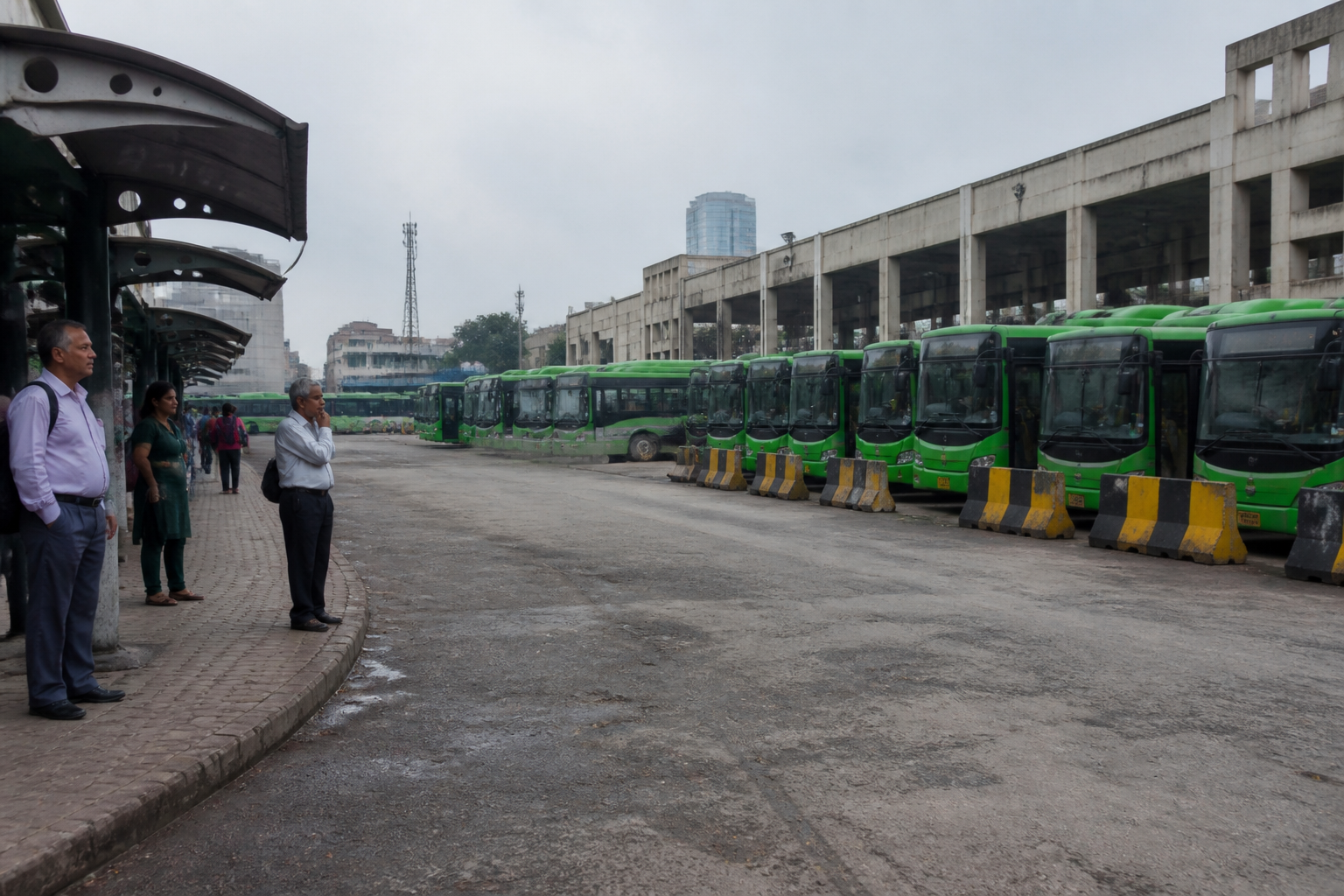
The Delhi DTC bus strike entered its second day on Wednesday, with more than 5,000 buses reported off the roads and an estimated 40 lakh daily passengers facing long waits, higher last-mile fares and a forced shift to the Metro.
The strike was called by the DTC Employees Ekta Union over demands including higher wages, medical facilities, annual bonuses, overtime payments, paid government holidays and insurance for workers. Drivers employed by DTC and private operators attached to the transport department are participating in the action, according to the report by Jagran – New Delhi.
The union claimed that bus operations were affected by up to 80 percent. Most buses remained parked across Delhi’s 83 depots, while protesting drivers held demonstrations and raised slogans. The union’s general secretary, Manoj Sharma, said around 5,000 of the more than 6,500 buses in the DTC fleet were affected and that the strike would continue until the demands were addressed.
The disruption was reported at bus stops in ITO, Mandi House, Krishi Bhawan, Karol Bagh, Chanakyapuri, Daryaganj, Pragati Maidan, India Gate and Laxmi Nagar. Passengers waited for extended periods, with some turning to the Metro after buses failed to arrive. The report also said that some commuters were unaware of the strike and remained at bus stops before seeking other modes of transport.
Passengers described additional costs and delays. A commuter waiting at Ambedkar Park said he had waited for more than an hour before taking an e-rickshaw to reach the Metro. A student waiting at ITO said she had used an auto-rickshaw earlier in the day because no bus arrived. Two passengers travelling towards Khanpur said an auto driver demanded Rs 200 instead of Rs 150.
The impact extended beyond ordinary route delays because DTC buses serve as a lower-cost connection between residential areas, Metro stations, educational institutions, offices and markets. With thousands of buses unavailable at the same time, commuters who could not immediately switch to the Metro or afford an auto-rickshaw faced longer journeys and higher travel expenses.
Transport Minister Dr Pankaj Singh appealed to the drivers to return to work and said the government was prepared to hear their problems and seek solutions. He also said essential public transport services should not be affected. Following his instructions, the DTC management summoned representatives of the 16 companies operating buses and sought responses on the strike.
The report said most of the drivers taking part in the strike operate newer electric buses. The minister directed the companies managing those services to resolve pending issues with drivers. The administration’s immediate response is therefore focused on discussions with private operators as well as the wider DTC management.
The strike has also become a political issue. Aam Aadmi Party MLA Kuldeep Kumar met protesting DTC employees and criticised the Bharatiya Janata Party-led government, attributing the strike to what he described as its rigid approach. The report did not indicate that a settlement had been reached by Wednesday.
For commuters, the next operational question is whether negotiations with the 16 bus-operating companies and the workers’ union will restore services. The union has said the strike will continue until its demands are met, while the transport minister has asked drivers to return and directed operators to address the pending issues.
