


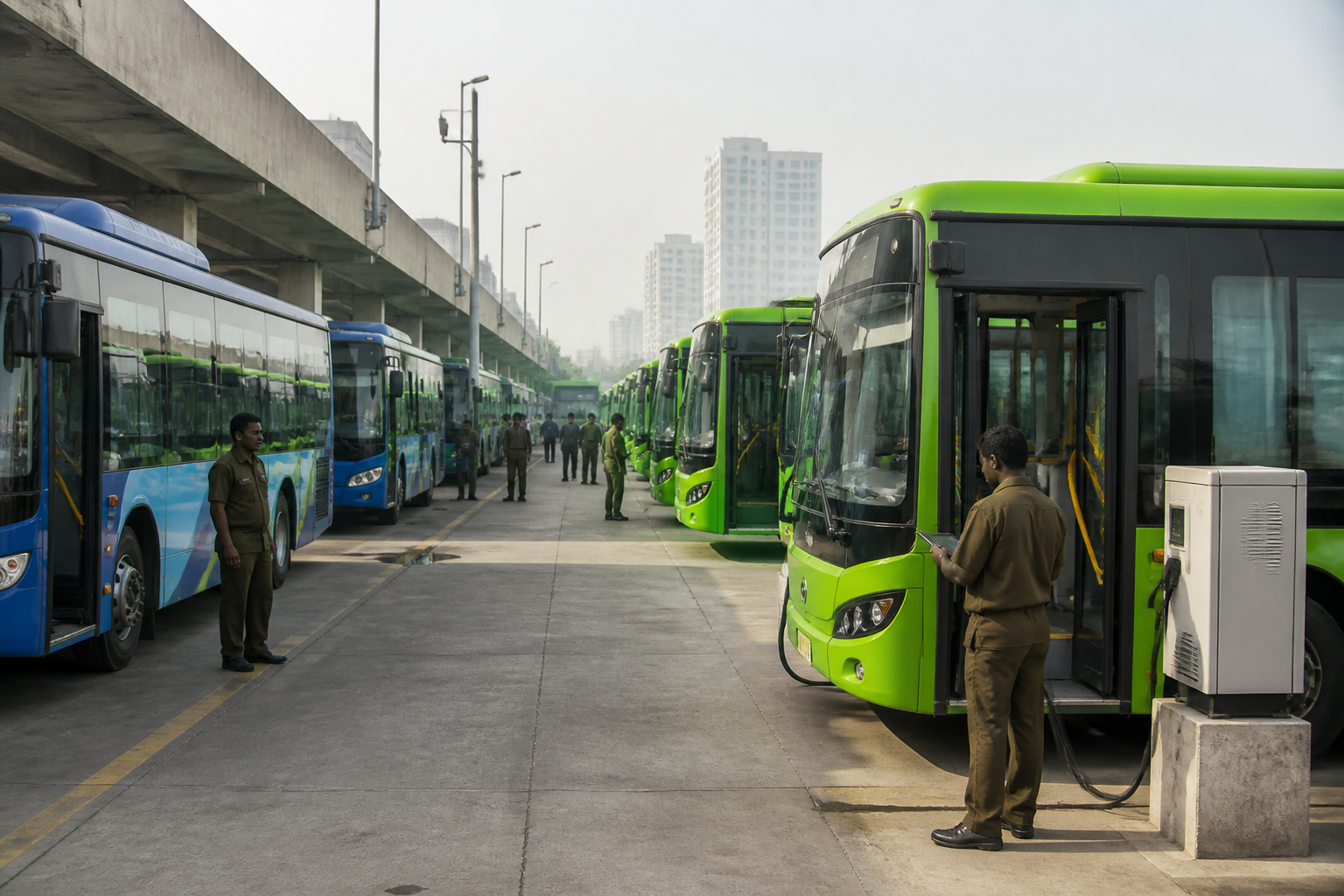
The Delhi Transport Corporation plans to introduce an artificial intelligence-driven system to monitor bus operations, improve punctuality and streamline maintenance as the city prepares to expand its public transport fleet.
The corporation has invited proposals to assess its existing Bus Management System and develop an upgraded platform based on artificial intelligence and machine learning. The proposed system would bring fleet, ticketing, crew, maintenance and depot functions under a single digital framework.
According to the reported plan, the platform would manage the allocation and tracking of Electronic Ticketing Machines, including their assignment to specific buses, drivers, conductors and duties. It would also record the issue, return and usage of the devices.
The system is expected to integrate fare collection data so that ticketing information can be synchronised and revenues reconciled digitally. This would reduce reliance on manual processes, although the report does not specify the technology vendor, project cost or implementation timeline.
The platform would also be designed to respond to real-time route changes, including diversions or alterations ordered by traffic authorities. For electric buses, its proposed functions include the use of artificial intelligence to optimise charging schedules and battery usage.
Other features under consideration include predictive maintenance, detection of operational irregularities, passenger-count monitoring and CCTV-based surveillance. The system would also analyse traffic and historical journey data to improve estimated arrival times, anticipate delays and support decisions on route, fleet and depot allocation.
The proposal comes as the Delhi government works towards increasing the city’s bus strength to 14,000 by 2028-29 and potentially expanding the number of depots to around 90. At present, the DTC operates around 6,269 buses, including more than 4,500 electric buses, from 52 depots across Delhi.
Crew scheduling is also expected to be brought within the upgraded system. The next formal steps will depend on the assessment of the existing Bus Management System and the proposal process initiated by the corporation.
