


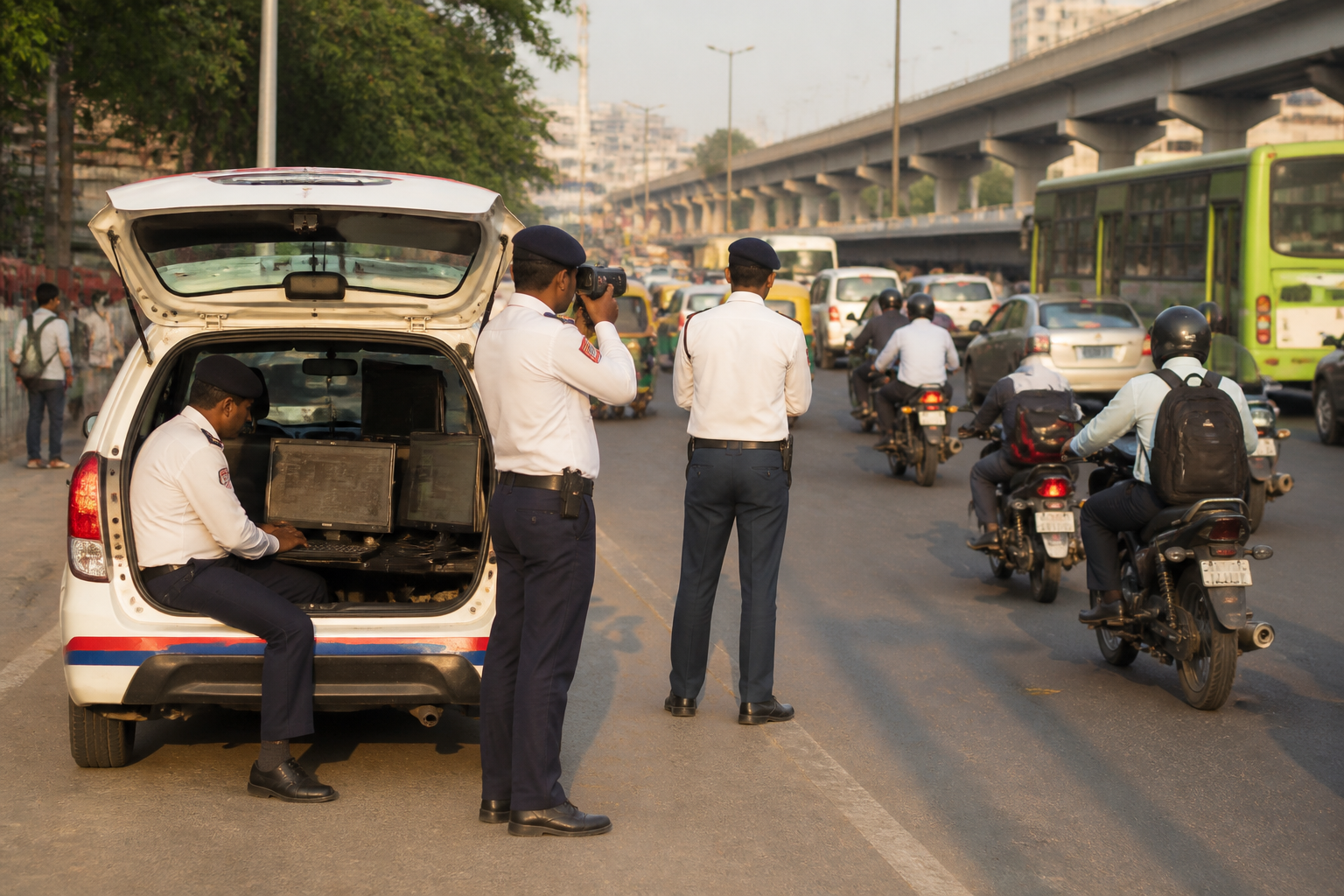
Delhi Traffic Police has launched a pilot Mobile Traffic Unit programme across six busy stretches, including areas around Delhi University, Kashmere Gate, Azadpur, NH-24 and Vikas Marg, to respond faster to traffic violations, congestion and disruptions.
The units will operate across three traffic ranges, with two identified stretches in each range. In the central range, the pilot covers the Delhi University area and the Inter-State Bus Terminus at Kashmere Gate. The northern range includes Bhagwan Mahavir Marg and the Azadpur Mandi area, while the eastern range covers NH-24 and Vikas Marg.
Unlike static traffic deployments, personnel assigned to the Mobile Traffic Units will patrol the selected stretches continuously. Their role will be to move towards congestion points and traffic disruptions as they emerge, rather than remain stationed at a single junction or location.
According to Delhi Traffic Police officials, the units will focus on violations that directly affect traffic flow, particularly improper parking. Vehicles parked on busy roads or near critical movement points can reduce available carriageway space and create localised bottlenecks. The mobile deployment is intended to allow personnel to address such violations at the locations where they occur.
The units will also regulate traffic at critical points, assist during peak hours and support traffic management during special situations. Traffic Police said the arrangement is intended to improve police visibility and make enforcement more responsive on the selected stretches.
The pilot places particular emphasis on locations where traffic conditions can change quickly because of commuter movement, commercial activity, public transport operations or roadside obstructions. The selected areas include major interchanges and busy corridors that handle substantial daily traffic, although the supplied report does not specify the number of personnel or vehicles assigned to each stretch.
The initiative also changes the operational pattern of traffic enforcement. Instead of relying only on fixed deployments, the mobile units are expected to combine patrolling, regulation and enforcement. This could allow personnel to reach emerging trouble spots, manage traffic during peak periods and intervene before a violation develops into a larger obstruction.
Delhi Traffic Police said the performance of the pilot will be assessed before any decision is taken on expanding the model to other busy stretches. The authority has not announced a specific end date for the pilot or provided performance targets in the report. Its further expansion will depend on how the mobile units perform on the six identified stretches.

