


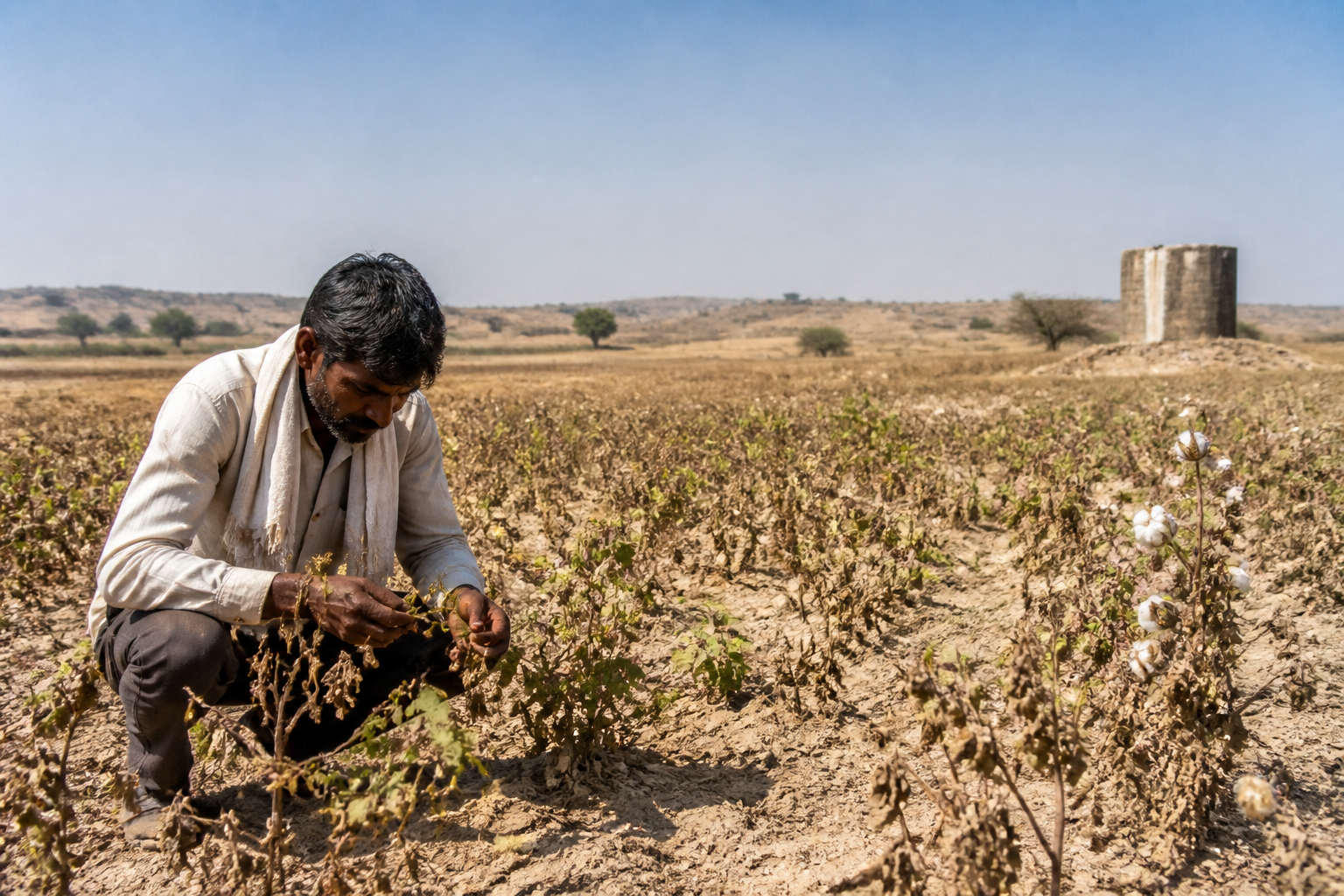
Maharashtra’s drought risk has intensified after 19 districts and 83 talukas went more than 20 days without rain, putting kharif crops under severe stress and prompting the state government to place district administrations on high alert. Chief Minister Devendra Fadnavis and ministers discussed the situation at a cabinet meeting, but no immediate relief package was announced.
The government said a formal drought declaration could not be made immediately. According to the report, officials told the cabinet that crop-loss assessment and ground-level verification would need to be conducted after October 5 under National Disaster Response Fund guidelines and central drought-management rules. The state government’s position is that an assessment conducted before the prescribed period could affect farmers’ eligibility for central assistance and lead to an inaccurate estimate of losses.
The Marathwada, Vidarbha and western Maharashtra regions are among the worst affected. Revenue Minister Chandrashekhar Bawankule and the chief minister directed district collectors and field-level officials to remain on high alert and prepare preliminary relief proposals. The administration is also preparing emergency lists, assessing fodder availability and advising agriculture departments to guide farmers on protective irrigation for crops that can still be saved.
The government has asked local administrations in affected districts to prioritise existing dam reserves for drinking water in both urban and rural areas. The instruction is intended to prevent a potential water shortage by protecting available storage for essential domestic use. The reported directive also places pressure on local authorities to coordinate water allocation as agricultural demand rises and rainfall remains inadequate.
An agriculture department report cited in the cabinet presentation found that 37.21% of the sown area in Beed had been damaged, along with 27.83% in Jalna and 7.06% in Chhatrapati Sambhajinagar. Soybean, green gram, black gram and cotton crops are reportedly drying in light-soil areas of Latur, Dharashiv and Parbhani. The report also noted a widespread outbreak of yellow mosaic virus in soybean crops.
Rain-dependent areas of Solapur, Satara, Sangli and Ahilyanagar have seen prolonged dry conditions affecting green gram, black gram, soybean, maize and millet. The report cited an estimated 20% to 25% possible decline in yields in these areas. In Vidarbha, soybean and cotton are under pressure, with several talukas in Amravati, Akola, Buldhana and Washim reportedly recording two to three weeks without rain. Farmers with irrigation access are using protective irrigation to limit crop damage.
The rainfall deficit is also affecting other parts of the state. Delayed rain has slowed paddy transplantation in parts of Nagpur, Chandrapur and Gadchiroli, while maize, cotton and other crops have been affected in parts of Nandurbar and Nashik. Nandurbar has received 46.6% of its normal rainfall, according to the report. Some areas of Dhule and Jalgaon received recent rain that provided limited relief to kharif crops.
Opposition leaders, including Congress leader Vijay Wadettiwar, Solapur MP Praniti Shinde and Shiv Sena (UBT) leaders, have demanded an immediate drought declaration and emergency assistance. Their demands include a relief package, crop-loan waivers, fodder camps and tanker-based water supply without waiting for the post-monsoon assessment timeline.
The state government is expected to continue preparing relief measures while district administrations monitor crop conditions, drinking-water reserves and fodder availability. The formal crop-loss survey is scheduled to begin after October 5, according to the report.
