


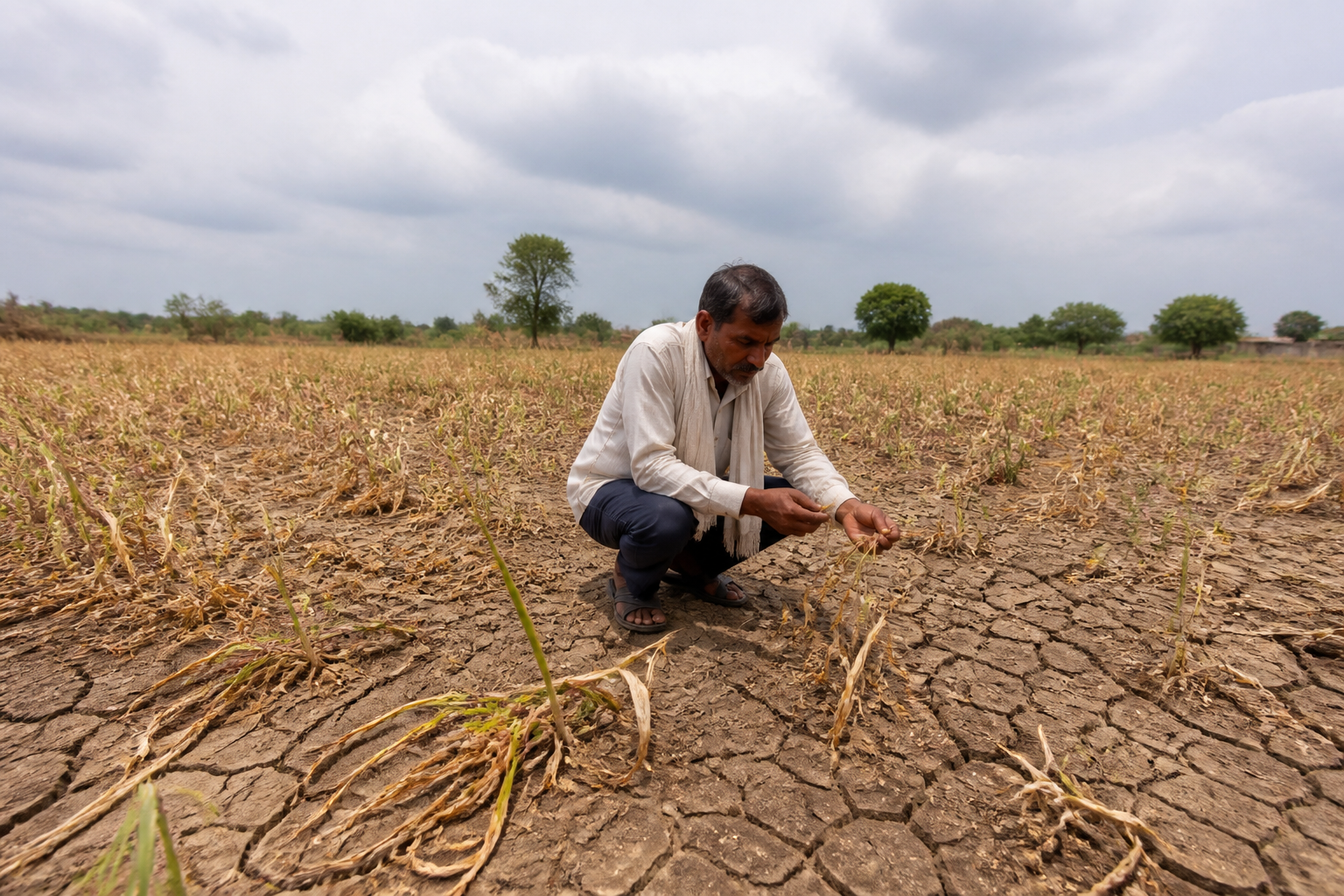
Maharashtra will begin formal assessments of drought-like conditions from 5 October after a prolonged monsoon break damaged kharif crops and left 86 talukas facing rainfall deficits, Chief Minister Devendra Fadnavis directed after a state cabinet discussion.
The assessments, known as panchnamas, will be conducted according to National Disaster Response Fund (NDRF) criteria. The government has also been instructed to begin scarcity-relief measures immediately rather than wait for the assessment process to start.
Between 1 June and 14 September, rainfall across India was 15% below the normal level, while Maharashtra recorded a 16% deficit, according to the report. The monsoon’s weak performance during August and September has placed the state’s kharif season under severe pressure and intensified demands from elected representatives for a formal drought declaration.
The cabinet discussed the situation in detail before the Chief Minister ordered the assessments from 5 October. Ministers from rural areas told the meeting that crops had deteriorated sharply because rainfall had remained absent for about a month. In rain-dependent areas, farmers are reportedly unable to recover even a viable harvest after cutting their crops.
Short-duration pulses, including moong, matki and chavali, have been particularly affected. The report states that these crops have failed in several areas, while sugarcane growth has slowed. New sugarcane plantations are also facing water shortages, adding pressure to a crop that requires continued water availability after planting.
The timing of the assessment is significant for the administration because drought-related support depends on documenting conditions on the ground under prescribed criteria. The panchnamas are expected to establish the extent of crop damage and scarcity conditions across affected areas. The supplied report does not specify the number of villages to be assessed, the relief package that may follow, or the financial assistance sought under NDRF norms.
The rainfall situation is unfolding as the southwest monsoon begins its withdrawal from the country. The monsoon’s retreat was expected to begin from western Rajasthan on 19 September, according to the report. That leaves limited scope for a late-season recovery in regions where crops have already been damaged, although the government’s immediate response is focused on assessment and scarcity-relief implementation rather than on a final statewide drought declaration.
The developments also place local administration at the centre of the response. Officials will have to record crop conditions and water stress in areas with different levels of irrigation access, while the government will use the resulting assessments to determine the nature and scale of relief. The report does not provide a district-wise breakdown of the 86 affected talukas.
The state’s next stated milestone is the start of drought-condition assessments on 5 October. Until then, the government’s immediate task is to implement scarcity-relief measures and document the impact of the rainfall deficit on crops, irrigation-dependent cultivation and rural water availability.
