


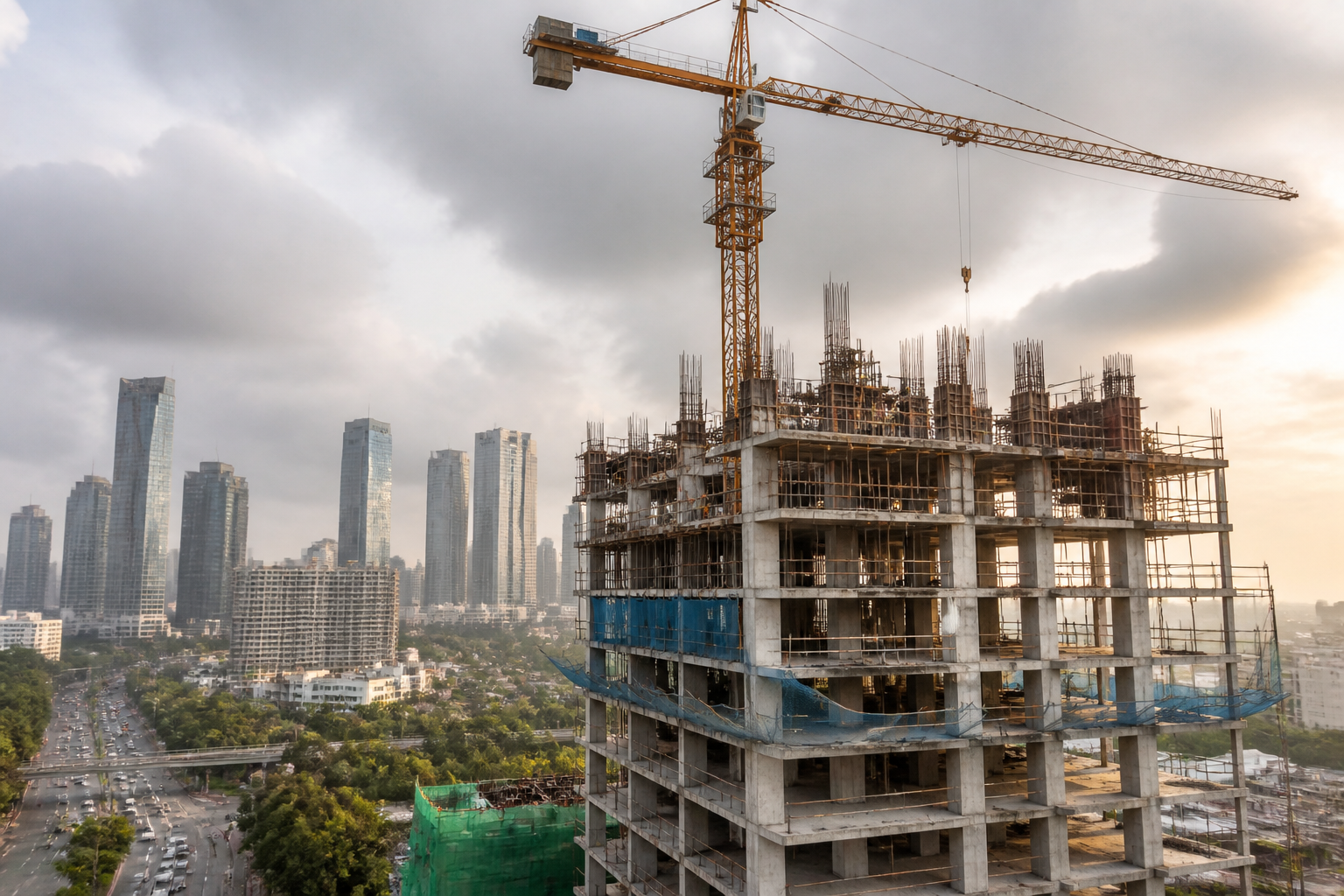
The Federal Reserve’s first interest-rate increase since 2023 has reopened a difficult question for cities and property markets: how much longer can urban development absorb expensive money? The Federal Open Market Committee raised the federal funds rate by a quarter percentage point to a target range of 3.75% to 4%, citing inflation that remains above its 2% objective even as economic activity, productivity and capital investment remain resilient.
The decision matters beyond financial markets. Interest rates influence the cost of mortgages, construction loans, commercial property debt, municipal borrowing and infrastructure finance. When borrowing costs remain elevated, the effects can move through the urban system slowly. Developers may reassess projects, households may delay purchases, and public agencies may face higher costs when financing large transport, housing or utility schemes. The Federal Reserve’s latest projections suggest that this pressure may not disappear quickly.
The rate increase was accompanied by an outlook that is more restrictive than the central bank’s earlier projections. Officials now expect to raise rates once more this year, while their latest quarterly projections indicate that rates are likely to remain unchanged in 2027. The federal funds rate could begin moving lower again in 2028, with the rate projected to reach the 3.5% to 3.75% range in 2029.
That path changes the planning environment for long-duration urban investment. A building, rail corridor or large infrastructure system is not financed on the assumption that money will be cheap for only one quarter. Project sponsors assess costs over several years, and the difference between a lower and higher interest-rate environment can affect project viability, debt-servicing requirements and the price that users must eventually pay.
The FOMC’s statement shows why policymakers have chosen to keep pressure on demand. It said economic activity was expanding at a solid pace, domestic spending was resilient, productivity growth was strong and capital investment was robust. Job gains had kept pace with the workforce, while the unemployment rate had changed little. But inflation remained elevated, and the committee said the latest action would support a timelier return to its 2% goal.
For the built environment, this combination is significant. Strong activity can sustain demand for offices, homes, logistics facilities and construction services, but higher rates make the capital needed to supply those assets more expensive. The result is not necessarily an immediate collapse in development. It is a shift in the calculations behind land acquisition, construction schedules, sales prices, rental expectations and refinancing.
The Fed’s inflation projections reinforce the possibility of a prolonged adjustment. The median projection for inflation, measured by the personal consumption expenditures price index, is now 3.7% for 2026, up from the 3.6% forecast issued in June. Officials continue to expect inflation to ease to 2.3% next year, while the projection for 2028 has risen to 2.1% from the earlier 2% estimate. The projections indicate that inflation may not return to the Fed’s 2% target until 2029.
This matters because the cost of urban finance is shaped not only by the policy rate but also by expectations about how long restrictive conditions will last. A short, clearly defined period of higher rates can be managed differently from a cycle in which inflation remains elevated and rate relief is pushed further into the future. The latest projections point to the second type of environment: growth continues, but the return to price stability is taking longer.
In real estate, developers generally commit capital before revenue is realised. Construction expenditure arrives in stages, while sales or rental income may come much later. Higher interest costs during this period can reduce margins or force a project to be redesigned, delayed or phased. Buyers may also face higher financing costs, affecting affordability even when the listed price of a home remains unchanged.
The same logic applies to infrastructure. Transport, water, energy and public-realm projects often require substantial upfront investment and depend on predictable funding over long periods. If global borrowing costs rise, governments and public agencies must account for the effect on debt, guarantees and project budgets. The supplied report does not establish how any particular Indian project will be affected, but the broader increase in global borrowing costs creates a less favourable financing backdrop for capital-intensive urban development.
The Federal Reserve’s outlook for economic growth remains relatively firm. Officials now expect gross domestic product to expand 2.3% in 2026, slightly higher than the 2.2% forecast in June, with growth projected at 2.4% in 2027. The unemployment rate, reported at 4.1% in August, is expected to remain at that level through the end of 2026 and stay there through 2029.
That projection complicates the traditional response to high rates. Policymakers are not reacting to a sharp contraction in the supplied data. They are responding to persistent inflation in an economy where spending, investment and employment remain comparatively resilient. For urban markets, that means demand may continue even as financing becomes more expensive. The stress may therefore appear through affordability, project returns and investment selection rather than through an immediate fall in activity.
The sources of inflation risk described in the report are also relevant to the physical economy. A renewed increase in oil prices above $100 a barrel could raise transport and construction costs. New tariffs and the possibility of additional import duties could affect the price of materials and equipment. Continued economic growth driven by heavy artificial-intelligence spending could sustain demand and investment while adding to pressure on prices. Each factor can influence the cost base of construction and infrastructure, although the supplied material does not quantify those effects for specific cities or projects.
The rate decision also highlights the institutional tension surrounding monetary policy. President Donald Trump had expected the Federal Reserve to cut rates after appointing Kevin Warsh as chair earlier in the year and had threatened additional import tariffs if borrowing costs were not reduced. The FOMC nevertheless raised rates, framing the decision around its dual mandate and the need to restore price stability.
For urban governance, the institutional lesson is that development conditions are not controlled by city authorities alone. Municipal bodies may approve land use, issue permissions or manage public infrastructure, but the cost and availability of capital are influenced by national and international monetary conditions. Developers, lenders and public agencies therefore operate within a wider financial system that can alter project economics without any change in local planning rules.
The change in policymakers’ views since June is another important signal. The June projections showed a near-even split: nine of the 19 officials expected rates to rise by at least a quarter percentage point by the end of 2026, while another nine expected rates either to remain at their existing level or fall by a quarter percentage point. At the July 28-29 meeting, three policymakers dissented in favour of raising rates, and several others later indicated they could support an increase unless inflation eased soon.
That shift suggests that the central issue is not simply the size of the latest hike. It is the changing balance of risks inside the institution. The Personal Consumption Expenditures Price Index rose at an annual rate of 3.7% in both June and July after a sustained increase through much of the previous year. The next reading, due on September 30, was expected in the supplied report to show little change, if any.
For property and infrastructure decision-makers, the evidence supports a cautious conclusion. The Fed is signalling that inflation remains sufficiently persistent to justify tighter policy even while growth, employment and investment hold up. The projections also indicate that the period before inflation returns to target could extend into 2029. That does not determine the outcome for any particular housing market or urban project, but it does indicate that financing assumptions based on an early return to low rates face greater pressure.
The larger urban question is how cities maintain housing supply and infrastructure investment when the capital required to build them becomes more expensive. The supplied evidence confirms a higher-rate environment and a delayed inflation target, but it does not establish the precise effects on Indian borrowers, developers or municipalities. Those effects will depend on local interest rates, currency conditions, project structures and the extent to which higher costs are absorbed or passed on.
What is clear is that the Federal Reserve’s decision extends the period in which urban development must be planned around expensive and uncertain capital. The next indicators to watch are the September inflation reading, the Federal Reserve’s subsequent policy decisions and whether its projections for another rate increase and delayed easing are maintained.
