


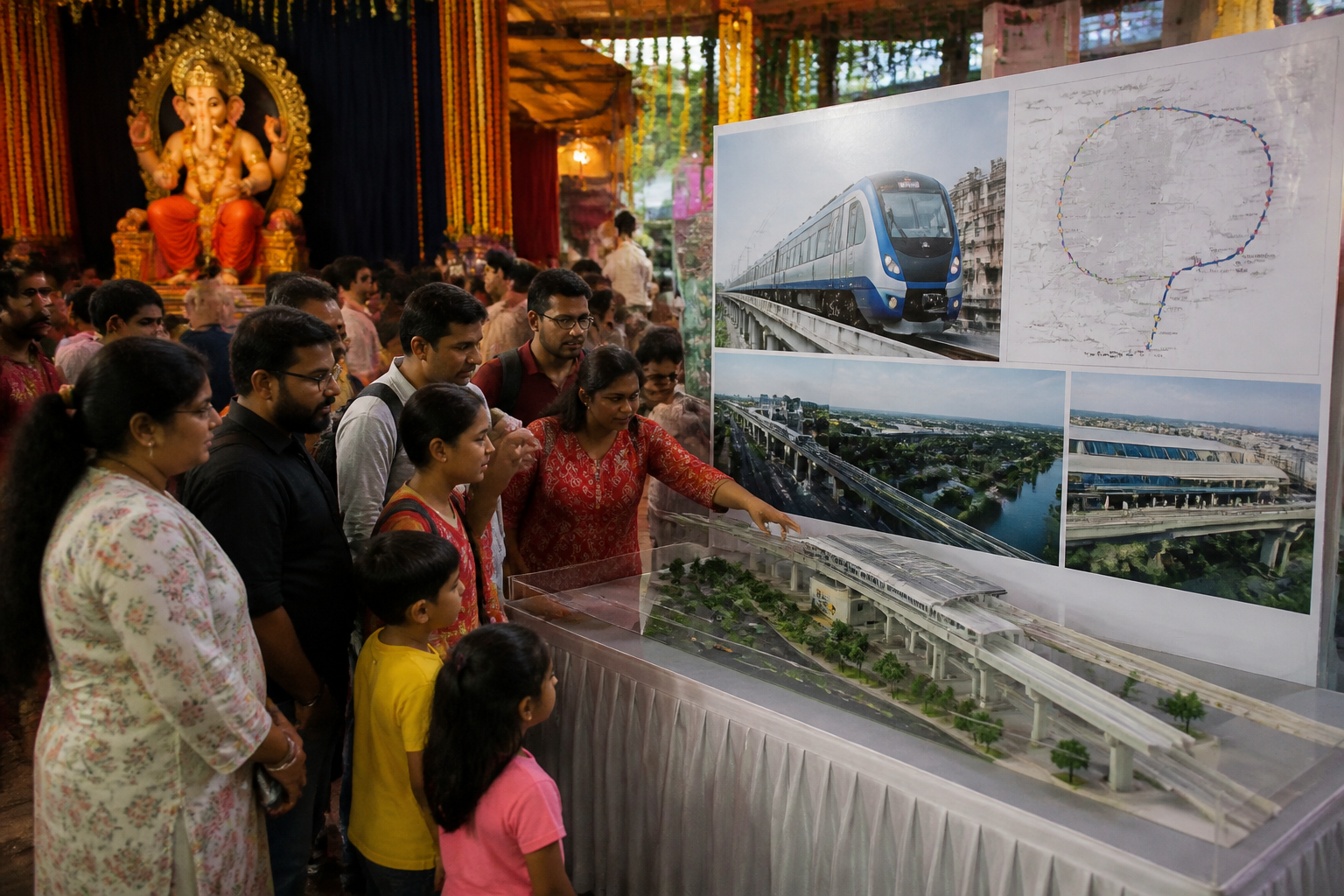
Maha Metro has begun promoting Thane’s proposed 29-km ring metro project through information stalls at Ganeshotsav venues in Khewra Circle, Pawar Nagar and Pachpakhadi, as sections of the city continue to oppose the project and protest against it.
The stalls have been set up at the Ganeshotsav venues of Utkarsh Mitra Mandal. Information boards at the sites explain the proposed alignment and the benefits that Maha Metro says the ring metro could provide to residents. The outreach campaign is aimed at explaining how the project would operate and how it could affect daily travel within Thane.
According to claims displayed by Maha Metro, the ring metro could reduce daily travel time by up to 50 per cent and make journeys between different parts of the city faster and more predictable. The agency has also said the system could reduce delays caused by peak-hour congestion and rainfall-related disruption on roads.
One comparison presented at the stalls says a journey between Waterfront and Rాయలాదేవి could take about 20 minutes by the ring metro. The same journey could take more than 50 minutes by car, taxi or Thane Municipal Transport bus during busy periods. Maha Metro has clarified that travel times would vary depending on the stations between which passengers travel.
The project is also being presented as a connected public transport system. Maha Metro has said the proposed ring metro would link with Thane’s suburban railway network, other metro corridors and bus services. The agency has described the project as a high-capacity alternative that could ease pressure from traffic congestion and reduce dependence on private vehicles.
Maha Metro’s information campaign also highlights access to business and employment centres as one of the proposed benefits. It has described the project as a clean, green and electric public transport system that could help reduce carbon emissions, although the supplied report does not provide a quantified emissions estimate or details of the project’s implementation schedule.
The use of Ganeshotsav venues places the project’s public communication campaign in locations that attract large numbers of residents. It also comes at a time when objections and protests have been reported at several places along the proposed route. The campaign therefore presents Maha Metro’s case directly to residents while the wider debate over the project continues.
The information available from the campaign establishes the benefits claimed by Maha Metro, but does not set out the objections raised by citizens, the status of approvals, the project’s funding structure or a construction timeline. Further details on these issues will be necessary to assess how the proposed ring metro would be implemented and how its stated travel-time benefits would be achieved.
