


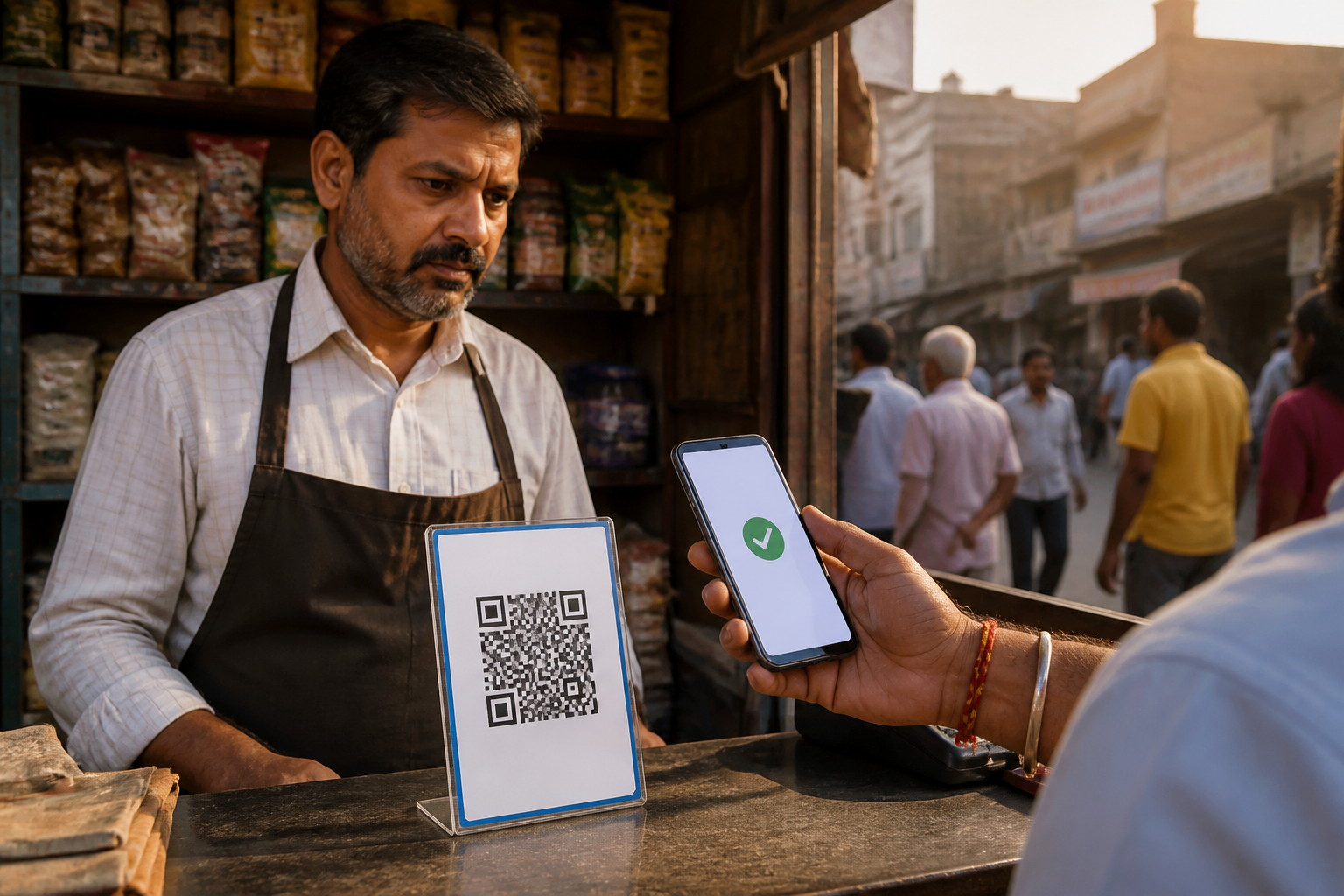
A report by Aaj Tak Business says a new UPI MDR charge will apply from 15 October to selected large merchants, but the alleged government circular behind the change has not been provided in the supplied material and the issuing authority is not identified.
According to the report, customers and small merchants would not be charged under the proposed arrangement. The reported threshold is monthly UPI QR-code receipts of more than ₹1 lakh. Merchants crossing that threshold would allegedly pay a merchant discount rate of 0.4% on eligible transactions, subject to a maximum charge of ₹300 per transaction.
The report presents the change as a charge on merchants receiving UPI payments rather than a fee imposed directly on customers. It says a payment of up to ₹2,000 would not attract MDR, while transactions above that amount would be subject to the reported rate when the merchant falls within the stated monthly-payment threshold.
Using the calculation described in the report, a merchant receiving ₹2,001 would pay an MDR of approximately ₹8. A ₹3,000 transaction would attract ₹12, while a ₹10,000 transaction would attract ₹40. A ₹50,000 payment would result in an MDR of ₹200 under the reported 0.4% rate.
The report further says that transactions of ₹75,000 or more would be subject to the maximum reported MDR of ₹300. This cap would mean that the charge would not rise above ₹300 even when 0.4% of the transaction value exceeds that amount.
These calculations depend on several conditions described in the report: the merchant must allegedly receive more than ₹1 lakh through UPI QR payments in a month, the transaction must exceed ₹2,000, and the reported MDR framework must actually be notified and implemented in the form described. The supplied material does not establish whether the threshold applies to individual merchant accounts, outlets, businesses or an acquiring-bank arrangement.
The distinction matters because UPI has generally been used as a low-cost digital payment channel for consumers and merchants. Any change in the cost of accepting payments could affect how larger retailers, service providers and other businesses account for digital transactions. However, the supplied report does not provide evidence of how banks, payment service providers or merchants would operationalise the alleged charge.
The report attributes the change to a government circular but does not name the ministry, department, regulator or other issuing institution. It also does not include the circular number, publication date, applicable payment instruments, settlement mechanism or details of how the charge would be collected. No independent confirmation or primary document is available in the supplied material.
Until the alleged circular or an official statement is examined, the reported 15 October implementation date, the ₹1 lakh monthly threshold, the 0.4% rate, the ₹2,000 exemption and the ₹300 cap should be treated as claims contained in the Aaj Tak Business report rather than established policy. Verification of the primary notification is necessary before merchants or customers rely on these calculations.
