


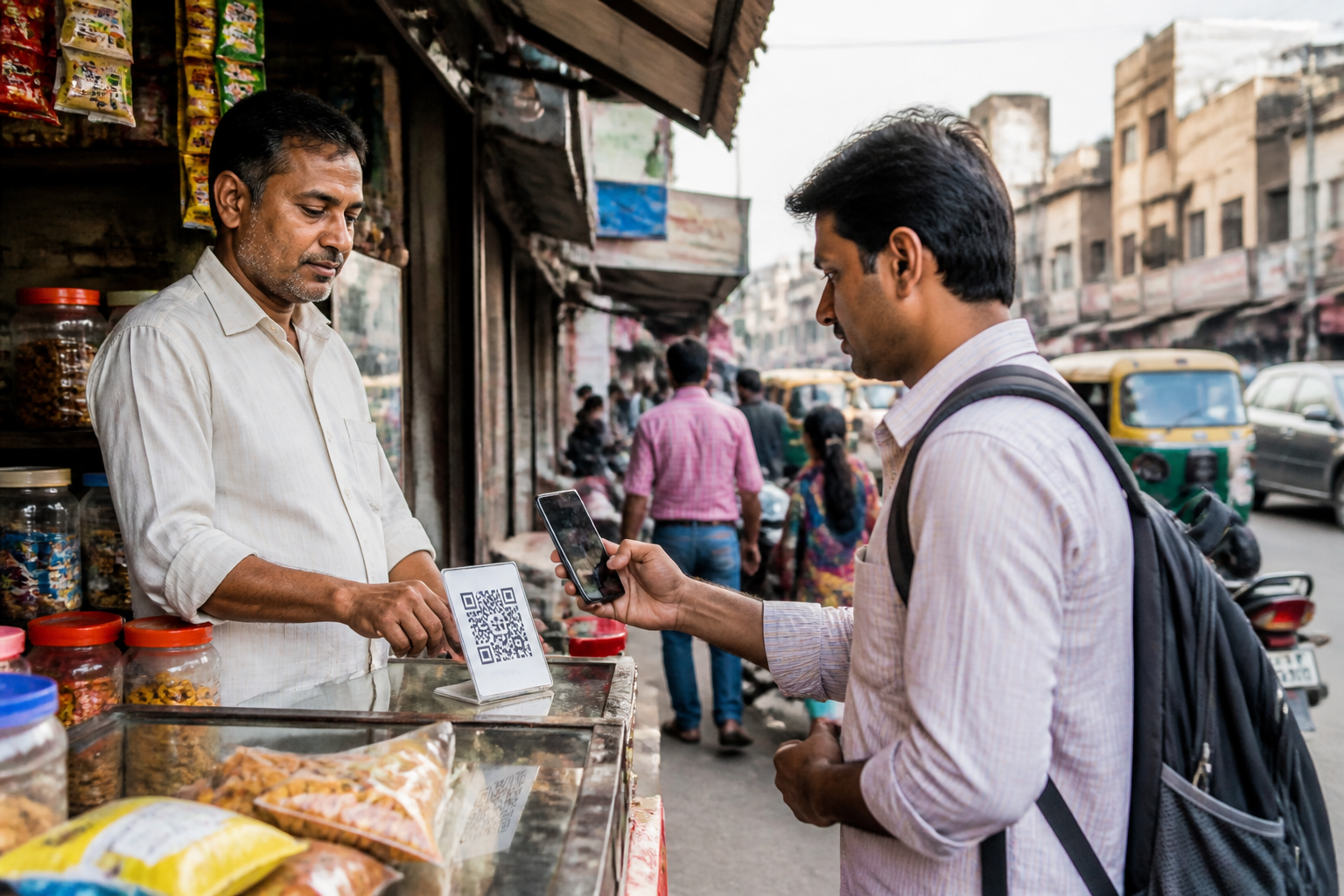
The government has clarified the UPI MDR rules that will apply from 15 October, with payments above ₹2,000 attracting a 0.40% charge for eligible person-to-merchant transactions while small merchants receiving up to ₹1 lakh a month through their shop QR code will remain in the zero-MDR category, according to a report by Aaj Tak Business.
The changes follow an amendment to the Payment and Settlement Systems Act, 2007. The Centre issued a notification under the amended framework on 14 September 2026, and the National Payments Corporation of India issued a detailed circular on the matter the following day.
Under the revised framework, UPI payments of up to ₹2,000 will not attract MDR. For payments above that threshold, a 0.40% MDR will apply to eligible P2M transactions. P2M refers to payments made by an individual to a merchant, meaning the charge is applicable to the merchant associated with the shop’s QR code rather than directly to the customer.
The rule will therefore affect merchants who accept UPI payments above ₹2,000. MDR, or merchant discount rate, is a fee associated with processing a merchant payment. The report said the government had earlier indicated that a nominal MDR could be introduced for selected UPI merchant transactions above a specified limit, while maintaining that person-to-person payments and ordinary consumer transactions would not be affected.
The notification also provides a zero-MDR category for certain sectors and small merchants. Among those covered are shopkeepers whose QR codes receive up to ₹1 lakh in UPI payments in a month. They will be able to accept payments up to that monthly limit without paying MDR, according to the report.
The exemption is significant for small retailers and informal street-vending businesses that increasingly use QR codes as their primary payment interface. A QR code allows a merchant to receive digital payments without handling cash, but the cost of processing those payments can affect the earnings of businesses operating on narrow margins. The revised exemption links the zero-fee benefit to the merchant’s monthly payment volume rather than removing MDR for every high-value merchant transaction.
The government’s stated rationale, as reported by Aaj Tak Business, is that the exemption will help connect small merchants and informal street vendors with formal merchant-acquiring accounts. That design places the policy at the intersection of digital payments and urban livelihoods: vendors can continue receiving routine low-value digital payments without a processing charge, while larger or higher-value transactions may fall under the MDR framework.
The new rules are scheduled to take effect on 15 October. The NPCI circular and the government notification will determine how participating payment and acquiring systems apply the threshold, the monthly limit and the merchant categories covered by the zero-MDR provisions.
