


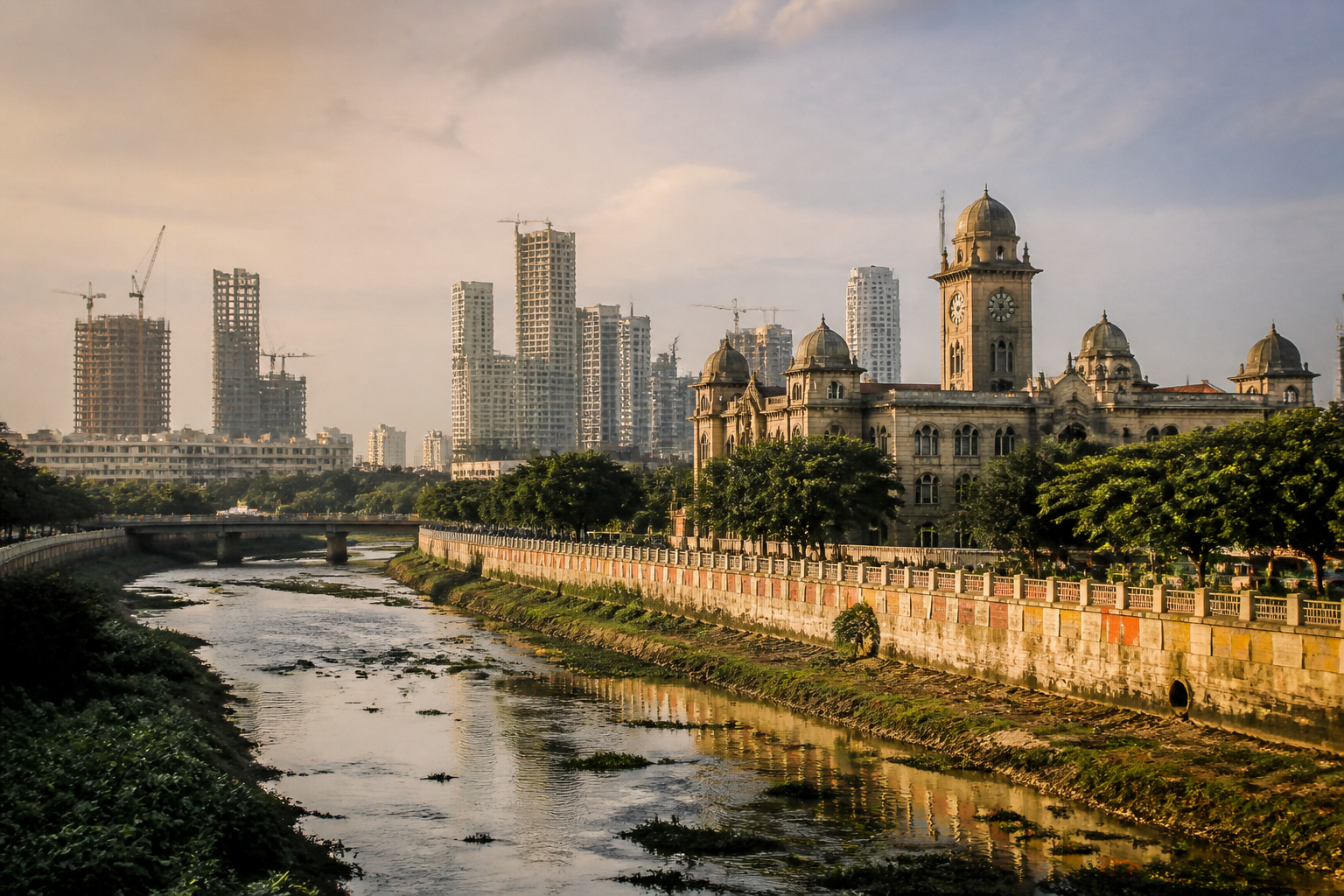
Chief Minister A. Revanth Reddy’s invitation to Prince Rahim Aga Khan V to attend the Telangana Global Summit 2026 has also opened a wider conversation about how Hyderabad intends to manage its heritage, riverfront and future urban expansion. The meeting brought together proposals for restoring historic buildings along the Musi, rejuvenating the river and developing a new 30,000-acre city in a single urban narrative.
According to Telangana Today, the Chief Minister held a courtesy meeting with Prince Rahim Aga Khan V at Taj Falaknuma Palace on Tuesday. During the meeting, Reddy sought the Aga Khan Foundation’s cooperation in restoring the City College and Osmania Hospital buildings, both located in the Musi catchment area. He also requested the Foundation to consider developing the existing Osmania Hospital building as a heritage asset under its aegis.
The proposals are significant because they place heritage conservation within the geography of the Musi catchment rather than treating historic buildings as isolated monuments. The report does not provide a restoration design, estimated cost, implementation schedule or institutional agreement. It records a request for cooperation and a discussion about the possible role of the Aga Khan Foundation.
The Osmania Hospital building occupies a particularly important place in the proposal. Reddy reportedly told Prince Rahim Aga Khan V that a new hospital building was being constructed at Goshamahal. The existing building could therefore be considered for a new role while retaining its heritage value, although the supplied report does not establish what future use is being planned or whether a formal decision has been taken.
That distinction matters in any heritage-led urban project. A building’s conservation cannot be separated entirely from questions of ownership, structural condition, public access, operating use and long-term maintenance. In this case, the report confirms that the Chief Minister wants the existing Osmania Hospital building to be considered as a heritage asset. It does not confirm that the Aga Khan Foundation has accepted the proposal, that restoration work has begun or that the building’s eventual use has been finalised.
The City College is the second building named in the request. Like the hospital structure, it is situated in the Musi catchment area, making the two buildings part of the larger landscape through which the state government proposes to rejuvenate the river. The report says the Chief Minister sought cooperation in restoring both buildings, but provides no technical assessment of their condition or details of the conservation methods under consideration.
The Musi proposal itself extends beyond restoration. Reddy briefed Prince Rahim Aga Khan V on a major project to rejuvenate the river and said plans had been prepared to revive it and develop a “night economy” along its banks. The phrase suggests that the proposed river project is being framed not only as an environmental or infrastructure intervention but also as an urban economic programme. However, the supplied report does not specify the planned river works, the limits of the project area, the agencies responsible for implementation or how the proposed night-time activity would be organised.
This combination of river rejuvenation, heritage restoration and economic activity raises an institutional question: whether these components will be planned as one integrated urban programme or advanced through separate projects. The buildings identified in the report lie within the Musi catchment, while the proposed night economy would depend on decisions about public space, access, safety, services and operating rules. None of those details is established in the material supplied, but their absence indicates the stage at which the proposal currently stands: a high-level presentation and request for cooperation rather than a publicly detailed implementation plan.
The meeting also connected Hyderabad’s older urban fabric to the state’s proposed new growth centre. Reddy explained plans to develop “Bharat Future City” across 30,000 acres. Prince Rahim Aga Khan V reportedly expressed keen interest in the project and asked specifically about its location. The Chief Minister informed him that a Singapore-based company was preparing the master plan.
The report further states that the proposed Future City is intended to be a net-zero city, with a green zone covering approximately 15,000 acres. This means the green zone described in the report would account for about half of the total 30,000-acre area. The material does not clarify whether the green zone would comprise protected land, parks, ecological buffers, agricultural areas or another category of open space. It also does not provide the city’s proposed population, development intensity, transport plan, water strategy, power model or waste-management arrangements.
Those missing details are central to understanding what a net-zero city would mean in practice. The description supplied by the Chief Minister establishes an ambition and a broad land-area figure, but not the measurable standards against which the project would be assessed. The master plan being prepared by the Singapore-based company may eventually define those parameters, but the report does not state when the plan will be completed or when it will be made public.
The scale of Bharat Future City also makes the relationship between planning and governance important. A 30,000-acre development would require decisions across land use, trunk infrastructure, mobility, utilities, environmental management and administrative coordination. The report does not identify the authorities that will oversee the project or explain how it will relate to Hyderabad’s existing metropolitan structure. It confirms only that the project was presented to Prince Rahim Aga Khan V and that a master plan is under preparation.
The same need for clarity applies to the Musi project. Rejuvenating an urban river is not limited to improving its visible banks. It involves the condition of the river corridor, the buildings and public spaces around it, the services that support surrounding neighbourhoods and the way access is managed. In this case, the state government’s presentation combines the river’s revival with heritage buildings and a proposed night economy, but the supplied account does not provide the baseline data needed to assess the river’s current condition or the intervention’s expected outcomes.
The proposed involvement of the Aga Khan Foundation adds an institutional dimension to the heritage component. The Chief Minister specifically sought the Foundation’s cooperation for the City College and Osmania Hospital buildings and asked it to consider developing the existing hospital building under its aegis. The account does not include a response from Prince Rahim Aga Khan V confirming participation. His reported interest in Bharat Future City should therefore not be read as an agreement to undertake the heritage work or join the urban projects.
The Telangana Global Summit 2026 invitation places the discussion within the state’s broader effort to attract international attention to its development agenda. Yet the three proposals discussed at the meeting are at different stages. The invitation to the summit is a request for attendance. The heritage proposals are requests for cooperation. The Future City has a master plan under preparation. The Musi project is described as having prepared plans, but its design and execution details are not included in the report.
This difference in project maturity is important for readers and institutions tracking Hyderabad’s urban transformation. A summit invitation, a conservation partnership, a river plan and a new-city master plan may share a common political narrative, but each will eventually require separate approvals, funding decisions, technical documentation and public implementation milestones. The available report does not say whether these processes have begun.
What the meeting confirms is that Hyderabad’s government is presenting the Musi, its heritage buildings and Bharat Future City as connected parts of the city’s future. What remains unclear is how that connection will be translated into land-use decisions, conservation agreements, environmental safeguards and measurable net-zero standards. The next significant developments will be the publication of the Future City master plan, clarification of the Aga Khan Foundation’s response and the release of specific details on the Musi rejuvenation and heritage-restoration proposals.
