


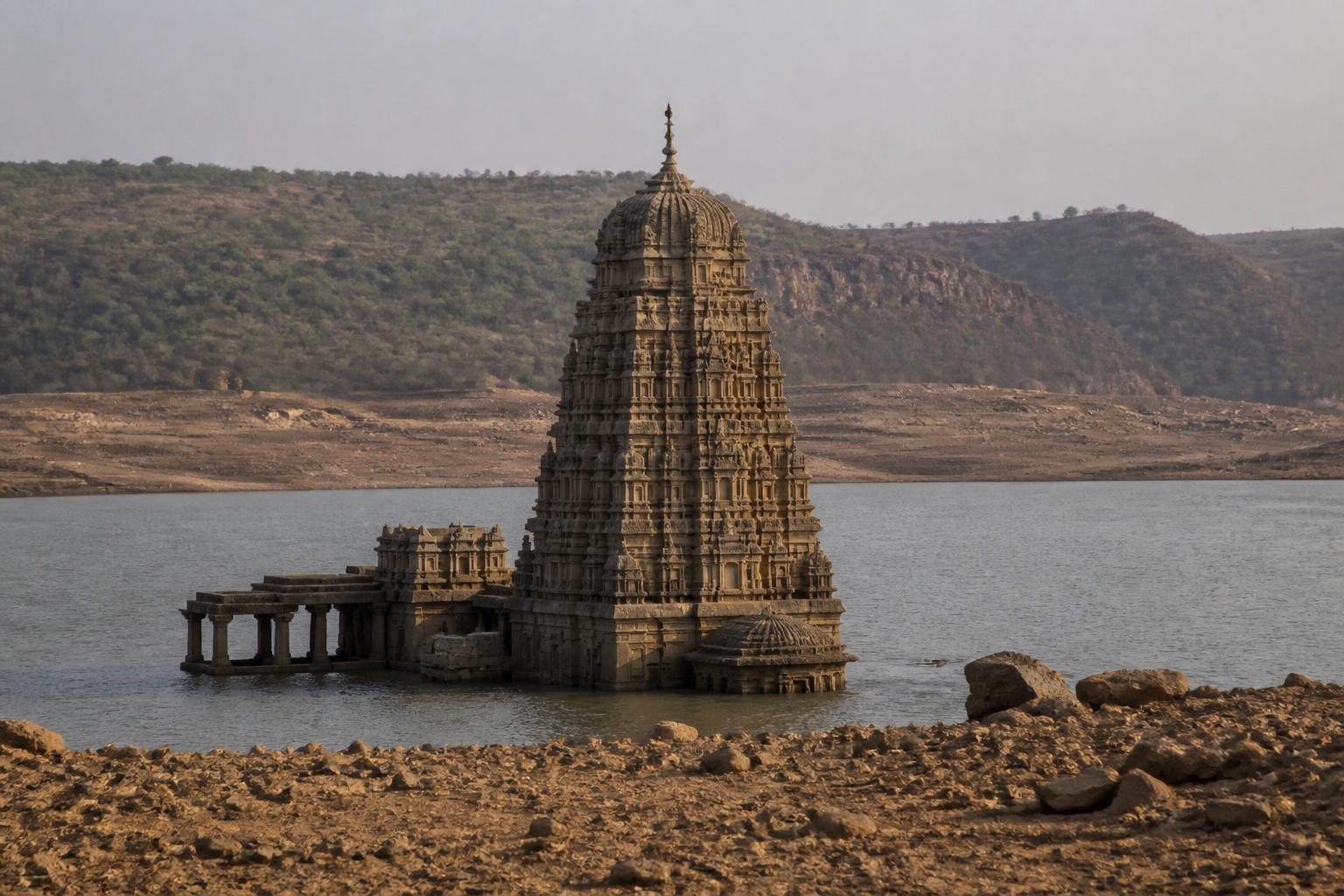
The shikhara of the submerged Sangameswara Swamy temple has emerged from the Srisailam reservoir nearly six months earlier than usual, signalling a sharp decline in water levels and deepening drought concerns in Andhra Pradesh’s Nandyal district.
The temple, located in Kothapalle mandal, normally remains beneath the reservoir for about eight months and becomes visible around March, at the beginning of summer. This year, its shikhara reappeared on September 14, only 37 days after the shrine was submerged on August 6 following a rise in the reservoir level.
The shikhara became visible when the Srisailam reservoir held around 118.61 tmc of water, according to the report. The rapid fall has altered the shrine’s usual seasonal pattern, with local devotees and priests treating its early appearance as a visible sign of deteriorating water conditions.
Over the past decade, the temple has remained submerged for at least eight months each year, local devotee S Ravindra Sharma said. “This year, the shikhara emerged within six weeks after it went under water. Such an early emergence is a worrying indication of the drought situation,” he said.
The shrine’s structure becomes visible in stages as the reservoir level recedes. The shikhara appears first, followed by the sanctum and other parts of the temple. If the reservoir does not receive substantial inflows, the remaining portions could also emerge in the coming weeks, said Nandyal-based priest D Sadananda.
“If there are no good rains in September, the entire Sangameswara temple may emerge from the water by the first week of October,” Sadananda said. He added that while devotees could receive an opportunity for darshan earlier than usual, the prospect was accompanied by concern over falling reservoir levels.
The temple had previously emerged on March 5, when the reservoir level declined before rising inflows during the monsoon period covered the shrine again. The reservoir began filling from August 2, and the temple was submerged on August 6. Under the usual cycle, it would have remained underwater until the following summer.
For devotees, the shrine’s emergence is normally associated with the summer months and has a strong religious significance. This year, however, the September appearance has also become a marker of the region’s water stress. Devotees said the sight offered the possibility of an early visit but was overshadowed by fears about drought.
The immediate outlook for the temple and the reservoir depends on rainfall and inflows in the coming weeks. Priests said the entire structure could become visible by early October if substantial rains do not replenish the Srisailam reservoir.
