


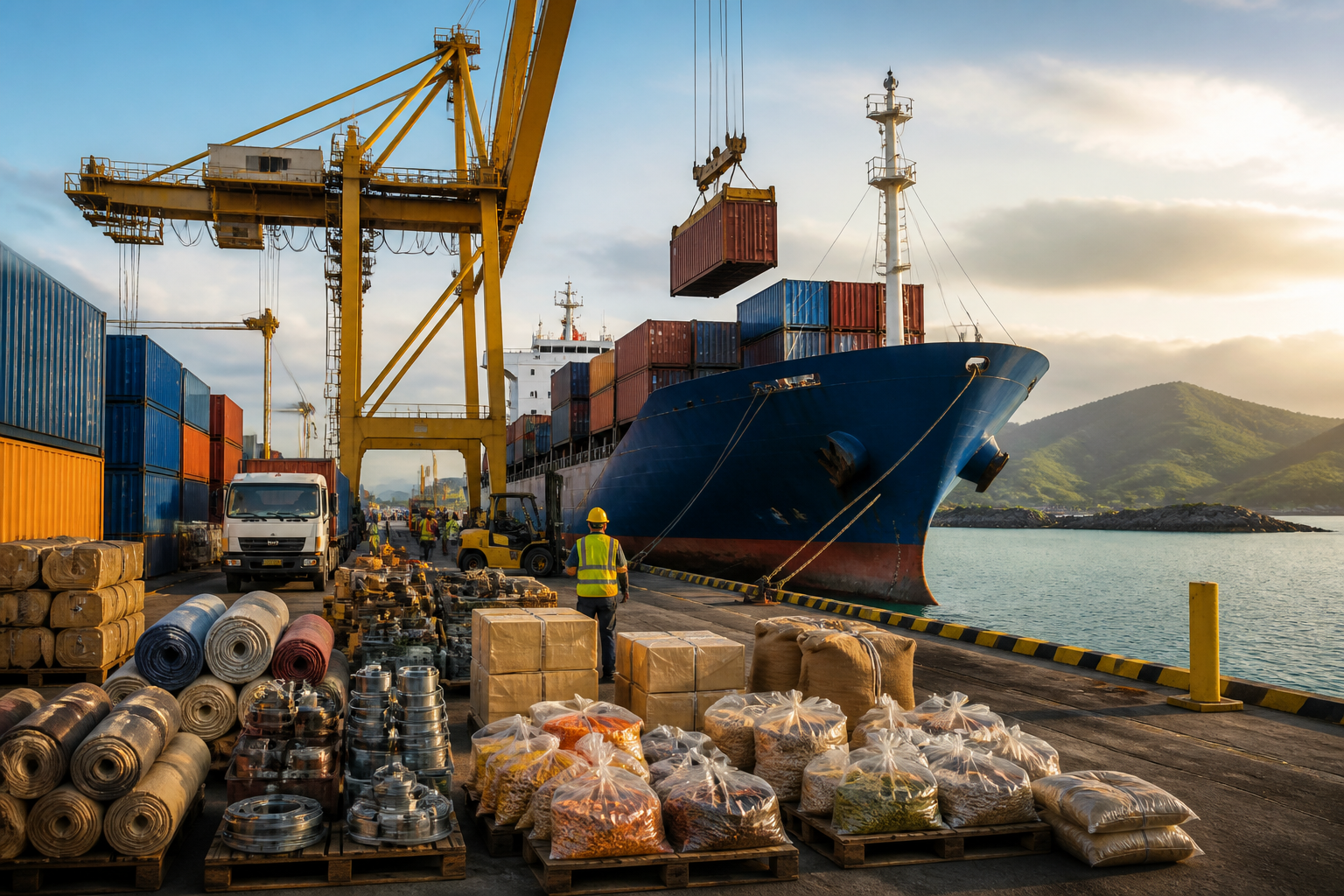
The India-New Zealand FTA is expected to come into force on 19 October, creating a new framework for goods, services, investment and professional mobility between the two countries. Its significance extends beyond the headline promise of duty-free access: the agreement combines tariff changes, a five-year trade target, a proposed $20 billion investment commitment and a 5,000-visa quota for Indian professionals.
The agreement was signed on 27 April at Bharat Mandapam in New Delhi by Union Minister Piyush Goyal and New Zealand Trade Minister Todd McClay, in the presence of New Zealand Prime Minister Christopher Luxon, according to a report by Aaj Tak Business. It will become effective from a mutually agreed date, with 19 October identified as the likely implementation date.
That timing matters because the agreement follows a negotiation process that lasted roughly 15 years. Discussions began in 2010, resumed in March 2025 and were concluded after five formal rounds in December 2025. The long negotiation period reflects the difficulty of balancing export access with domestic sensitivities, particularly in agriculture and dairy.
The central commercial change is New Zealand’s commitment to provide duty-free access to 100% of India’s exports. The arrangement covers more than 8,200 tariff lines, including textiles, garments, leather, footwear, engineering goods, processed food and pharmaceuticals. New Zealand currently imposes tariffs of up to 10% on some Indian products, including ceramics, carpets, automobiles and auto components. Removing those duties could improve the price competitiveness of Indian goods in the New Zealand market.
However, lower tariffs do not automatically translate into higher exports. Indian businesses will still need to meet New Zealand’s product standards, rules of origin, documentation requirements and market-specific compliance conditions. The agreement’s practical value will therefore depend on how quickly smaller exporters can understand and use its provisions. The reported tariff coverage creates an opportunity, but the ability to convert that opportunity into shipments will depend on firm-level capacity and access to market information.
The agreement is not a one-way concession. India will liberalise around 70% of its tariff lines, covering approximately 95% of New Zealand’s exports by value. Around 57% of the tariff lines will become duty-free immediately, while the remaining concessions will be phased in over time. Dairy and certain agricultural products have been excluded from India’s commitments, indicating that the agreement preserves protection in politically and economically sensitive segments.
New Zealand’s expected beneficiaries include exporters of wool, wine, coal, sheep meat, forestry products and wood products. Horticultural products such as kiwifruit, apples, avocados and blueberries could also gain from improved access. At the same time, the agreement includes agricultural cooperation, with plans for New Zealand to provide technology and other support for Indian farmers growing crops such as kiwifruit and apples.
This combination of market access and agricultural cooperation is important because the agreement is not limited to a conventional import-export exchange. It may also influence production practices and crop choices in India. The available report does not establish the scale of this potential shift or identify the regions and institutions that would implement the proposed support. Those details will be important in determining whether the cooperation remains a broad commitment or becomes a functioning technology-transfer programme.
The services and mobility provisions add another dimension. The FTA includes a temporary employment visa arrangement with a quota of 5,000 visas for Indian professionals. It also contains provisions intended to make the movement of students and professionals easier. This gives the agreement a direct livelihood and skills dimension, connecting trade policy with labour mobility rather than treating goods and services as separate areas.
For India’s urban economy, such provisions could matter through the movement of professionals, education-linked mobility and new business relationships. The source report does not specify the occupations covered, the duration of the visas, eligibility conditions or whether the quota applies equally across sectors. Without those details, the scale of the employment impact cannot yet be assessed. The 5,000-visa figure is significant as a formal opening, but it should not be treated as a guaranteed number of jobs or a measure of total mobility.
Investment is another major pillar. New Zealand has committed to invest $20 billion in India over the next 15 years, according to the report. If delivered, that commitment could support new business activity, investment partnerships and employment. But the available information does not identify the sectors, project pipeline, financing structure or conditions attached to the commitment. A stated investment intention and actual capital deployment are different stages of the process, making subsequent disclosures important.
The two countries have set a target of doubling bilateral trade to $5 billion within five years. Merchandise trade stood at about $1.3 billion in 2024-25, while total trade was reported at approximately $2.4 billion in 2024. These figures show both the ambition and the relatively small existing base of the relationship. Reaching the target will require sustained growth in exports, imports, services and investment-linked activity rather than a one-time increase after tariffs are reduced.
The gap between merchandise trade and total trade also highlights the importance of services and mobility. Goods trade alone would not capture the full economic relationship if professional movement, education, business services and investment expand. Yet the source material does not provide a sector-wise breakdown of current services trade, so it is not possible to determine which areas are most likely to drive the five-year target.
The agreement forms part of India’s broader effort to build trade partnerships with individual countries and regional groups. The report cites arrangements involving Mauritius, the United Arab Emirates, Australia, the European Free Trade Association bloc and the United Kingdom. Each agreement creates its own tariff schedules, exclusions and implementation requirements, but collectively they represent an attempt to widen market access for Indian businesses.
The institutional challenge now shifts from negotiation to implementation. Governments must operationalise tariff schedules, customs procedures, rules of origin and sector-specific commitments. Exporters need clear guidance on eligibility and documentation. Visa and mobility provisions require administrative coordination between trade, immigration and education authorities. Investment promises require a mechanism for tracking announced projects, approvals, actual inflows and employment outcomes.
That implementation layer will determine who benefits. Large companies with existing compliance teams may be able to use the agreement quickly, while smaller firms may face greater difficulty navigating certification and market-entry rules. The supplied report does not provide details of an exporter-support programme, so it remains unclear how the benefits will be distributed across firm sizes and regions.
The agreement also creates a more complex domestic policy balance. India is opening a substantial share of its tariff lines while excluding dairy and some agricultural products. New Zealand will receive improved access for selected goods, while Indian exporters receive full duty-free access across the reported tariff schedule. The eventual outcome will depend on the relative ability of businesses in both countries to scale supply, meet standards and respond to demand.
What the evidence confirms is that the FTA creates a broad framework: duty-free access for Indian exports to New Zealand, phased Indian concessions, professional mobility, agricultural cooperation, a proposed investment pipeline and a five-year trade goal. What remains uncertain is how quickly these commitments will be implemented, which sectors will attract investment, how many professionals will use the visa quota and whether the trade target will be achieved.
The next key milestone is the proposed 19 October implementation date. Its significance will be measured not only by the formal activation of the agreement, but by the publication of operational rules, the use of tariff preferences, the movement of professionals and evidence of actual investment and trade growth.
