


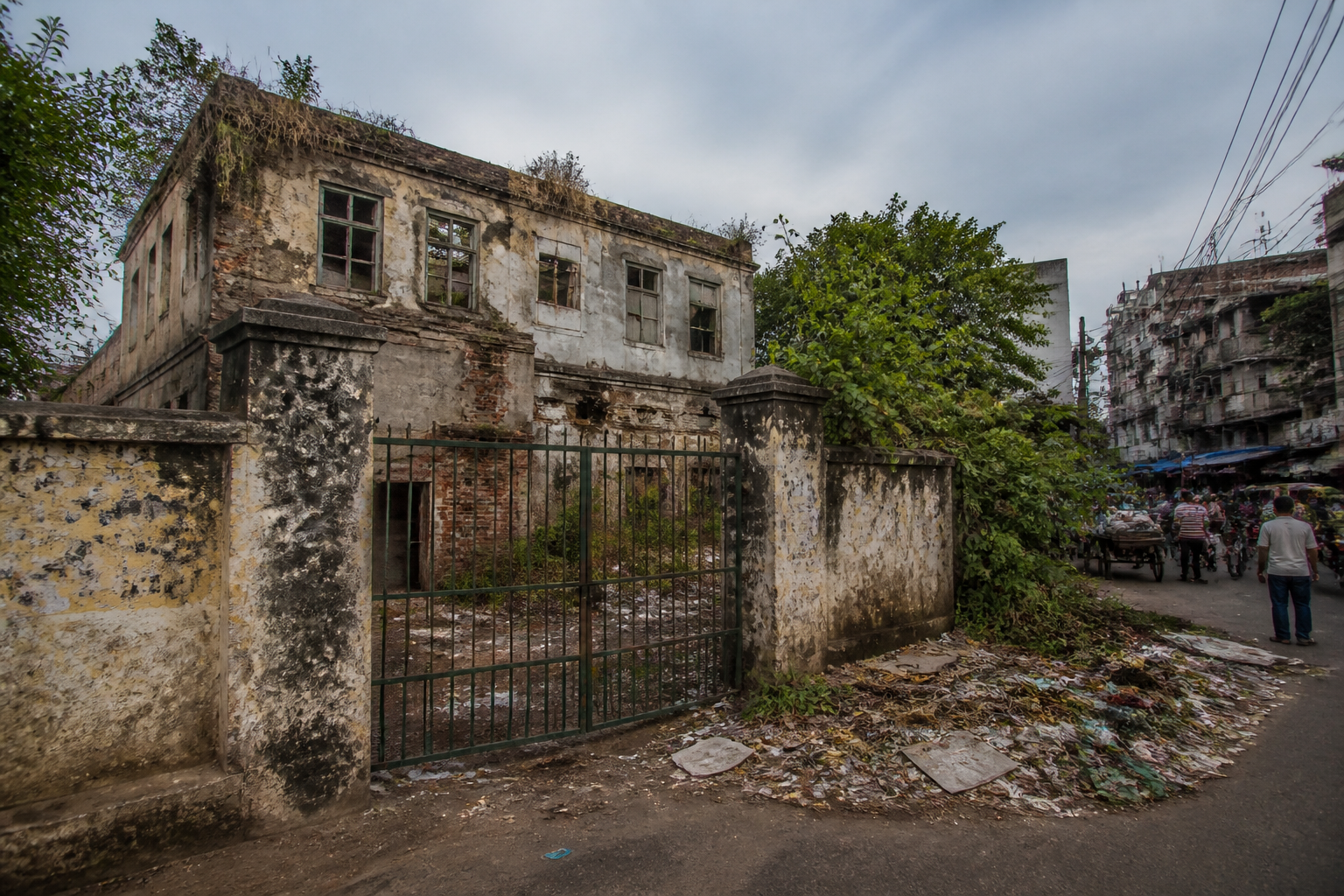
Delhi’s vacant MCD properties are revealing a civic problem that extends beyond abandoned buildings: the Municipal Corporation of Delhi owns public assets in some of the city’s busiest neighbourhoods, yet many have been left unused, poorly secured or allowed to deteriorate for years. The civic body’s latest data identifies 126 vacant properties across the capital, including 67 classified as dilapidated and 95 that have remained unused for more than three years.
A ground check by the Times of India found the consequences of that neglect in Bungalow Road, Gulabi Bagh and Turkman Gate. Buildings intended for officers’ accommodation, staff quarters, schools and a maternity home were found locked, overgrown, surrounded by waste or accessible without visible security arrangements. Some properties appeared structurally usable, while others showed damaged facades, exposed brickwork, broken doors and windows and signs of prolonged deterioration.
The pattern matters because these are not isolated structures on Delhi’s outskirts. Several properties occupy valuable land in dense, high-demand areas where public space is limited and pedestrian movement, housing, services and local commerce compete for room. The unused sites represent a failure not only of maintenance, but also of public asset management: the civic body has retained land and buildings without converting them into functioning public infrastructure or ensuring that they remain safe and protected.
The most visible examples were found along Bungalow Road in Kamla Nagar, near Delhi University. The area is crowded with shops, students, pedestrians and traffic, leaving little spare space for movement. Along one side of the road, however, several MCD properties remain silent and neglected. At least four buildings visited during the ground check were in severely deteriorated condition, with vegetation occupying sizeable parts of the premises.
The physical condition of these properties shows how quickly an unused public building can become a neighbourhood liability. Damaged structures exposed to weather can pose safety risks to people who enter them. Open entrances, absent or inadequate surveillance and secluded interiors can create opportunities for unauthorised occupation or misuse. Garbage and overgrown vegetation further reduce visibility and signal that the sites are not being actively managed.
At one property, bedding and personal belongings found inside a room suggested that the unused structure may have been accessed as a shelter. A flower seller outside MCD bungalow No. 49/8 told the newspaper that many properties had remained vacant for several years. He said one property vacated the previous year was sometimes entered by people to dump garbage, while roadside workers occasionally used the space, although regular activity inside the premises appeared limited.
The account points to a recurring administrative gap. A property does not become neutral simply because it is not currently assigned a formal use. When a public building is left vacant, the civic authority still has to secure it, inspect its structural condition, prevent dumping and unauthorised access, and decide whether it should be repaired, repurposed, leased, demolished or transferred to another public function. The available information does not indicate that such a consistent lifecycle process is operating across the MCD’s vacant estate.
The data supplied by the civic body offers a clearer view of the scale. Of the 126 vacant MCD properties, 19 are listed as being in good condition, 67 in dilapidated condition and 12 in average condition. Three sites have already been demolished, 19 are open plots and six properties are under court cases. The classifications suggest that vacancy is not a single problem. Some assets may require immediate structural intervention, while others could potentially be brought back into use with repairs, security and administrative decisions.
The numbers also show that physical decay is not inevitable for every vacant asset. Nineteen properties are recorded as being in good condition, and some of the school buildings visited during the ground check appeared maintained and capable of use. This distinction is important. A building that is structurally sound but closed for years represents a different governance failure from one that has become unsafe. Treating both categories simply as “vacant” can conceal whether the primary issue is declining demand, delayed decision-making, legal uncertainty, budget constraints or inadequate maintenance.
MCD school buildings make up a significant part of the unused property stock. In some cases, enrolment declined and students were shifted to another nearby school. The buildings were then left largely closed, although some were used occasionally for election-related preparations, including as polling stations. School Ward No. 5 on Turkman Road No. 1, behind the MCD headquarters, was described as locked but relatively well maintained and clean. Residents said enrolment had fallen over the years before students were moved elsewhere.
The school example illustrates the difference between operational closure and public abandonment. A school may no longer be viable for its original purpose, but that does not automatically make the building irrelevant. Its location, condition and existing public ownership could make it suitable for another civic use. However, the supplied report does not establish whether the MCD has carried out a systematic conversion assessment for such properties, or whether alternative uses have been considered and rejected.
The Gulabi Bagh property intended for a maternity home presents another dimension. The large MCD site was found unused, without a security guard and with an open main entrance. The building appeared to have deteriorated over time, with the vacant space showing signs of becoming a wasteland. A facility originally associated with public health therefore remains unavailable for that purpose, while its physical condition continues to worsen.
This is where the question of public land becomes inseparable from the question of urban services. Delhi’s built environment is shaped not only by new projects, but also by what public institutions fail to maintain or reuse. A vacant maternity home is not merely an empty building; it is a public facility whose intended service is absent. A closed school is not merely an unused structure; it may represent a mismatch between older neighbourhood planning and current demand. An officers’ bungalow left to decay is an asset that remains tied up while the surrounding locality faces intense pressure on space.
The institutional responsibility is principally with the MCD, which owns or administers the properties identified in the data. Yet the report also indicates that the status of individual sites may involve different administrative conditions. Six properties are under court cases, while others may have been vacated because of declining school enrolment or changes in departmental requirements. These distinctions matter because the route to reuse differs in each case. A property under litigation cannot be managed in the same way as a structurally sound school awaiting a new use, or a dangerous building requiring demolition.
The available evidence does not establish how much the MCD spends on maintaining vacant buildings, how often each property is inspected, which department controls each site or whether there is a public deadline for deciding its future. It also does not clarify whether the 95 properties unused for more than three years overlap fully with the 67 dilapidated properties. These gaps prevent a complete assessment of the financial cost or the precise causes of vacancy, but they underline the need for better public asset records and clearer accountability.
The MCD official contacted by the newspaper said most municipal properties have security arrangements. That claim sits alongside the ground report’s findings of open entrances and no visible security personnel at several locations. The difference does not by itself establish a complete failure of security across the portfolio, but it does show why property-level information matters. A general assurance cannot reveal whether guards are posted, whether access is controlled, whether inspections occur or whether a particular building has been declared unsafe.
For residents, the immediate consequences are practical. Neglected buildings can attract dumping, become overgrown and reduce the quality of streets that are already crowded. Unauthorised access can create safety concerns for people living or working nearby, as well as for those who enter the premises. At the same time, locked but usable buildings represent lost opportunities for public services, community facilities or other approved civic functions. The report does not identify any final reuse plan for the properties examined.
The larger urban question is how Delhi’s civic institutions account for land and buildings after their original purpose changes. Cities often focus on creating new infrastructure, but the condition of existing public assets determines whether land already acquired for public use continues to serve residents. In dense neighbourhoods, the decision to leave a property vacant is also a land-use decision, even when no formal redevelopment decision has been taken.
MCD’s own figures confirm that the issue is broad rather than confined to a handful of visibly abandoned buildings. The portfolio includes properties in good, average and dilapidated condition, demolished sites, open plots and properties affected by court cases. What remains unclear is whether the civic body has a unified mechanism to publish the location, condition, legal status, responsible department and proposed action for each site.
The evidence currently confirms three facts: the MCD has 126 vacant properties; a majority have remained unused for more than three years; and more than half are classified as dilapidated. It also shows that the consequences are visible on the ground in prominent Delhi neighbourhoods. The next developments to monitor are the civic body’s response to the reported conditions, property-level security and inspection measures, and whether it announces timelines for repair, reuse, legal resolution or demolition.
