


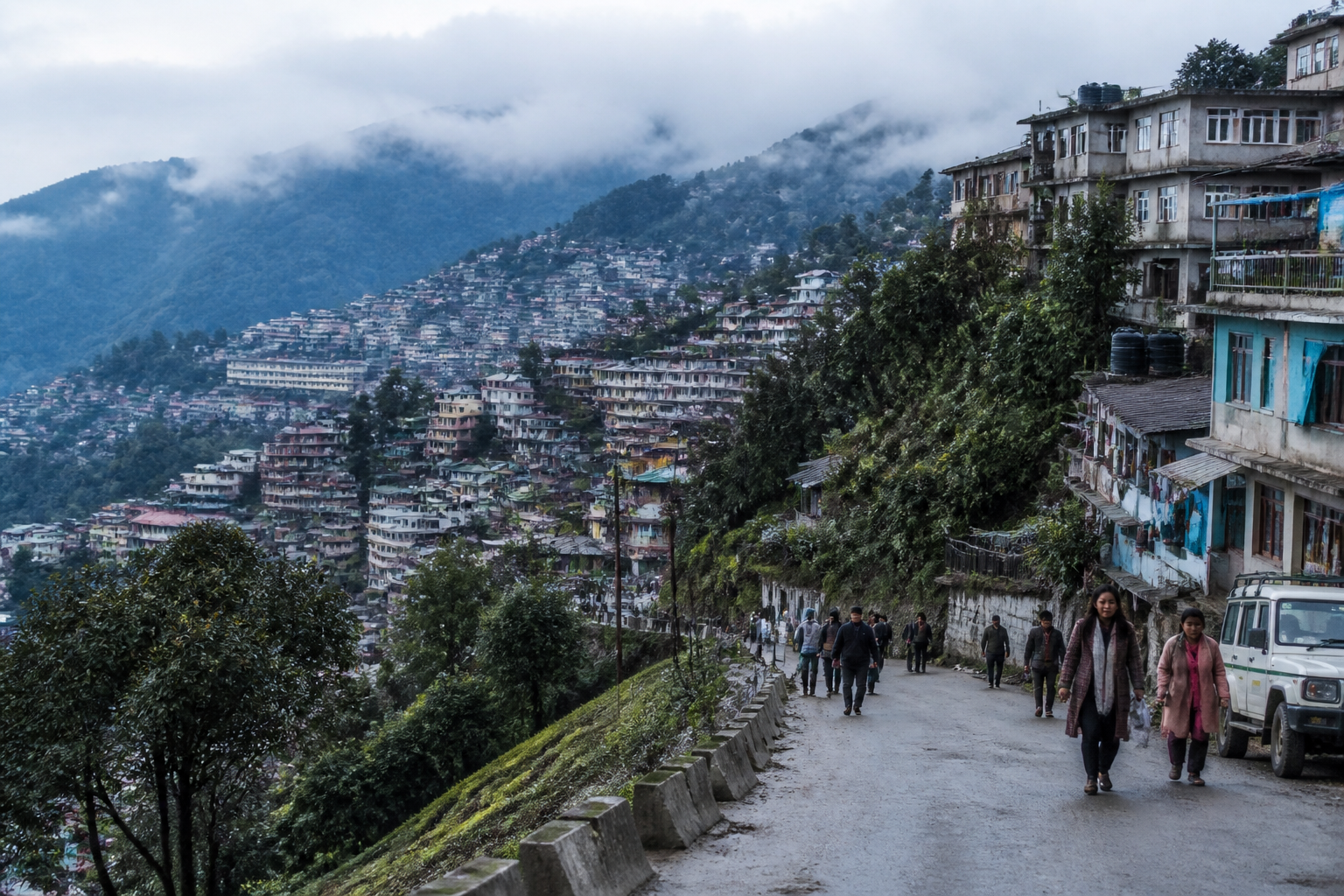
The demand for constitutional territorial autonomy in the Darjeeling hills received a fresh political push on Sunday, with CPM state secretary Md Salim linking the issue to residents’ access to education, drinking water, employment and safety. Salim accused the BJP-led central government of diverting attention from these basic concerns through temporary administrative measures rather than addressing the underlying demands of hill residents.
Speaking to the media after a meeting of CPM workers from the Darjeeling and Kurseong subdivisions at Kalamandir in the hill town, Salim called for a “permanent political solution” within the framework of the Indian Constitution. He said the CPM had consistently supported territorial autonomy as a way of resolving the political demands raised by residents of the hills.
Salim alleged that the Centre had used the appointment of interlocutors and the creation of task forces to manage the issue without resolving what he described as the basic rights of hill residents. “The BJP and central government are not sincere about redressing the basic issues of the hill residents. Instead, they are dangling lollipops, sometimes by appointing an interlocutor, or by forming a task force, to divert their attention from the very basic rights,” he said.
The concerns cited by Salim extend beyond the question of political representation. His remarks placed public services and everyday security at the centre of the Darjeeling hills debate, identifying proper education, reliable drinking water, employment opportunities and safety as unresolved issues for residents. The report did not provide specific figures on service coverage, employment or water access, nor did it include a response from the central government to the allegations.
Salim also accused the BJP and the Rashtriya Swayamsevak Sangh of failing to follow what he described as the Constitution’s principle of “Unity in Diversity”. He alleged that democratic rights had been curtailed in Bengal, Bihar and Delhi, broadening his criticism beyond the Darjeeling hills and placing the regional autonomy demand within a larger political argument about constitutional governance.
Saman Pathak, secretary of the CPM’s Darjeeling district committee, said the party was seeking the “highest form of regional autonomy” with a constitutional guarantee. “Only that highest form of autonomy will ensure the basic rights of the hill people and we will continuously keep on raising the issue,” Pathak said.
The CPM’s position therefore combines a demand for a constitutional arrangement with claims about deficits in essential services and local rights. The immediate next step identified by the party is to continue raising the demand for the highest form of regional autonomy and a constitutional guarantee for the hill people.
