


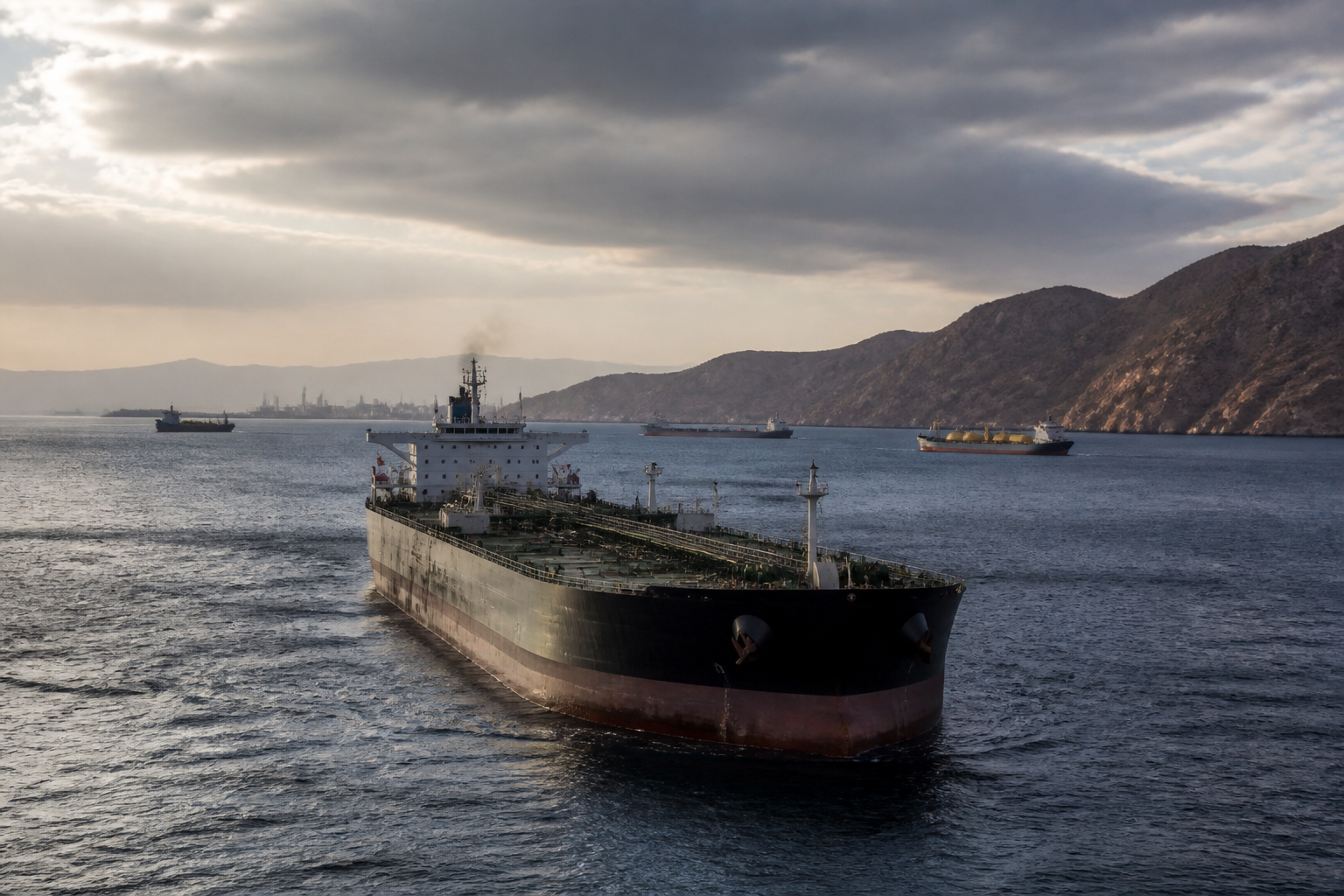
India’s tanker costs have more than doubled in about two weeks as hostilities around the Red Sea and Strait of Hormuz disrupt shipping routes, exposing how dependent the country’s energy security remains on a small number of maritime chokepoints. Daily charter hire rates for tankers travelling to India have risen 150%, from about $100,000 to $250,000, according to people familiar with the developments cited in the report.
The increase is not an isolated freight-market movement. It is the combined result of higher operational, fuel and insurance costs at a time when West Asia supplies about 30% of India’s current oil and gas imports. Bunker fuel prices have risen 50% to $900 a tonne, while insurance costs have increased 20%. Together, these increases raise the cost of bringing crude and other energy supplies to Indian refineries, even before the price of the commodity itself is considered.
The immediate trigger is the worsening security situation around two passages that connect major energy-producing regions with global markets. Houthi forces have seized Yemen’s Red Sea port city of Mocha and advanced towards the Bab el-Mandeb Strait, reaching Perim, or Mayun, Island, according to the report’s references to Reuters and other reports. At the same time, traffic through the Strait of Hormuz remains severely disrupted.
These developments matter because the Bab el-Mandeb and Hormuz are not simply geographic features. They are operating points in the global energy supply chain. A disruption at either location can force ships to wait, avoid a route, pay higher war-risk premiums or undertake longer voyages. For India, which imports a substantial share of its crude oil and gas, that translates into higher delivered costs and greater uncertainty for refiners, importers and public finances.
Anil Devli, chief executive of the Indian National Shipowners’ Association, said the situation had “completely reversed” over the previous week. He said seafarers were now reluctant to take the Strait of Hormuz route, with ships being attacked and sunk and seafarers killed, whereas earlier vessels had mainly been disabled or prevented from moving. His remarks indicate that the current disruption is affecting the willingness of operators to sail, not just the price of insurance.
The distinction is important. Shipping markets can absorb a higher premium when vessels continue to move through a route. They become more difficult to manage when owners, crews, insurers and charterers begin treating the route as operationally unacceptable. At that point, the adjustment is no longer limited to a surcharge. It can involve route diversions, longer transit times, fewer available vessels and additional pressure on port and refinery planning.
A likely diversion of tankers carrying Saudi Arabian oil around the Suez Canal would add about two weeks to the voyage, according to shipping industry executives cited in the report. That longer journey would tie up vessels for more time and could reduce the effective availability of tanker capacity. The report links this possibility to further pressure on global oil prices, which were already near four-month highs, with benchmark Brent crude close to $105 a barrel.
India’s exposure is visible in the import numbers. The country’s crude import bill for April-July of the current fiscal year had reached $63.37 billion, 56% higher than a year earlier. The figure compares with a total oil import bill of $123 billion in the previous fiscal year. The Indian crude basket was recorded at $115.98 a barrel on September 9, adding to the significance of freight and insurance costs in the overall import equation.
The report also cites an estimate that every $1 increase in crude oil prices raises India’s annual import bill by ₹18,000 crore. This makes maritime disruption a macroeconomic issue rather than a concern limited to shipping companies. A higher import bill can affect the external balance, fuel pricing decisions, inflation management and the growth outlook. The report noted that retail inflation had risen to a 19-month high of 4.45% in July, although it did not establish how much of that movement was attributable to the latest shipping disruption.
The pressure has emerged after tanker rates had eased considerably. Devli said rates had fallen to around $70,000-80,000 a day about two months earlier, before rising to the current level. The movement from those lower rates to $250,000 shows how quickly security conditions can change the economics of maritime transport. It also demonstrates why energy-importing countries can face cost escalation even when the physical supply of crude has not yet been shown to stop.
There is a second layer of uncertainty in the market. An executive with a refiner, whose identity was withheld, said the latest developments threatened to halt the revival of supplies and that Russian crude was in some instances being sold at a premium. A UAE-based DP World executive said there was very limited ship movement around the Strait of Hormuz and that vessels able to move were paying substantially higher war-risk premiums.
The evidence supplied in the report does not establish that Indian refineries are facing an immediate physical shortage. Nor does it provide a confirmed estimate of how much of the additional tanker cost has been passed through to domestic fuel prices. That distinction matters. Freight rates can rise before consumers see a direct price effect, while refiners may respond through inventory management, sourcing changes or commercial agreements. The report does, however, establish that the cost and risk of moving energy to India have increased sharply.
India has already attempted to strengthen one part of this system through the Bharat Maritime Insurance Pool, launched by the Centre in May. The facility has a capacity of $1.5 billion and carries a sovereign guarantee of $1.4 billion, with the stated purpose of facilitating continuous maritime insurance coverage. Such a mechanism addresses the availability of insurance during a crisis, but it does not remove the underlying risks faced by crews, vessels, ports or cargo owners.
The limits of that support are reflected in the current operating picture. An executive with an Indian shipping company said Indian ships were not currently using the affected routes and therefore were not using the insurance support. This suggests that insurance capacity can support continuity only when operators are prepared to sail. It cannot, by itself, restore confidence in a route where attacks, deaths and vessel losses are reported.
The institutional response also remains incomplete in the supplied account. Queries sent to the ministries of ports and petroleum, as well as Indian Oil Corporation, Bharat Petroleum Corporation and Hindustan Petroleum Corporation, had not received responses. The absence of a public response from these agencies leaves several operational questions open, including the extent of current route avoidance, the status of crude inventories, the exposure of state-run refiners to higher freight costs and the government’s assessment of maritime insurance requirements.
For India, the central policy issue is therefore broader than securing an alternative tanker route. It is the resilience of an import system that depends on uninterrupted access to distant energy suppliers, international shipping capacity, affordable insurance and functioning regional security arrangements. When any one of those conditions weakens, the effect travels through freight markets, refinery procurement and the national import bill.
The current episode also shows why energy security cannot be measured only by the number of suppliers or the volume of strategic stocks. The location of supply, the route taken by vessels, the availability of tankers and the willingness of crews and insurers to operate are equally important. The report provides evidence of stress across each of these logistical layers, although it does not quantify the duration of the disruption or its final impact on Indian fuel prices.
What is established is that tanker hire rates have risen to $250,000 a day, bunker fuel has reached $900 a tonne, insurance costs have increased, and Indian crude imports are already carrying a much larger bill than a year earlier. What remains uncertain is whether the disruption will persist, how much supply will be rerouted through the Suez Canal, and whether the Bharat Maritime Insurance Pool will be used at scale. Those indicators will determine whether the present shock remains a freight-market crisis or develops into a wider energy and inflation problem for India.
