


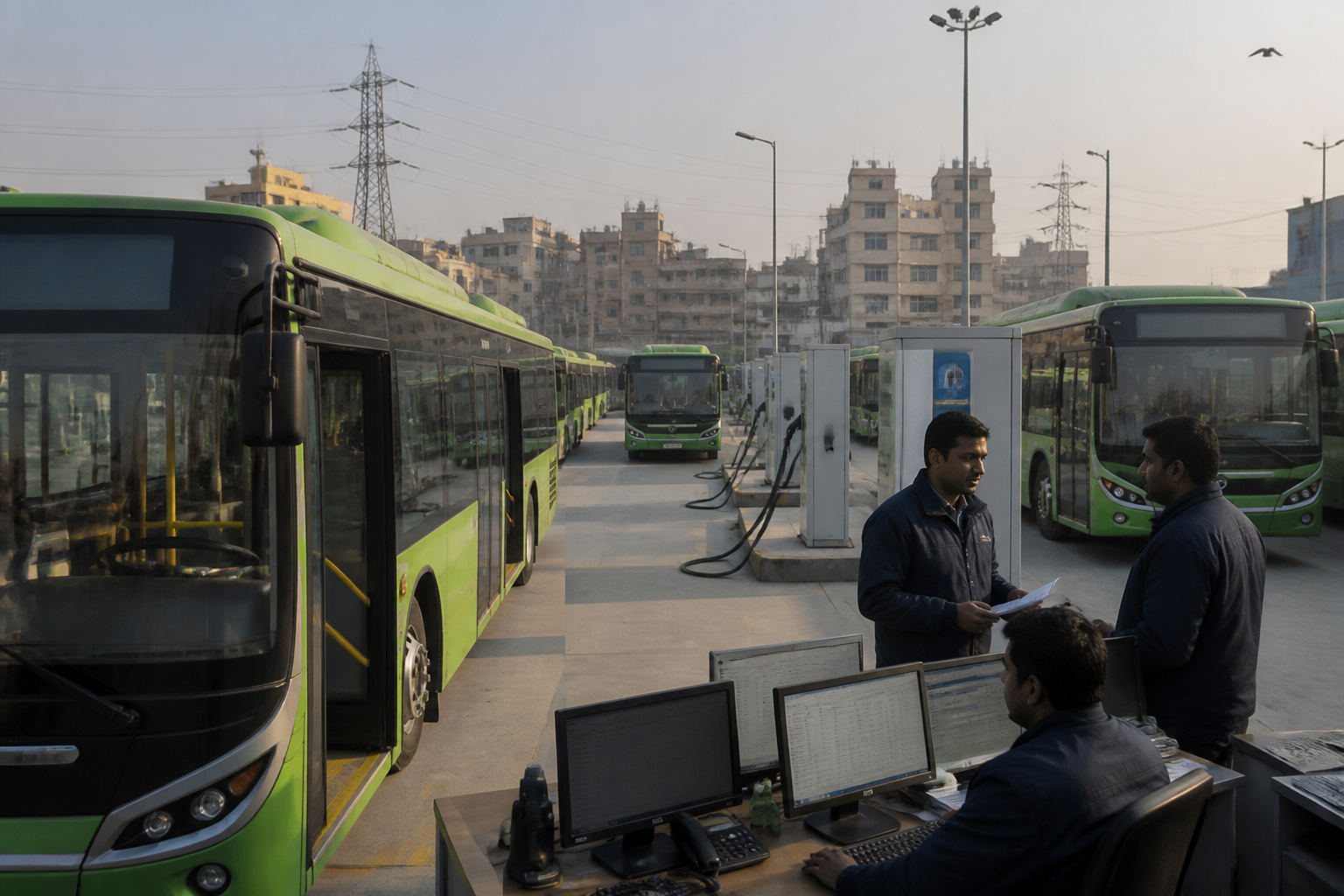
The Delhi Transport Corporation is planning an artificial intelligence-driven system to monitor bus operations, improve punctuality and manage maintenance as the city prepares to expand its public transport fleet, according to a report by Millennium Post.
The corporation has invited proposals to assess its existing Bus Management System and develop an upgraded platform based on artificial intelligence and machine learning. The proposed system is intended to bring fleet, ticketing, crew and depot operations under a single digital framework.
Delhi’s government has set a target of increasing the city’s bus strength to 14,000 by 2028-29. It has also indicated that the number of bus depots could rise to around 90. The DTC currently operates around 6,269 buses, including more than 4,500 electric buses, from 52 depots across Delhi.
The proposed platform will manage the allocation and tracking of Electronic Ticketing Machines. This will include assigning machines to specific buses, drivers, conductors and duties, along with recording their issuance, return and usage. The system is also expected to integrate with fare collection systems so that ticketing information can be synchronised and revenues reconciled digitally.
The proposed digital integration would reduce reliance on manual processes in areas that require coordination across buses, crews and depots. The system is also expected to respond to real-time route changes, including diversions or alterations ordered by traffic authorities.
Electric-bus operations are another major component of the plan. The proposed system is expected to use artificial intelligence to optimise charging schedules and battery usage. The corporation has not disclosed, in the report, the proposed technology provider, project cost or implementation timeline.
Other planned features include predictive maintenance, detection of operational irregularities, passenger-count monitoring and CCTV-based surveillance. The platform is also expected to analyse traffic and historical journey data to improve estimated arrival times and anticipate delays.
The system would further assist with route planning, fleet allocation, depot allocation and crew scheduling. These functions are currently part of the operational challenge created by managing a large and expanding bus network across multiple depots.
The planned technology upgrade comes as the DTC prepares for a substantial increase in fleet capacity. The scale of the proposed expansion means that the corporation’s ability to track vehicles, manage charging requirements, reconcile fares and schedule staff will become increasingly important to daily service operations.
The immediate next step is the assessment of the existing Bus Management System and the development of proposals for the upgraded AI-enabled platform. Further details on procurement, costs, implementation stages and operational rollout are expected after the proposal process advances.
