


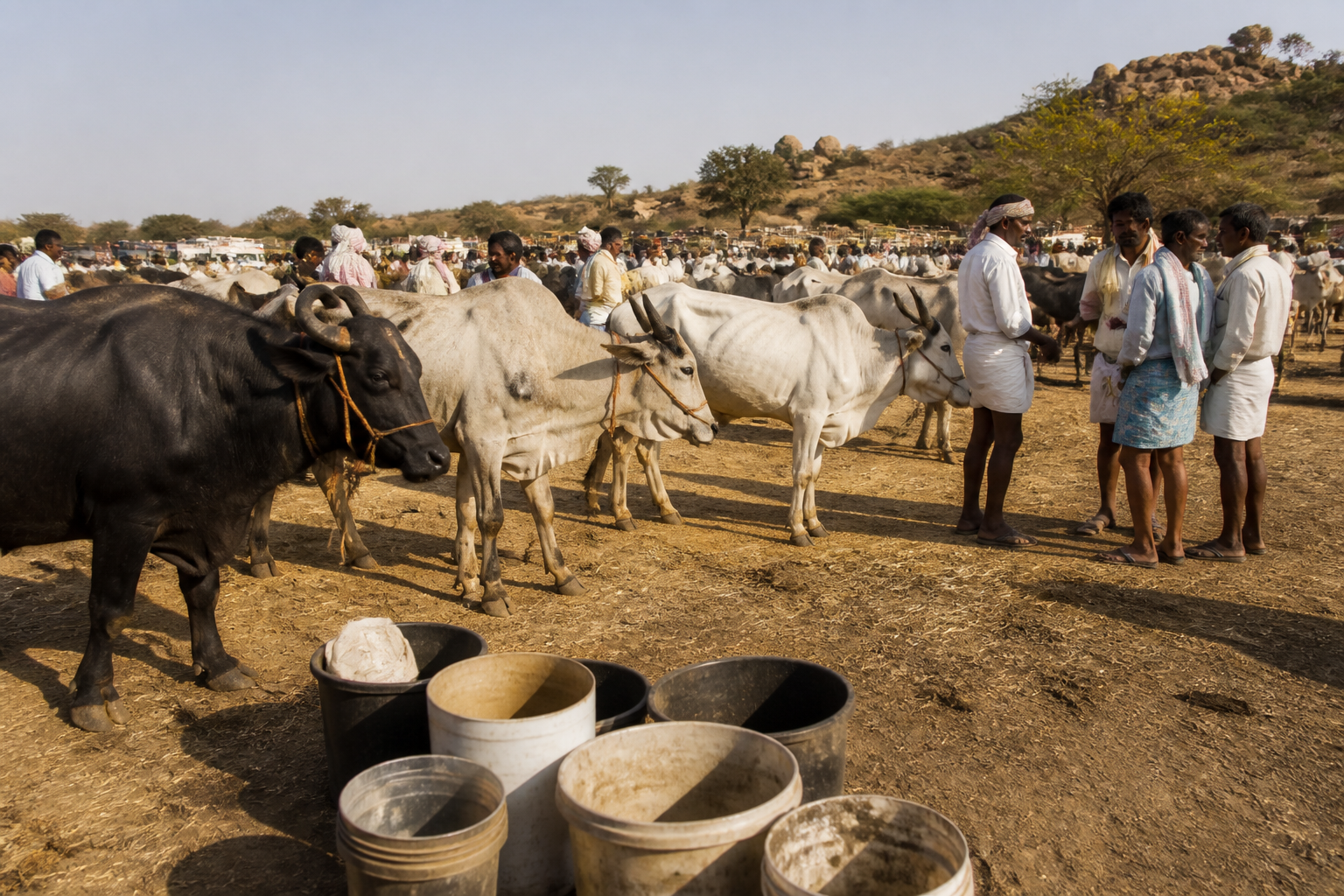
Andhra Pradesh drought conditions are forcing farmers in Anantapur to sell cattle at steep losses as villages face shortages of drinking water and fodder, according to farmers who spoke to a CPI delegation visiting the Anantapur market yard on Sunday.
One farmer, Thimmappa, was reportedly attempting to sell cattle valued at around ₹80,000 for ₹30,000 after being unable to afford their upkeep. Other farmers told the delegation that animals purchased for about ₹80,000 were attracting few buyers even at prices close to ₹30,000.
The delegation was led by CPI national secretary K Ramakrishna, who met farmers bringing cows, bulls and milch buffaloes to the cattle market. The reported sales point to the immediate pressure created when households cannot secure fodder or water for livestock, which often function as both productive assets and a source of income for rural families.
Ramakrishna attributed the conditions to the El Niño effect and deficient rainfall. He said nearly 300 mandals had been severely affected, with groundnut, red gram, green gram and cowpea crops drying up. Horticulturists were also facing losses after borewells ran dry, according to the report.
The combination of crop failure, depleted groundwater and rising livestock-maintenance costs is affecting more than farm output. For households that depend on cattle for milk, draught work or future sale, distress disposal can reduce their ability to recover when conditions improve. The reported lack of buyers is also worsening the gap between the value farmers paid for animals and the amount they can obtain during the drought.
The CPI delegation demanded that the state government seek a declaration of drought as a national calamity and arrange drinking water and fodder supplies for affected villages. It also sought compensation for crop losses, a waiver of farm loans and fresh credit for farmers facing a liquidity shortage.
Ramakrishna further called for expanded Mahatma Gandhi National Rural Employment Guarantee Scheme works, saying increased employment opportunities were needed to prevent migration from drought-hit areas. The demands place water, livestock support, farm finance and rural employment within the immediate response required by the affected communities.
