


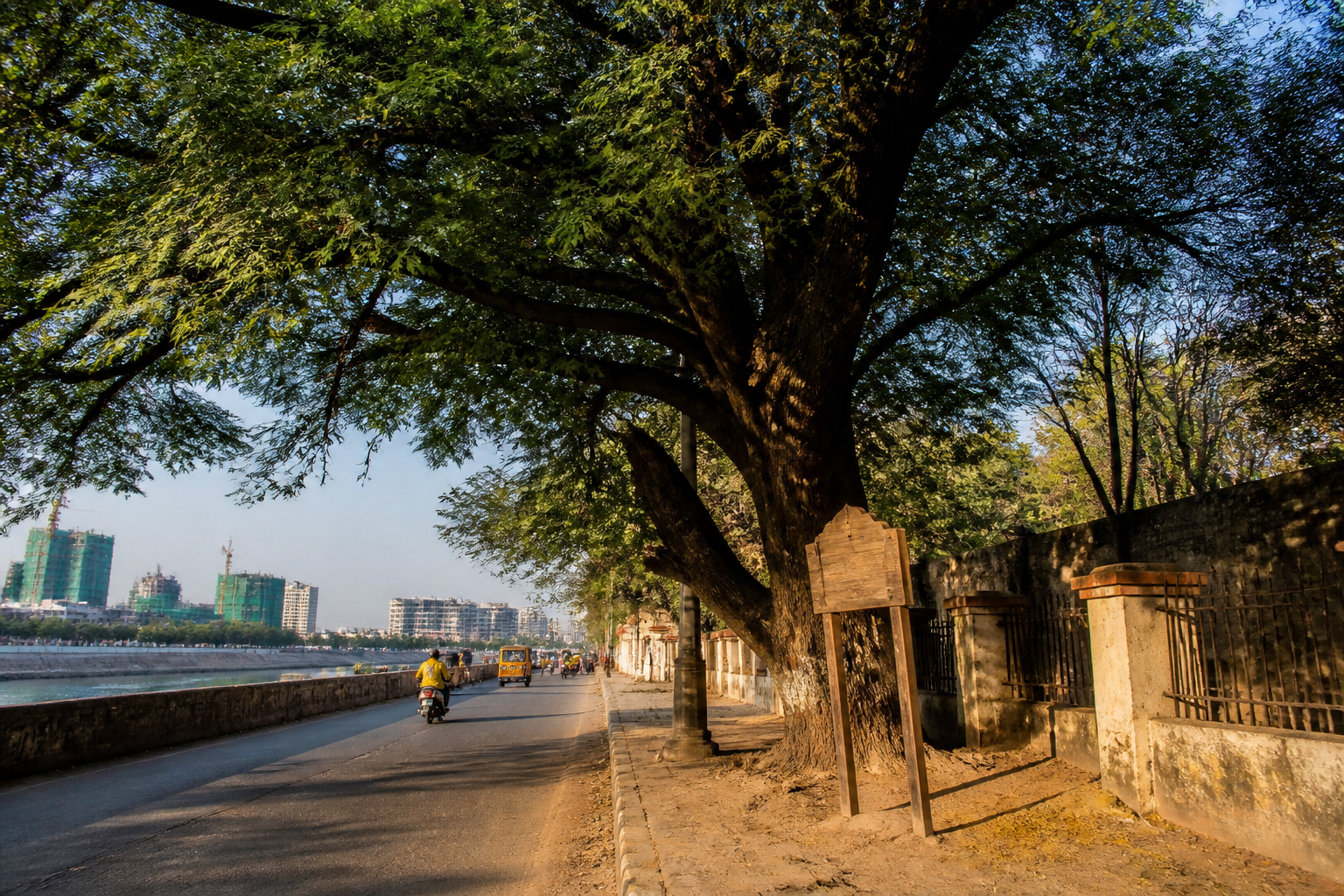
The Musi flood tree is more than a surviving landmark in Hyderabad. It is a physical reminder of the city’s deadliest recorded flood, the scale of destruction caused by the river’s rise in 1908, and the continuing difficulty of protecting urban memory when roads, hospitals and development plans compete for space.
On September 28, 1908, Hyderabad received around 17 inches of rain and the Musi River rose to nearly 15 feet above its banks. Several parts of the city were inundated, thousands of people were killed and more than 80,000 houses were damaged, according to accounts cited in reports about the disaster. Afzal Gunj, Ghansi Bazar and Kolsawadi were among the badly affected areas, while several bridges across the river were washed away.
The flood was not only a historic catastrophe. It also revealed the vulnerability of a city built around a river whose behaviour could rapidly overwhelm homes, bridges and public institutions. The surviving tamarind tree, located within the compound of what was then Afzalgunj Hospital and is now Osmania General Hospital, connects that moment of extreme risk to the present-day urban landscape.
Around 150 people climbed into the tree as floodwaters rose around them. They remained there for two days, holding on to its branches and waiting for the water to recede. They had no food during that period, according to the historical accounts. The hospital itself was severely damaged by the flooding, making the tree’s location significant not only as a site of survival but also as part of a wider public-institutional landscape affected by the disaster.
A wooden board on the trunk records that the tree saved around 150 people during the 1908 Musi flood. In 2002, Hyderabad’s then collector Rajeshwar Tiwari named it ‘Prana Dhatri’, meaning giver of life. The official act of naming the tree gave a fixed identity to an episode that had otherwise survived through local memory, historical accounts and periodic public remembrance.
## What the Musi flood tree reveals about urban memory
The tree’s importance comes from the overlap of three histories. The first is the history of the 1908 flood and the thousands of deaths and extensive damage associated with it. The second is the history of public memory, expressed through the board on the trunk, the name ‘Prana Dhatri’ and gatherings held at the site. The third is the history of urban change around the Musi, where road widening and development pressures have repeatedly raised questions about what the city is willing to preserve.
That overlap matters because urban heritage is often understood through monuments, buildings or officially designated precincts. The tamarind tree represents a different category: a living object associated with a specific disaster and a documented survival story. Its value is not based only on age or appearance. It lies in the human event connected to it and in the way generations of residents have continued to interpret that event.
The tree also shows how public memory can persist without a clearly established protection framework. In 2008, as Hyderabad marked the centenary of the flood, civil society groups and historians gathered under it to remember those who died. An exhibition of photographs showing Hyderabad before, during and after the flood was also organised. These activities turned the tree into a place of historical interpretation rather than a roadside curiosity.
Yet remembrance did not automatically secure protection. In the same year, plans to widen roads along the Musi raised concerns that the tree could be cut down. Officials said it could not be relocated, while heritage activists sought its protection and argued that it deserved heritage status because it had saved human lives.
## Development pressure and the limits of relocation
The road-widening controversy exposed a basic problem in conserving living heritage within a changing city. A building can sometimes be repaired, fenced or adapted. A mature tree rooted in a particular place cannot be shifted without risking the loss of the very ecological and historical conditions that make it meaningful. In this case, officials reportedly said relocation was not possible, while activists pressed for protection at the existing site.
The issue was therefore not simply whether the tree could physically survive a construction project. It was whether a transport or road intervention would recognise the site as part of Hyderabad’s history before design and execution decisions were made. The available account does not establish that the tree received formal heritage protection. It does establish that activists sought such status and that road widening had created a direct threat.
This distinction is important for urban governance. Public authorities may acknowledge the cultural value of a site through naming, commemorations or signage, but those measures are different from legally or administratively enforceable protection. The story of the Musi flood tree shows the gap that can emerge between recognition and safeguarding.
The tree’s condition became another concern in 2019, when fungal growth was found around its trunk. Its deteriorating condition prompted calls for greater protection. This shifted the problem from possible removal caused by infrastructure work to the slower risks of neglect, biological damage and inadequate maintenance.
Together, the two threats—road widening and deterioration—show why heritage protection cannot be reduced to preventing demolition. A living landmark also requires monitoring and care. The source account does not identify a long-term conservation plan, a designated custodian or a formal maintenance arrangement for the tree. That absence is itself significant because the site’s survival depends on more than public sentiment.
## The flood as a continuing urban question
The 1908 disaster is remembered through large numbers: around 17 inches of rain, a river rise of nearly 15 feet, thousands of deaths and damage to more than 80,000 houses. These figures convey the scale of the event, but the tree gives the disaster a human scale. It represents approximately 150 people who survived by climbing into its branches and remaining there for two days.
That contrast between citywide destruction and individual survival is central to the tree’s meaning. Flood histories are often told through damaged infrastructure, death tolls and property loss. The tree adds another layer: the improvised decisions people made when buildings, roads and bridges were no longer safe. It preserves a story of how residents responded when the city’s formal structures failed to protect them.
The account also places the flood within a network of critical urban infrastructure. Bridges across the Musi were washed away. The hospital was severely damaged. Houses across several localities were affected. The river was therefore not an isolated environmental feature; it was connected to movement, housing, healthcare and the functioning of the city.
That connection remains relevant to how historic floods are interpreted. A disaster becomes an urban governance issue when water affects multiple systems at once. The 1908 flood disrupted homes, bridges and a hospital in a concentrated area. The surviving tree does not provide a complete account of the disaster, but it anchors that interconnected history in a visible location.
The source material does not establish how current flood-management arrangements compare with those of 1908, nor does it provide present-day rainfall, river-level or drainage data. Those questions require separate evidence. What can be established is that the Musi flood remains part of Hyderabad’s civic memory and that the tree continues to serve as a site through which residents recall the consequences of the river rising over its banks.
## From centenary remembrance to present-day neglect
The tree’s public life did not end with the 2008 centenary. In 2023, residents gathered at the ‘Saviour Tamarind Tree’ to remember those who lost their lives in the 1908 floods. The gathering demonstrated that the site still carries meaning more than a century after the event.
But commemoration also highlights the limits of memory without institutional continuity. A city can remember a disaster annually or at important milestones while the physical site associated with it deteriorates. The 2019 concern over fungal growth suggests that the tree’s historical value did not, by itself, guarantee regular care.
This is where the tree’s story becomes a question of administrative responsibility. The account records the involvement of a collector in naming the tree, officials’ position on relocation, heritage activists’ demands and residents’ commemorative gatherings. It does not identify a single institution with clear, continuing responsibility for protection. The tree’s location within the compound of Osmania General Hospital further complicates that question because the site is simultaneously a hospital environment, a public space and a heritage marker.
Without clear responsibility, different forms of value can remain disconnected. Hospital authorities may view the site through the needs of a functioning medical campus. Road agencies may view the surrounding area through circulation and widening requirements. Heritage groups may prioritise historical continuity, while residents may value the place as a memorial. The supplied account does not document how these interests were resolved, but the repeated threats indicate that recognition alone has not ended the conflict.
## A living marker of Hyderabad’s flood history
The Musi flood tree survives because its branches once offered refuge to people trapped by rising water. It has continued to survive through road-widening concerns, questions over heritage status, fungal growth and the pressures of an expanding urban environment. Each stage has added to its significance.
Its story confirms three facts. First, the 1908 Musi flood was a citywide disaster that damaged homes, bridges and a major hospital while killing thousands. Second, the tamarind tree has remained a tangible site of survival and remembrance, associated with around 150 people who sheltered in it for two days. Third, the tree’s continued presence has not removed the need for formal protection and maintenance.
What remains uncertain from the available account is whether the tree has received statutory heritage status, which agency is currently responsible for its upkeep and what conservation measures have been implemented since concerns were raised about fungal growth. Those are the next questions for any fuller assessment of the site.
More than a century after the Musi overflowed its banks, the tree stands as a reminder that urban disasters are remembered not only through records and statistics. They are also carried by places—sometimes fragile, living places—that connect the city’s past failures, its public institutions and its continuing choices about what to protect.
