


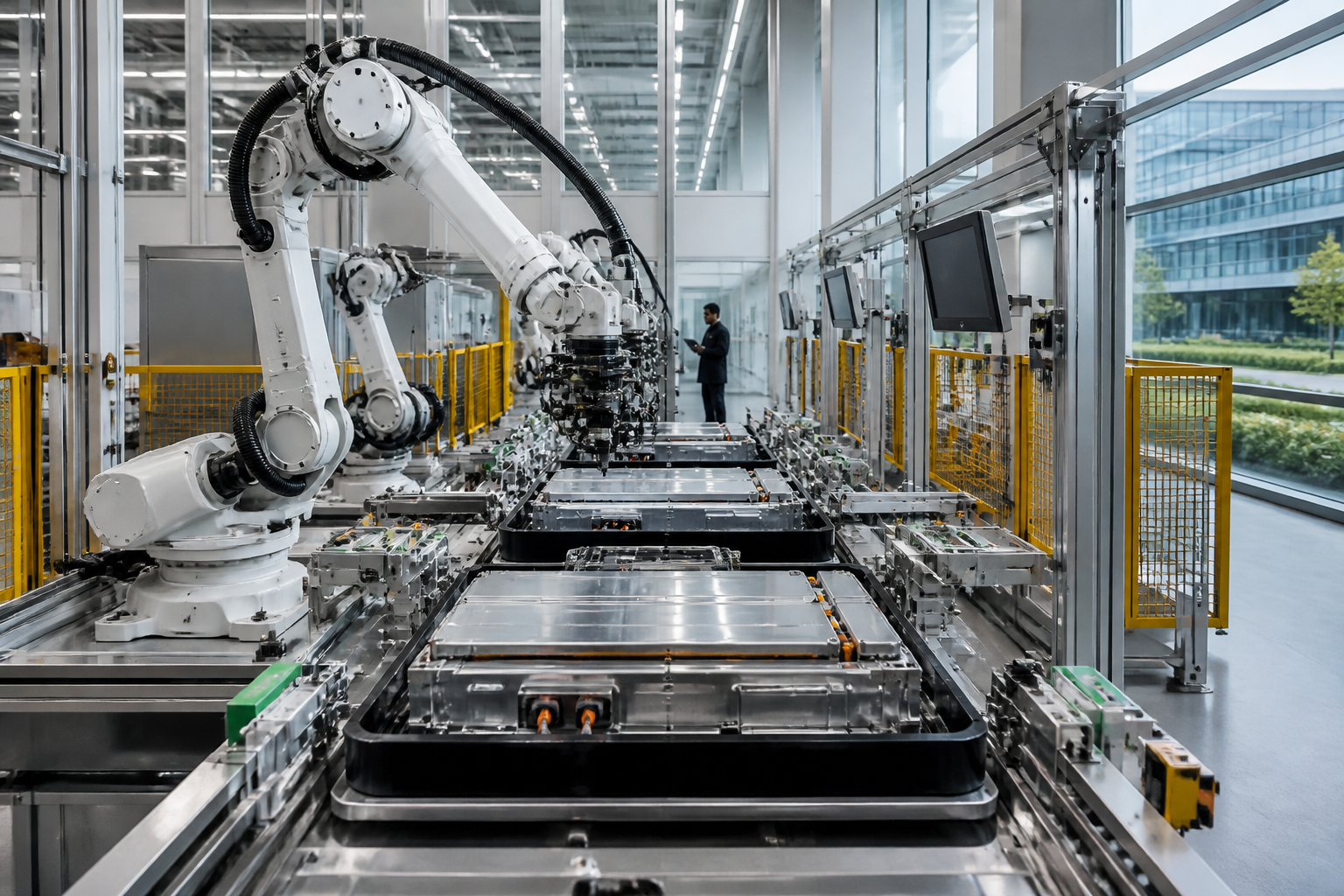
PUNE | September 9, 2026 — TCS has launched an Industrial Autonomy & Engineering Lab at its Sahyadri Park campus in Pune, describing the facility as India’s first lights-out factory lab aimed at advancing artificial intelligence-led manufacturing.
The announcement was made by Tata Consultancy Services on Wednesday through a regulatory filing. The facility includes a fully robotic battery pack assembly line designed to demonstrate how autonomous systems can operate a manufacturing process with minimal human intervention.
A lights-out factory is a manufacturing facility in which autonomous systems run production lines with limited human involvement. TCS said its new Pune lab will allow manufacturers to prototype, validate and scale AI-first production systems in a live, multi-stage setup while reducing the risks associated with deployment.
The facility combines digital twins, robotics, industrial artificial intelligence, factory control systems and real-time operational intelligence. TCS said the setup simulates how self-optimising factories can automate workflows and coordinate production activities.
“With our state-of-the-art TCS Industrial Autonomy & Engineering Lab Lights-Out Factory, we are advancing TCS’ vision of engineering AI-first production systems,” Sreenivasa Chakravarti, Global Head and Vice President of Industrial Autonomy and Engineering at TCS, said in the company’s statement. “We have built a facility that can help customers turn their aspiration of lights-out manufacturing into a reality.”
Chakravarti said the lab would demonstrate how a “Human + AI” model could help enterprises move from digitally enabled operations towards increasingly autonomous production systems. The statement did not disclose the investment in the facility, its employee strength or the number of manufacturers expected to use the lab.
The Pune facility will support industrial applications including predictive maintenance, automated quality inspection, real-time process optimisation, human-machine collaboration and autonomous factory operations. These use cases cover both the monitoring of industrial equipment and the automation of production-related decisions.
The launch adds an industrial automation facility to Pune’s technology and engineering ecosystem, although TCS did not specify whether the lab would support a particular manufacturing sector beyond the battery pack assembly demonstration. The company also did not announce a public commissioning date for customer projects or provide an implementation timeline for moving systems tested at the lab into operating factories.
TCS’s next stated step is to use the facility to help manufacturers prototype, validate and scale AI-first production systems across the listed industrial use cases.
