


Rakesh Mehta’s Delhi Legacy Runs Through Transport and Civic Reform
The former Delhi chief secretary and municipal commissioner’s career reflected a period when the capital was attempting to modernise its transport systems, civic administration and public interface ahead of the 2010 Commonwealth Games.
Standfirst: Former Delhi chief secretary Rakesh Mehta, who was found dead at his rented flat in Noida on Sunday, held several positions at the centre of Delhi’s urban administration. His record included senior responsibility at the Municipal Corporation of Delhi, the Delhi Transport Corporation and the power department, followed by a tenure as chief secretary during preparations for the Commonwealth Games. The available account of his career points to a bureaucratic model focused on large public projects, transport reform, administrative visibility and technology-enabled services. It also illustrates how senior civil servants can shape the direction of a city through successive institutional roles, even when the changes they oversee are later absorbed into everyday urban life.
The immediate event was the death of Mehta, a 74-year-old 1975-batch AGMUT-cadre IAS officer, at his rented flat in Sector 82, Noida. Police recovered a one-page note that referred to his illnesses and stated that no one was responsible for his death, according to the report. A forensic team examined the flat, evidence was collected and the body was sent for an autopsy. The family had not lodged a complaint by late Tuesday, while police said an inquiry had been initiated into the circumstances surrounding the death.
Those facts remain separate from the larger public record of Mehta’s work. His relevance to Delhi’s built environment and urban systems comes from the range of positions he held before and during his time as chief secretary. He served as commissioner of the Municipal Corporation of Delhi, chairman and managing director of the Delhi Transport Corporation, and secretary in the power department. These roles placed him across three essential layers of city administration: local government, public mobility and utilities.
That institutional range matters because urban change rarely comes from a single department. Roads, buses, building permissions, electricity supply and civic services are experienced together by residents, even when they are administered by separate agencies. A senior official who moves between these institutions can influence how those systems are coordinated, how quickly projects are advanced and how government communicates with citizens. The account of Mehta’s career presents him as a bureaucrat whose influence extended across precisely these connected areas.
His tenure as Delhi chief secretary began in December 2007, during the government of then chief minister Sheila Dikshit, and continued until 2010. The period coincided with preparations for the Commonwealth Games, described in the report as one of the biggest administrative challenges faced by the capital. The Games created a fixed deadline for infrastructure works and public-facing improvements, bringing intense administrative attention to transport, roads, civic facilities and project delivery.
The supplied account does not provide a complete inventory of the projects overseen during that period, nor does it quantify their costs, delays or outcomes. It does, however, place Mehta in a central administrative position while Delhi was managing a concentrated programme of urban preparation. That distinction is important. It allows his role to be examined as part of the city’s governance structure without attributing every Games-related decision or project to one official.
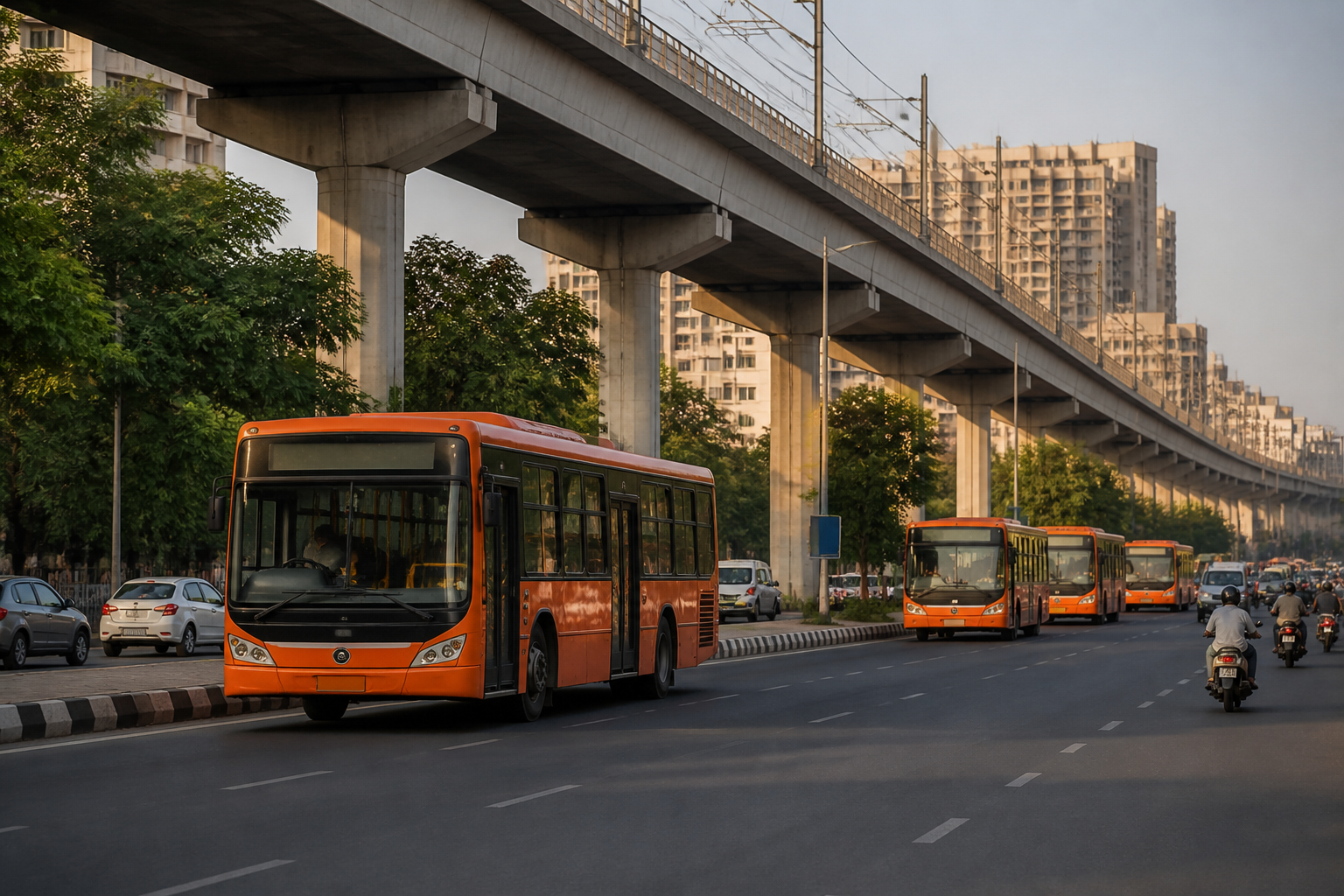
Public transport was one of the clearest parts of Mehta’s reported urban legacy. During his tenure at the Delhi Transport Corporation, he oversaw the transition away from the accident-prone Blue Line buses and the introduction of low-floor buses. The low-floor vehicles later became a familiar feature on Delhi’s roads. The change represented more than a fleet replacement: it altered the physical interface between the bus system and its passengers, including the height of entry and the design of the vehicles used on city routes.
The source material does not provide figures for the number of buses introduced, the dates of individual procurements, changes in ridership or the effect on accident rates. It therefore cannot establish the full operational impact of the transition. It does establish that Mehta held responsibility at DTC during a visible change in the capital’s bus system, and that the low-floor fleet became associated with the next phase of Delhi’s public transport experience.
The episode also shows how transport reform becomes part of a city’s everyday visual and functional landscape. Large infrastructure projects are often easier to identify as milestones, but changes to bus fleets can affect a much larger number of routine journeys. They influence how residents board vehicles, how buses operate on crowded roads and how a public agency presents itself. In this case, the report links Mehta’s tenure at DTC to a change that remained recognisable on Delhi’s streets after the administrative period ended.
As chief secretary, Mehta was described as media-savvy and focused on new projects and administrative reforms. He unveiled a 10-point agenda and advocated greater transparency in civic administration. He also backed changes to building bylaws and promoted technology to make government services more accessible to citizens. These areas point to three recurring pressures in urban governance: the need to regulate construction, the need to make municipal decision-making more transparent and the need to reduce the distance between public agencies and residents.
Building bylaws are particularly significant because they shape the physical form of cities. They influence what can be built, how land is used and the conditions under which construction receives approval. The report does not specify which provisions Mehta sought to change or whether those changes were implemented in full. It would therefore be inaccurate to describe his tenure as having resolved Delhi’s construction or planning challenges. What can be said is that building regulation was part of the reform agenda associated with his administration.
The same caution applies to technology-enabled public services. The report says Mehta promoted the use of technology to make government services more accessible, but it does not identify the platforms, departments or measurable results involved. The significance lies in the administrative direction: civic services were being considered not only as internal government functions but also as interfaces that residents should be able to access more easily.
Mehta’s career therefore illustrates the importance of administrative continuity in cities. The agencies he led or worked with have different mandates, but they collectively determine many of the conditions under which urban life operates. Municipal corporations manage local services and regulation. Transport undertakings connect residents to jobs and institutions. Power departments support the functioning of homes, businesses and public infrastructure. The chief secretary’s office sits above several of these systems, coordinating the state administration’s work across departments.
At the same time, the available material reveals the limits of a personality-centred account of urban change. It identifies Mehta’s positions, priorities and association with particular reforms, but it does not provide the institutional records needed to assess how policies were designed, contested, funded or sustained after his tenure. Nor does it compare the performance of Delhi’s transport or civic systems before and after the changes described. Those unanswered questions are essential for evaluating outcomes rather than simply recording administrative intent.
The 2010 Commonwealth Games context adds another layer. A major event can accelerate infrastructure decisions by establishing a deadline and concentrating political and bureaucratic attention. It can also make senior administrators highly visible because multiple agencies must work towards a common public objective. Yet the source material does not establish which specific reforms were directly connected to the Games and which were part of longer-running administrative programmes. The distinction should remain clear in any assessment of Mehta’s contribution.
His reported emphasis on transparency, building bylaws, technology and public transport reflects the broad range of urban governance challenges Delhi faced. These issues remain connected even when they appear in separate policy debates. Transport affects access to work and services. Building rules determine the pattern and density of development. Power supply supports both formal and informal urban activity. Municipal transparency shapes how residents understand and challenge decisions that affect their neighbourhoods.
The circumstances of Mehta’s death are being handled separately by police, with an inquiry initiated and forensic procedures completed according to the report. His family described a history of hypertension, diabetes and other health problems, including tremors in his right hand and leg. Those details provide context but do not determine the findings of the inquiry. The report says his final rites were held in Delhi on Monday.
What the available evidence confirms is a public career spent at the intersection of Delhi’s transport, municipal, utility and administrative systems. It records a senior official who worked during a period of intense city-building activity and who was associated with changes in bus design, civic administration, building regulation and public-service access. What remains less established is the precise scale, durability and institutional authorship of those changes. Any fuller assessment would require official records, transport data, planning documents and administrative evaluations beyond the supplied report.
For Delhi, the broader lesson is that urban transformation is often carried through institutions rather than individual projects alone. Officials may become associated with visible changes, but the lasting test lies in whether agencies retain the capacity, rules and public accountability needed to maintain them. Mehta’s career provides a window into one phase of that process; the documentary record will determine how much of that legacy can be measured.
