


Subheadline: Equifax data shows younger, rural and informal borrowers are driving new credit growth, while lenders face pressure to assess risk beyond conventional income records.
Standfirst: India’s retail credit market is entering a new phase in which the next major borrowers are less likely to come from salaried households in the largest cities and more likely to be found in smaller towns, rural communities and digitally connected informal economies. According to Equifax India’s latest Aspirational India: Retail Credit Market Performance report, aspirational borrowers accounted for 79% of 14 crore retail credit originations between January and March 2026. Semi-urban and rural markets represented 73% of the total credit value extended to this group. The shift is significant not only because it widens access to formal finance, but also because it challenges the assumptions on which conventional underwriting has been built. The evidence cited in the report points to a market where transaction data, digital platforms and alternative measures of income may become as important as traditional salary records and collateral.
India’s retail credit market is being reshaped by borrowers entering formal finance through digital channels, smaller-ticket loans and products linked to consumption, mobility and livelihood creation. The change is visible in the reported composition of new borrowers: younger consumers, rural households, informal workers and women entrepreneurs are increasingly accounting for the growth that lenders are pursuing.
Equifax India’s report said these aspirational borrowers represented 79% of India’s 14 crore retail credit originations in January-March 2026, with originations worth ₹19 lakh crore. Semi-urban and rural markets accounted for 73% of the total credit value of aspirational borrowers. The figures suggest that the next expansion of retail finance is not centred only on India’s biggest metropolitan markets. It is also being generated in smaller towns and rural economies where formal credit penetration remains low but digital transactions are becoming more visible.
The report’s figures also indicate the scale of the opportunity. As of June 2026, aspirational borrowers accounted for ₹132 lakh crore in outstanding assets under management, compared with ₹167 lakh crore for the overall retail credit industry. Subhankar Mishra, Interim Managing Director of Equifax India, described the change as a movement from credit expansion towards what he called “credit intelligence”. The distinction matters because reaching new borrowers is only one part of the challenge. Lenders must also determine how to evaluate people whose financial lives are not reflected in a conventional salary slip or a long-established bureau record.
For younger borrowers, credit is increasingly being used before the traditional milestones associated with formal borrowing. The report describes credit as a tool for mobility, consumption and income generation, rather than something reserved for a home or car purchase. Within the Lifestyle Seekers segment, only 1% currently enter formal credit, but those who do have an average initial ticket size of about ₹67,000. Gen Z accounts for 55% of the segment and millennials for 31%, while 68% rely on fintech platforms for products such as consumer loans, two-wheeler finance and credit cards.
This pattern places digital lenders and fintech platforms close to the point at which new borrowers first encounter formal credit. Equifax expects early exposure to buy-now-pay-later products, short-term personal loans and consumer credit to potentially precede larger-ticket borrowing, including automobiles, credit cards and home loans, as borrowers move into higher-income stages of their working lives. The report’s argument is not that every small loan will automatically become a larger one, but that early transactions can help create a more continuous financial identity.
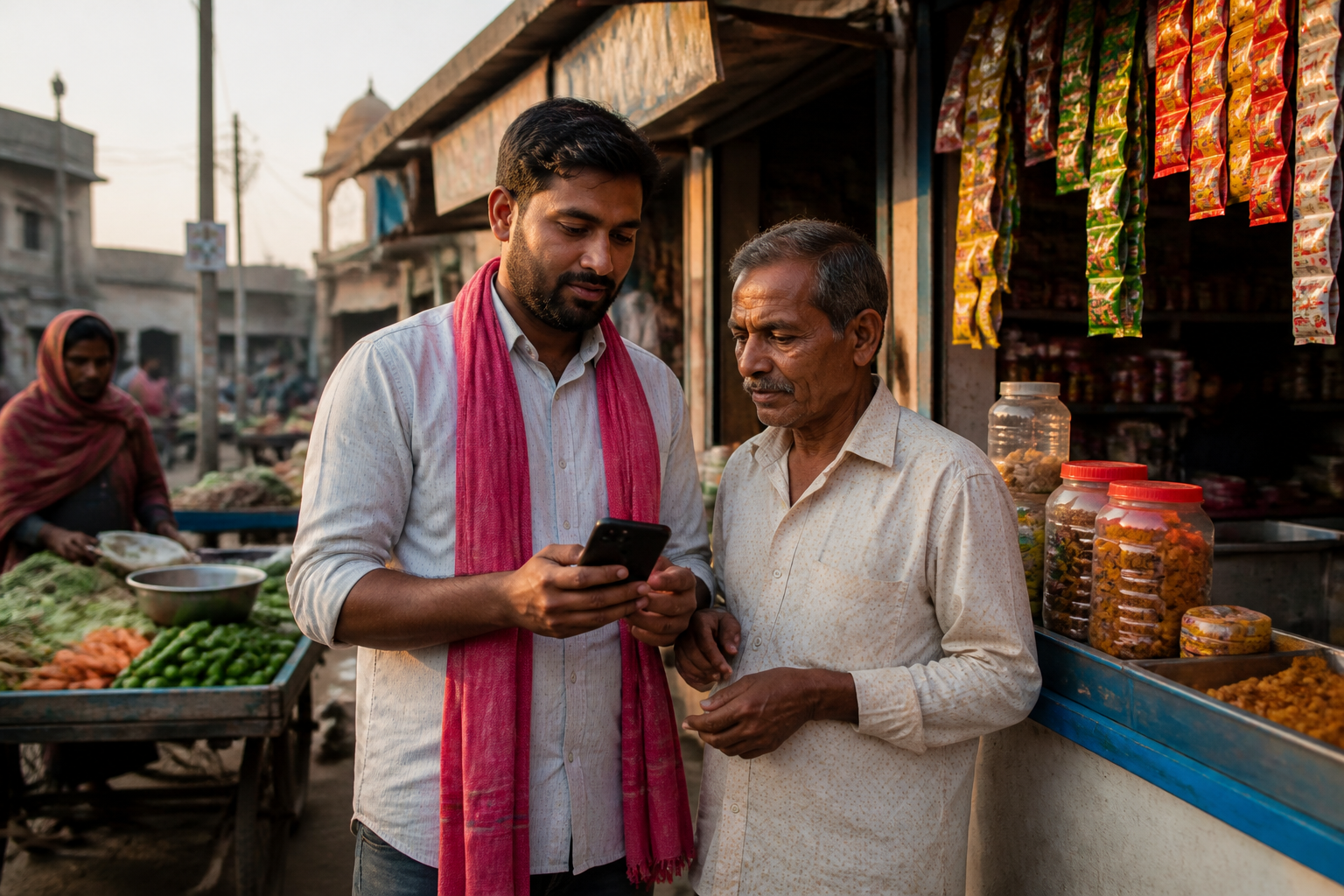
That identity is increasingly being assembled from alternative data. UPI transaction histories, Account Aggregators, the Unified Lending Interface, GST-linked information and other digital records can provide lenders with signals about cash flow and economic activity. For borrowers with irregular incomes, these signals may reveal patterns that a conventional income document cannot capture. The approach is particularly relevant to street vendors, whose daily earnings may vary and whose businesses may not generate standard payroll records.
According to the report, only 1.1% of street vendors currently access formal credit, with an average initial ticket size of ₹44,000. Gen Z borrowers account for about 65% of the segment, while 61% rely on fintech platforms for immediate credit requirements. Equifax recommends using alternative signals such as UPI transactions to assess repayment capacity rather than depending exclusively on salary-style documentation. In practical terms, this changes the lender’s question from whether a borrower has a conventional monthly income to whether the borrower demonstrates a consistent and measurable cash-flow pattern.
The same issue appears in rural credit. Rural Bharat Aspirants have a reported new-to-credit penetration of only 0.7%, despite an average initial ticket size of ₹1.02 lakh. Millennials represent 41% of the segment and women account for 47%. Their credit journeys commonly begin with Kisan Credit Cards, agricultural loans and personal loans, before extending towards gold loans and business credit. The low penetration figure, combined with the reported average ticket size, indicates a sizeable group that is not necessarily too small to borrow but remains insufficiently represented in formal credit systems.
Women-led micro-enterprises are another important part of this emerging market. Emerging Micro-Ventures have a new-to-credit penetration of 2.6% and an average ticket size of ₹1.72 lakh, with women accounting for 78% of the segment. These entrepreneurs are using unsecured business loans and gold loans for inventory, working capital and expansion. Equifax recommends greater use of cash-flow-based underwriting and enterprise credit products that do not depend entirely on land or physical collateral.
The collateral question is central to the rural and small-business opportunity. Land or property-based lending can exclude entrepreneurs who lack formally documented assets, do not own property or need working capital for a business whose value lies in inventory, customer relationships or daily turnover. Cash-flow-based assessment does not remove the need for risk controls, but it changes the type of evidence lenders consider relevant. It also makes the quality, accessibility and consent-based use of digital records more important.
The expansion of digital credit, however, carries measurable risks. The report found that 58.4% of retail debt is unsecured, while 31% of Gen Z consumers have two or more active credit accounts at the time of initial origination. Small-ticket personal loans below ₹50,000 have a reported default rate of 6.4%. Among subprime borrowers, 48% of loan proceeds are allocated towards direct lifestyle consumption. These figures complicate the idea that wider access alone represents financial inclusion. A borrower may be newly included in the formal system while also becoming vulnerable to high repayment pressure or repeated borrowing.
This is why the report places emphasis on responsible underwriting. It recommends structured equated monthly instalment products, transparent credit lines and models that reward responsible repayment rather than simply maximising lending speed or loan frequency. The requirement is especially important when borrowing is delivered through mobile interfaces, where the convenience of approval can make the cost and cumulative burden of credit less visible to consumers.
Artificial intelligence could increase both the reach and the speed of this lending model. Equifax expects AI-driven and agentic lending systems to automate increasingly complex workflows and reduce turnaround times. Combined with Account Aggregators and the Unified Lending Interface, such systems could allow lenders to assess live transactional signals instead of relying primarily on static documents and historical bureau information.
The potential effect is particularly pronounced for agricultural and rural finance. The report said digital land records and ULI could reduce dependence on physical verification and potentially bring approval times for tractor, dairy and farm-mechanisation loans from weeks to under 30 minutes. That possibility illustrates the institutional shift underway: access to credit may increasingly depend on how effectively public digital infrastructure, financial platforms and lender risk systems can work together.
The policy landscape implied by this transition includes more than the expansion of lending channels. It involves the way Account Aggregators, UPI records, GST-linked information, digital land records and ULI are incorporated into underwriting. It also raises questions about how borrowers understand consent, how lenders price risk and how regulators distinguish useful alternative data from intrusive or misleading proxies. The supplied report identifies the tools and the opportunity, but it does not establish how consistently these systems are being implemented across lenders or regions.
The data also shows why the market cannot be treated as a single borrower population. Gen Z consumers, street vendors, rural households and women-led micro-enterprises have different income cycles, credit needs and levels of formal documentation. Their average initial ticket sizes range from ₹44,000 for street vendors to ₹1.72 lakh for Emerging Micro-Ventures. Their reported levels of new-to-credit penetration also vary substantially, from 0.7% among Rural Bharat Aspirants to 2.6% among Emerging Micro-Ventures. A single underwriting model would risk overlooking these differences.
For cities and smaller urban centres, the implications extend beyond consumer finance. Two-wheeler loans can affect mobility; working-capital credit can support street-level commerce; agricultural and dairy loans connect rural production to local markets; and business lending can shape the growth of small-town enterprises. The report does not quantify these wider urban effects, but it shows that retail credit is increasingly tied to the everyday economic systems through which people travel, trade and generate income.
The evidence supports a clear conclusion: India’s next credit cycle is being driven by borrowers whose financial footprints are digital, irregular and geographically dispersed. What remains uncertain is whether the systems assessing those footprints will expand access without encouraging unaffordable borrowing or repeated unsecured debt. The developments that merit monitoring are the adoption of cash-flow-based underwriting, the use of alternative data and AI, the performance of small-ticket loans, and whether rural and women-led enterprises receive credit products suited to their actual business cycles rather than products designed for salaried consumers.
