


The proposed JSW-Skoda Volkswagen joint venture begins with a non-binding memorandum of understanding, not a completed transaction. Yet the agreement marks a potentially important shift in how Volkswagen Group intends to operate in India: through a majority-Indian-owned partnership that could combine an established manufacturing and research base with a large domestic industrial group’s capital, market access and localisation capabilities.
JSW Group and Volkswagen Group have begun exclusive discussions on a proposed 51:49 venture covering Volkswagen’s passenger-vehicle operations in India. The companies are targeting a binding agreement by December 2026, while the final transaction value and several operating arrangements remain unresolved. The proposed venture would initially include the eight Skoda and Volkswagen brands sold in India, as well as future launches, including electric vehicles. Luxury marques such as Audi, Porsche, Lamborghini and Bentley are expected to remain outside the initial arrangement.
The immediate significance of the proposal is therefore not that a new car manufacturer has already been created. It is that two companies are negotiating the transfer or inclusion of a substantial industrial platform into a new ownership and operating structure. That platform could include manufacturing operations, employees, suppliers, model-sharing arrangements, common vehicle platforms, sales and marketing functions, and research and development capabilities. Each of those components will determine whether the proposed alliance becomes a deeper industrial partnership or remains primarily a financial and corporate restructuring.
The proposed structure gives JSW a 51 per cent stake and Volkswagen a 49 per cent stake. For JSW, this would provide entry into an established passenger-vehicle manufacturing business rather than requiring the group to build an automotive operation from the ground up. For Volkswagen, the arrangement could provide a local partner as it seeks deeper localisation, broader product coverage and more efficient use of its existing industrial assets in India.
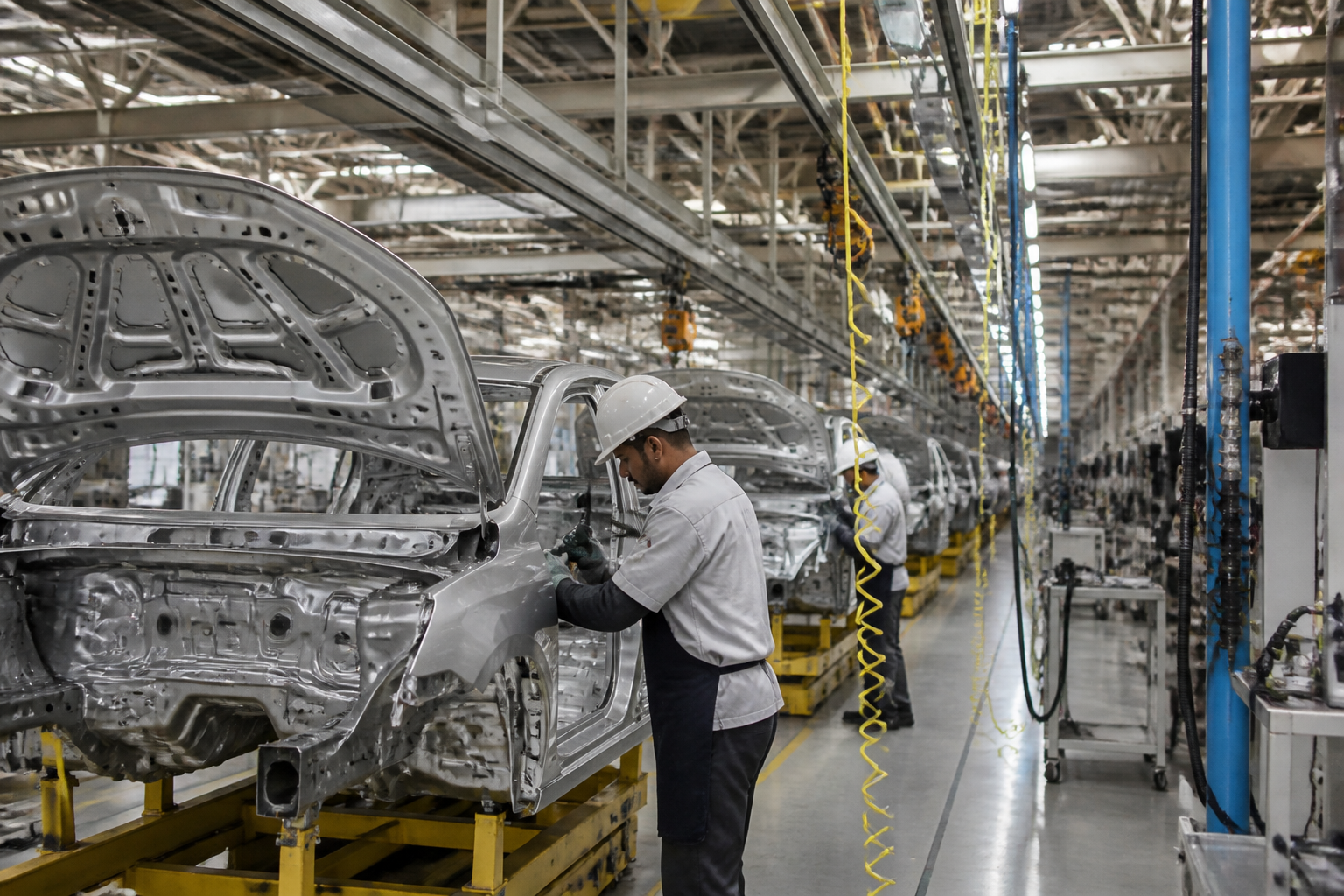
Those assets are central to the proposal. Volkswagen’s plants at Chhatrapati Sambhajinagar and Chakan have a combined capacity of about 400,000 vehicles a year, according to the material available on the proposed venture. The companies are examining whether the plants, along with their workforce and supplier ecosystem, would form part of the joint venture. The plants’ existing scale means that the partnership’s performance will depend not only on ownership but also on how effectively it fills available manufacturing capacity.
The proposal also places capacity utilisation at the centre of the business case. The companies are considering greater model sharing, common platforms and wider production volumes. Higher utilisation could allow development and manufacturing costs to be distributed across more vehicles. That possibility is particularly relevant to a market in which the proposed venture would need to support internal-combustion, hybrid and electric vehicles while maintaining multiple brands and product lines.
The available information does not establish how many vehicles the proposed venture would produce, which models would move between plants, or how quickly new electric vehicles would be introduced. It also does not establish whether the combined capacity would be used solely for the Indian market. The companies are reportedly considering India as an export hub, particularly for electric vehicles, but the scale, destinations and timing of any export programme have not been disclosed.
That uncertainty matters because an export strategy would require more than unused factory capacity. It would involve decisions on product specifications, supplier capability, cost competitiveness, logistics, regulatory compliance and the division of responsibilities between the two partners. None of those arrangements has been finalised in the non-binding MoU. The export possibility is therefore best understood as part of the negotiations rather than as a confirmed manufacturing commitment.
The proposed venture’s treatment of employees and suppliers will be another important test. The companies are working out arrangements for employee transfers, manufacturing, sales and marketing operations, and the inclusion of the supplier ecosystem. A transaction involving an existing manufacturing platform cannot be assessed only through its shareholding ratio. It also requires clarity on continuity of employment, operational control, procurement, technology access and the responsibilities of the parent companies.
The supplier question is especially significant because deeper localisation is one of the stated aims of the cooperation. A larger local production base could create more room for component sourcing and manufacturing scale, but the supplied material does not provide a localisation target or identify specific suppliers. It also does not show whether the proposed venture would change current procurement arrangements. Those details will need to be established as the companies move from a framework agreement to a binding transaction.
The electric-vehicle component adds another layer to the negotiations. The proposed venture is expected to cover future electric-vehicle launches alongside mass-market internal-combustion and hybrid vehicles. This creates a broad product mandate, but the available information does not specify the technology platforms, battery sourcing arrangements, investment schedule or production timelines for those vehicles. The reference to electric vehicles indicates the intended scope of the partnership, not a confirmed launch calendar.
The proposed investment and capital commitments are also not settled. Market estimates cited in reports have placed the project investment and capital commitments at more than €1 billion, or around ₹10,000 crore. That figure is not the final transaction value, which remains under determination. The distinction is important: the cost of acquiring or restructuring the business is different from the capital required for future manufacturing, product development, localisation or electric-vehicle capacity.
A major issue in the valuation discussions is Volkswagen’s potential tax liability in a customs-duty case. The Customs Department has alleged that Volkswagen imported nearly complete vehicles in an unassembled state while declaring them as individual components, resulting in lower duties. The reported potential exposure is around ₹20,000 crore. The case remains a factor in the negotiations, and reports indicate that JSW is unlikely to take on liabilities arising from it. Any allocation of that liability would affect the valuation and the financial terms of the proposed venture.
This unresolved liability illustrates why the MoU should not be treated as a final commitment. The companies still have to agree on valuation, assets, liabilities, employee arrangements, operating responsibilities and the treatment of brands. A binding agreement targeted for December 2026 would represent a further milestone, but it would not necessarily resolve every implementation question. Approvals, transfers and operational integration could still require additional steps.
The brand structure further complicates the proposed alliance. The initial venture is expected to cover the eight Skoda and Volkswagen brands sold in India, together with future launches. Luxury brands are expected to remain outside the venture for now, although JSW is open to bringing them into the alliance at a later stage and Volkswagen is reportedly interested in eventually bringing all its brands under the joint venture. This difference in timing indicates that the scope of the partnership could evolve beyond the initial arrangement, but no expansion has been agreed.
From an industrial-policy perspective, the proposed JSW-Skoda Volkswagen JV reflects the importance of existing manufacturing infrastructure. The two plants already provide a combined stated capacity of about 400,000 vehicles a year. The proposed strategy is consequently based on improving the use of established facilities, supplier relationships and technical capabilities rather than announcing an entirely new greenfield manufacturing complex. That can reduce duplication, but it also makes the venture’s success dependent on the productivity and competitiveness of assets already in operation.
The arrangement also brings together two different forms of industrial capability. Volkswagen contributes established passenger-vehicle brands, manufacturing operations and research and development capabilities in India. JSW would provide majority ownership and a local corporate partnership. The companies’ stated objectives include a wider product portfolio, deeper localisation and stronger manufacturing and research and development capabilities. Whether those objectives can be delivered will depend on the final governance structure and the investment decisions that follow.
For India’s urban and industrial systems, the effects would extend beyond vehicle sales. Manufacturing plants support employment, supplier activity, freight movement and regional industrial ecosystems. Chakan and Chhatrapati Sambhajinagar are therefore not simply locations on a corporate map; they are production nodes connected to workers, component manufacturers, logistics networks and local economies. However, the supplied information does not quantify employment, supplier numbers, freight volumes or the proposed venture’s regional economic impact.
The same caution applies to the partnership’s potential contribution to India’s transition towards electric mobility. The proposed inclusion of electric vehicles and the possibility of exports suggest an ambition to use Indian facilities for a wider product strategy. But the available material does not establish production volumes, charging infrastructure plans, battery manufacturing arrangements or the environmental performance of the proposed operations. Those questions remain outside what the MoU currently confirms.
The evidence at this stage supports three conclusions. First, the proposed alliance could give Volkswagen a local majority partner while giving JSW access to an established passenger-vehicle platform. Second, the venture’s industrial logic depends heavily on using existing plants, expanding product coverage and increasing localisation. Third, the transaction’s commercial shape remains uncertain because valuation, the customs-duty liability, brand scope, employee transfers and operational integration have not been finalised.
The next decisive milestone is the targeted binding agreement by December 2026. Until then, the proposed JSW-Skoda Volkswagen JV remains a negotiated framework rather than an operationally completed partnership. Its significance will ultimately be measured by what happens to the two plants, their workers and suppliers, the level of new investment, the treatment of the customs case, and whether the proposed venture can turn existing capacity into a broader India-based manufacturing and export platform.
