


Subheadline: The decision to leave October production policy unchanged shows why quotas alone cannot stabilise oil markets when transport routes and spare production capacity are under pressure.
Standfirst: OPEC+ has kept its oil production policy unchanged for October as the Iran conflict disrupts crude exports through the Strait of Hormuz and pushes Brent crude towards $100 a barrel. The decision is not simply a pause in monthly output management. It exposes a deeper constraint facing the producer group: production targets on paper may have little immediate effect when oil cannot reliably move from producers to buyers. This analysis examines what the decision reveals about OPEC+’s influence, the limits created by existing cuts and the consequences for cities, where fuel prices shape transport costs, household budgets, public services and the broader urban economy.
OPEC+’s decision to leave its October oil production policy unchanged came as crude prices moved sharply higher and the conflict involving Iran continued to disrupt expectations about oil shipments through the Strait of Hormuz. Brent crude futures rose to $96.28 a barrel on Friday, gaining nearly 8% over the week, while West Texas Intermediate settled at $91.48 after rising almost 10% over the same period.
The immediate question is why the producer group did not respond to higher prices by announcing a larger increase in output. The answer in the supplied material is that the current disruption is not limited to a question of how much oil producers are willing to pump. It is also a question of whether additional crude can physically reach the market. When the route through which oil is transported is under pressure, a change in production targets may not translate into an equivalent increase in available supply.
That distinction is important for understanding the limits of OPEC+’s influence. The group can set production targets and adjust its formal policy, but it cannot guarantee that every additional barrel will be produced, transported and delivered to buyers. Jorge Leon of Rystad Energy described OPEC+ as having “very limited power over the physical oil market” in the current situation. His assessment separates the organisation’s administrative authority over quotas from its ability to control the wider logistics of global oil supply.
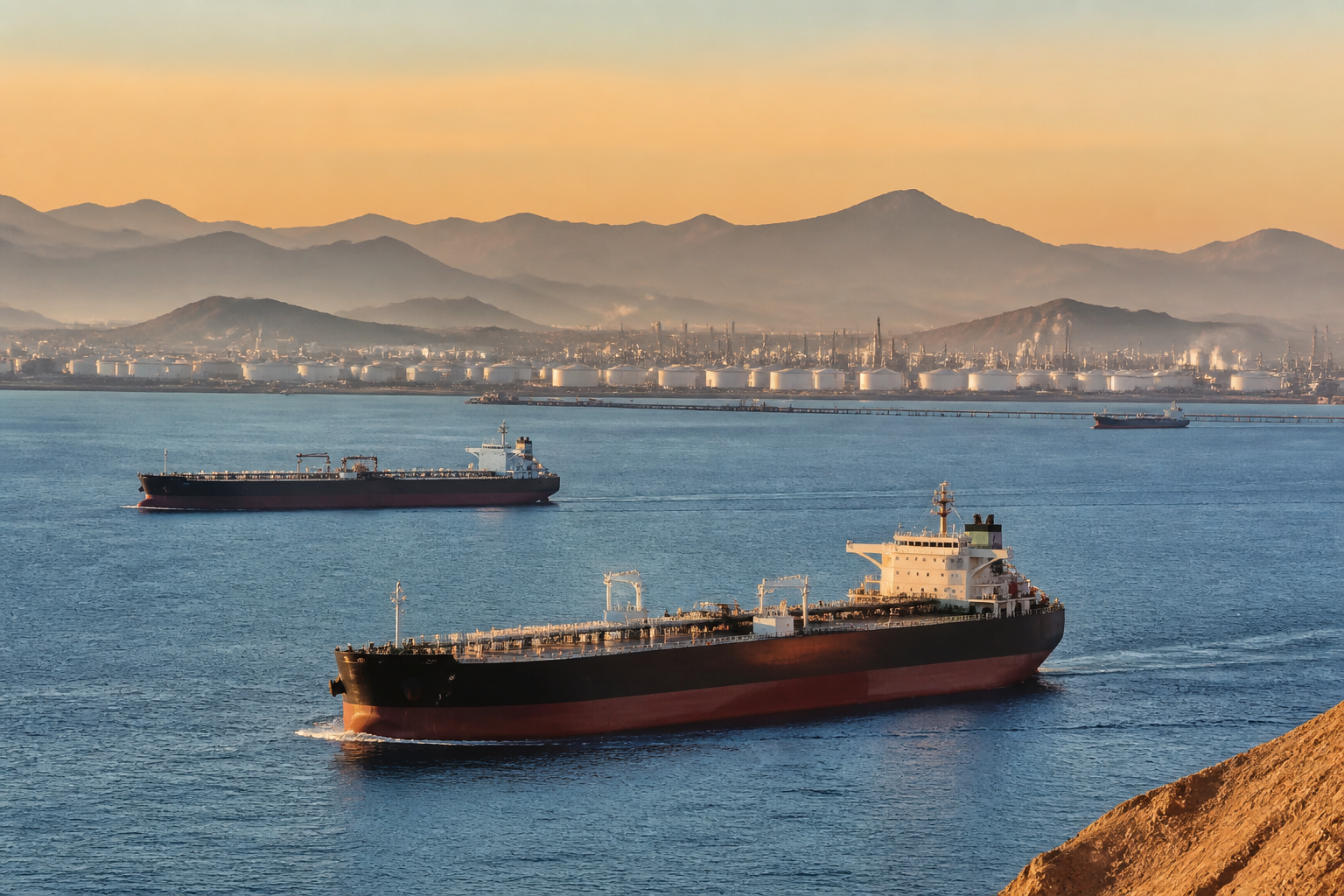
The Strait of Hormuz is central to that problem. The supplied report identifies disruption to crude exports through the strait as the main factor complicating the oil market. It does not quantify the volume of oil currently blocked or specify how individual shipments have been affected. What it establishes is that the conflict has raised concerns about the physical flow of crude, making it more difficult for OPEC+ to use production policy as a quick response to rising prices.
For cities, the significance of this distinction lies in the way oil moves through the urban economy. Fuel is not only a commodity traded between producers and refiners. It is an input into road transport, freight, construction activity, municipal operations and household mobility. A sustained rise in crude prices can place pressure on the cost of moving people and goods, even though the supplied material does not establish how much of the latest increase will be passed through to consumers or how individual governments will respond.
The report also shows that OPEC+ is operating with less readily available production capacity than its official targets might suggest. In August, the group agreed to increase production for September, completing a phased rollback of a 1.65 million-barrel-per-day cut first agreed in 2023. Yet member countries are still producing well below their official targets. The report attributes this gap largely to the disruption caused by the war, meaning that the formal decision to raise output did not create a comparable flow of additional oil into the market.
This gap between targets and actual production is a recurring institutional problem for any quota-based system. A quota can define what a producer is permitted or expected to supply, but it cannot by itself create the equipment, transport access, commercial incentives or secure export route needed to deliver that supply. In the circumstances described by the report, OPEC+’s policy mechanism is therefore working with a narrower practical range than its headline numbers suggest.
The group also has another layer of production cuts covering most members of the 21-country OPEC+ structure. Those cuts are scheduled to remain in place until the end of 2026. Before deciding how they should be removed, OPEC+ needs to establish how much oil each member can actually produce. That review is intended to support new 2027 production baselines, which will then be used to calculate individual quotas.
This turns the debate away from a simple monthly question—whether to add or remove a specific volume of oil—and towards a longer institutional process. The issue is not only what OPEC+ wants its members to produce in October. It is also how the group will measure capacity, assign future baselines and determine whether its members can meet those numbers under changing market and security conditions.
Jorge Leon said the focus is shifting from monthly production changes to the larger question of 2027 oil production. The report says OPEC+ is expected to discuss production capacity and new baselines later in 2026. Sources cited earlier by Reuters indicated that the group could pause further production increases in the fourth quarter. However, the Sunday statement did not announce policy changes beyond October, so any subsequent pause remains a reported possibility rather than a confirmed decision.
The seven countries participating in the monthly production decisions described in the report—Saudi Arabia, Russia, Iraq, Kuwait, Algeria, Kazakhstan and Oman—are scheduled to meet again on October 4. The United Arab Emirates was also part of those monthly decisions until it left OPEC in May. The composition of the meeting matters because the group’s ability to manage supply depends on coordination between producers with different production capacities, existing targets and operational constraints.
The supplied material does not provide a breakdown of which members are furthest below their targets, nor does it identify the exact volumes affected by the Strait of Hormuz disruption. That limits what can be concluded about the likely scale of any shortfall. It does, however, establish a clear sequence: prices rose as conflict intensified; concerns about shipments increased; existing production increases were not fully reflected in actual supply; and OPEC+ chose not to announce a new October policy change.
The price movement adds urgency to that sequence. Brent’s close at $96.28 placed the global benchmark near the $100 level, while WTI reached $91.48. The report also says US diesel prices reached a record high, adding to concerns about fuel costs. It does not state how these prices will affect Indian fuel prices, public transport fares, freight rates or construction costs, and those outcomes should not be assumed from the crude benchmarks alone. The evidence supports a narrower conclusion: higher international oil prices increase the pressure on systems and consumers that depend on petroleum products, while the final local impact depends on pricing, taxation, refining and distribution decisions not covered in the supplied material.
The urban consequences are therefore best understood as a transmission problem. Oil market stress first affects the cost and reliability of energy supply. That pressure can then move through logistics networks, road-based mobility and the operating budgets of businesses and public agencies. Construction projects may face higher transport and equipment costs, while households may confront more expensive travel or goods if increases pass through the supply chain. The report does not measure these effects, but the relationship between crude prices and fuel-dependent urban activity explains why an international production decision belongs within a built-environment and city-economy conversation.
There is also a governance lesson in the OPEC+ decision. The group’s formal policy announcements are easier to observe than the physical conditions that determine whether those policies work. A production increase can appear decisive in a communiqué while having limited near-term effect if members remain below target or shipments are disrupted. For governments, businesses and city administrations, monitoring official quotas alone may therefore provide an incomplete picture of supply risk. Actual production, export access and transport security are equally important indicators.
The next stage has two time horizons. In the immediate term, attention will remain on the Iran conflict, the condition of oil flows through the Strait of Hormuz and whether additional production can reach buyers. In the longer term, OPEC+ will have to examine member capacity and establish the baselines that will shape 2027 quotas. These are separate decisions, but the current crisis links them: the credibility of future quotas will depend partly on how accurately the group can distinguish nominal capacity from deliverable supply.
What the October decision confirms is that OPEC+ is not responding to a conventional oversupply or demand-management problem. It is dealing with a market in which security risks, transport routes and production constraints are limiting the effect of formal output policy. What remains uncertain is the duration and scale of the disruption, the volume of oil that can continue moving through affected routes and whether the group will pause further increases later in the year. Those questions will shape the significance of the October 4 meeting and the wider debate over 2027 production quotas.
