


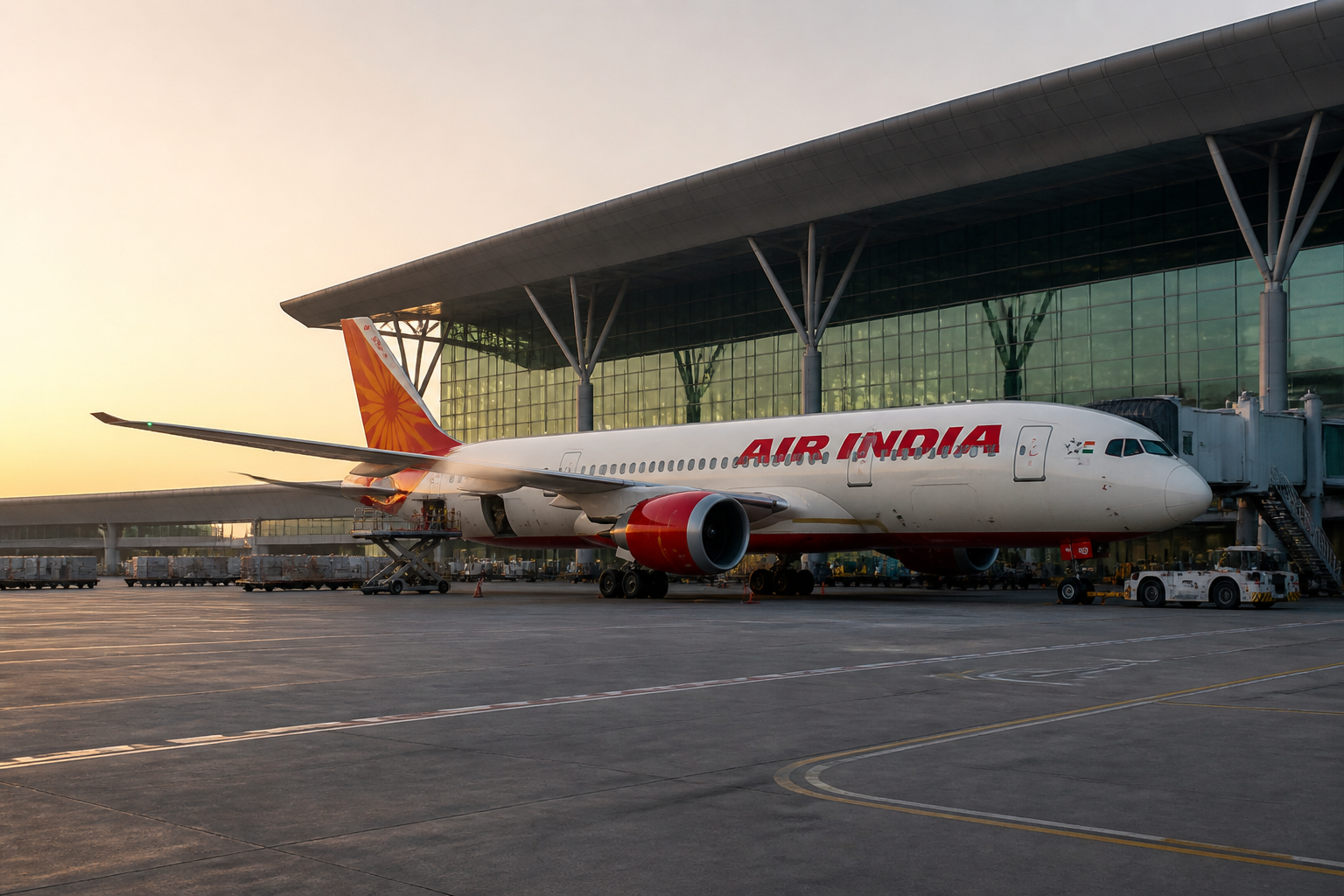
Air India’s new leadership faces a test beyond growth
Tewolde Gebremariam’s assumption of operational charge at Air India comes as the airline attempts to address safety scrutiny, inconsistent operations, engineering challenges and substantial financial losses. The transition places renewed attention on whether the Tata-owned carrier can build the systems needed to operate a larger fleet while improving reliability and financial discipline.
Gebremariam, the former chief of Ethiopian Airlines, is taking over from Campbell Wilson. He will not initially be formally designated chief executive officer or accountable manager because his security clearance is still pending, according to people aware of the development cited by Economic Times. The clearance is expected by the end of September. Air India has not commented on the change.
Air India chairman N Chandrasekaran is expected to introduce Gebremariam to employees at a town hall. Chandrasekaran and former Air India chairman and managing director Pradeep Singh Kharola are expected to continue working closely with him during the early months of the transition. That arrangement suggests that the change is not simply a leadership substitution, but the start of a period in which the airline’s operating structure and internal accountabilities may be reviewed.
The immediate challenge is to make safety and reliability part of everyday execution rather than treating them as parallel priorities to fleet expansion. Gebremariam has already interacted with departmental heads and emphasised improvements in engineering, safety and yield, according to the report. He is expected to examine how the airline operates, identify gaps and move quickly to address them.
That mandate follows a period of heightened scrutiny. A fatal crash in Ahmedabad last June killed more than 270 people, according to the report. On August 4, about 20 passengers and four crew members were injured when an Air India flight from Phuket to Delhi experienced a sudden loss of altitude. Air India dismissed the aircraft’s captain after a preliminary investigation said a confirmatory test was non-negative for a psychoactive substance. The incident has added to the pressure on the airline to demonstrate consistent adherence to procedures and stronger operational controls.
The events described in the report do not by themselves establish a single cause for Air India’s wider operational difficulties. They do, however, show why the airline’s technical organisation, maintenance systems and internal safety processes are central to the new leadership’s mandate. A major airline depends on the interaction of flight operations, engineering, maintenance, crew management, regulatory compliance and customer-facing systems. Weakness in any one of those areas can affect reliability across the network.
Engineering and maintenance are therefore likely to be among the most consequential areas of the transition. Gebremariam brings experience in building operational and engineering capabilities from his time at Ethiopian Airlines, and officials cited by the report expect him to strengthen Air India’s technical organisation as the carrier prepares to operate a significantly larger fleet. The report does not specify the size or timing of that fleet expansion, but it makes clear that growth is being considered alongside the need to improve the systems supporting it.
That distinction matters. Fleet expansion increases the number of aircraft, routes, crews and maintenance decisions that an airline must coordinate. It also increases the cost of inconsistent processes. A larger network can amplify delays, aircraft substitutions, crew disruptions and maintenance bottlenecks if operational systems do not develop at the same pace. The report’s emphasis on consistency, procedure and accountability indicates that Air India’s challenge is not limited to acquiring aircraft or adding destinations.
The leadership change also has a financial dimension. Air India reported a loss of more than ₹26,000 crore for FY26 and has sought a fresh equity infusion of ₹10,000 crore from its owners, Tata Sons and Singapore Airlines, according to the report. Those figures place operational reform within a broader financial recovery effort. The airline is expected to focus on cash, costs and profitability while continuing to improve its operating capabilities.
For Air India, this creates a difficult management balance. Investment in engineering, maintenance, safety systems and leadership capacity may be necessary to build a more reliable airline, but the carrier must also control spending and improve its financial performance. The report says Gebremariam will receive considerable autonomy to put the airline on a safe and sustainable footing. It also says his mandate includes strengthening the leadership pipeline and creating a high-performance culture with greater accountability across functions.
The reference to autonomy is significant because operational improvement often depends on decisions that cut across departmental boundaries. If teams are reorganised, responsibilities clarified or senior executives replaced, the objective would be to improve execution rather than merely change reporting lines. An Air India employee quoted anonymously expects that several senior executives may leave as the new chief brings in fresh faces. That possibility remains an expectation rather than a confirmed organisational decision.
The transition also highlights the importance of institutional roles. Gebremariam is beginning operational leadership before receiving the clearance required for his formal designation as CEO and accountable manager. During this interim period, the chairman and former senior leadership are expected to work with him. The arrangement may allow continuity while the formal process is completed, but the report does not establish how long the interim structure will last or how responsibilities will be divided in practice.
Air India’s ownership structure adds another layer to the situation. Tata Sons and Singapore Airlines are identified as the airline’s owners and potential sources of fresh equity. The report says the airline’s new head will be expected to operate with substantial autonomy, while a separate report cited within the article says the Singapore government will not interfere in decisions concerning Air India. The central management question is therefore how operational authority, shareholder support and internal accountability will work together during the turnaround.
The available evidence points to an airline dealing with several linked pressures rather than one isolated problem. Safety scrutiny has increased after serious incidents. Engineering and maintenance capability require attention. Operational consistency and adherence to procedures are explicit priorities. The airline has also reported significant losses and is seeking additional capital. These issues make the leadership transition relevant not only to Air India employees and passengers, but also to the functioning of India’s air transport system.
At the same time, the report leaves important questions unanswered. It does not provide a detailed recovery plan, identify specific maintenance or engineering deficiencies, or set out measurable targets for safety, reliability or profitability. It also does not establish which organisational changes will be made, whether senior departures will occur, or when the formal CEO and accountable-manager designations will be completed. Those details will determine whether the transition produces lasting operational change or remains primarily a change in leadership.
The immediate next step is the expected employee town hall, where Gebremariam is likely to set out the priorities for his tenure. The report identifies safety, operational excellence, customer experience and financial discipline as the themes expected to shape that message. The subsequent test will be whether those priorities are translated into clearer accountability, stronger engineering and maintenance systems, and more consistent execution across Air India’s growing operations.
