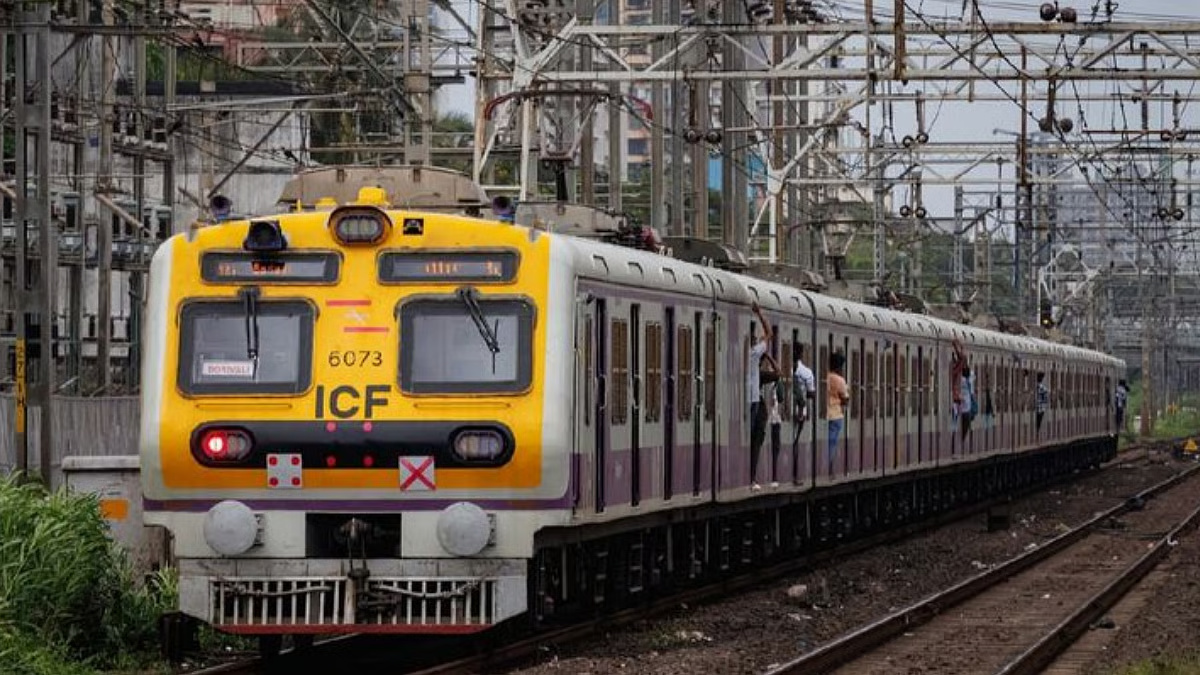
Mumbai’s suburban rail network will see significant service changes on Sunday, September 6, as maintenance blocks affect the Central, Harbour and Western lines. The coordinated work will bring diversions, cancellations and short-terminations across several corridors, making advance journey planning particularly important for passengers who depend on the rail network for affordable citywide mobility. On the Central Line, the main disruption will run between Chhatrapati Shivaji Maharaj Terminus and Vidhyavihar from 10.55am to 3.55pm on the slow lines. Several services will move onto the fast lines and make additional stops before returning to their normal routes. The changes are intended to create working time for railway maintenance while keeping a portion of suburban operations running.
The Harbour Line will face a longer daytime block, covering CSMT to the Bandra and Chunabhatti sections from late morning into the afternoon. Services towards Vashi, Belapur, Panvel, Bandra and Goregaon will be affected. Central Railway plans special Panvel–Kurla services at roughly 20-minute intervals, while Harbour Line passengers will be allowed to use alternative Main Line and Western Railway routes during specified hours. Western Railway will simultaneously conduct a five-hour jumbo block between Churchgate and Mumbai Central, from 10.35am to 3.35pm. The work covers tracks, signalling and overhead equipment. During the block, through-line trains will be shifted to local lines, while some services will be cancelled or terminated earlier at Bandra and Dadar.
A separate overnight disruption will affect the Central Railway network around Titwala and Kasara. Special traffic and power blocks are scheduled during the nights of September 4–5, September 5–6 and September 6–7, with suburban services between Titwala and Kasara affected during the midnight-to-5am window. The work is linked to platform extension activity at Titwala to accommodate longer trains. For commuters, the scale of Sunday’s work highlights the dependence Mumbai places on a relatively small number of high-capacity rail corridors. Even planned maintenance can have knock-on effects when multiple lines are restricted on the same day. The disruption also underlines why maintenance remains essential to the city’s long-term mobility. Track, signalling and overhead systems require regular intervention to preserve reliability and safety. Deferring such work could create more serious failures later, particularly on infrastructure carrying millions of journeys.
The immediate priority for passengers is to check the latest service position before leaving, allow additional interchange time and consider alternative routes where available. For Mumbai, the longer-term challenge is ensuring that maintenance can be carried out efficiently without placing disproportionate pressure on passengers who have few affordable alternatives.