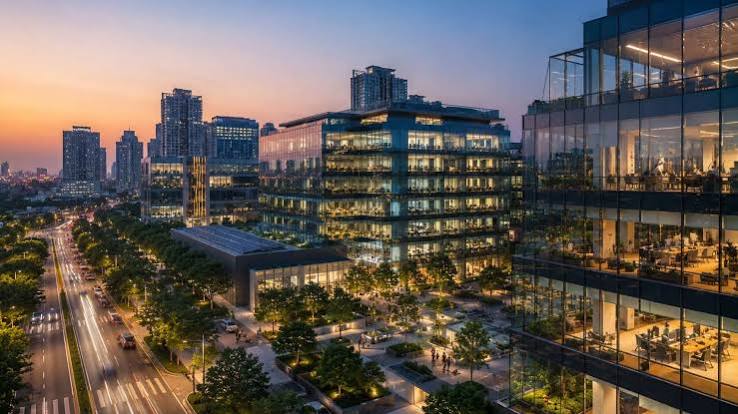
Pune GCC Expansion Reshapes Jobs and Office Demand
Pune: Pune’s expanding Global Capability Centre (GCC) economy is beginning to reshape the city’s commercial property and employment landscape, with the state government projecting a sharp increase in global business operations. A new global business solutions centre inaugurated in Wakad on September 4 adds more than 1,000 expected direct jobs, but the larger opportunity also raises questions about transport, housing, digital infrastructure and the city’s ability to absorb further office-led growth.
The new centre of The Magnum Ice Cream Company occupies about 67,000 sq ft at EON West in Wakad and will support functions including finance, technology, supply chain and other global operations. Company recruitment activity confirms that the Pune operation is being built as a broader global business services platform rather than a conventional back-office unit. PPune GCC+1 The development comes as demand for GCC office space accelerates. State officials said Pune recorded around 6 million sq ft of GCC-related office demand over the past 15 months, while Maharashtra added or expanded about 130 GCC units over the previous 18 months. The state has set a target of 400 GCC companies and more than 700 units. TTheDCN.NEWS
There is, however, an important distinction in the available data. A 2026 KPMG research report places Pune’s wider GCC ecosystem at more than 500 centres across over 30 countries and 20 industries, with more than 130 centres entering or expanding since 2024. The government’s reference to more than 130 operational centres therefore appears to use a narrower definition or dataset. KKPMG For commercial real estate, the trend is consequential. GCCs typically seek large, high-quality offices and specialised digital infrastructure, supporting demand for Grade A space and related services. But each new employment cluster also creates pressure beyond the property boundary. More workers mean additional peak-hour travel, demand for rental housing and greater requirements for reliable electricity, water, public transport and last-mile connectivity.
Wakad and the wider western Pune corridor already face mobility constraints. Government officials have acknowledged infrastructure challenges in the city’s IT corridors, including Hinjawadi. If GCC expansion continues at the projected pace, adding office supply without improving mass transit and pedestrian connections could increase dependence on private vehicles and weaken some of the environmental gains associated with concentrated employment. The shift towards AI, automation and data-led operations also means future GCC growth may create fewer routine jobs while increasing demand for specialised skills. That makes training and access to higher-value employment important parts of the city’s economic planning. Pune’s GCC expansion is therefore becoming more than a commercial real estate story. The next phase will test whether infrastructure investment can keep pace with employment growth while making new economic opportunities accessible without adding disproportionate pressure to the city’s transport, housing and environmental systems.