


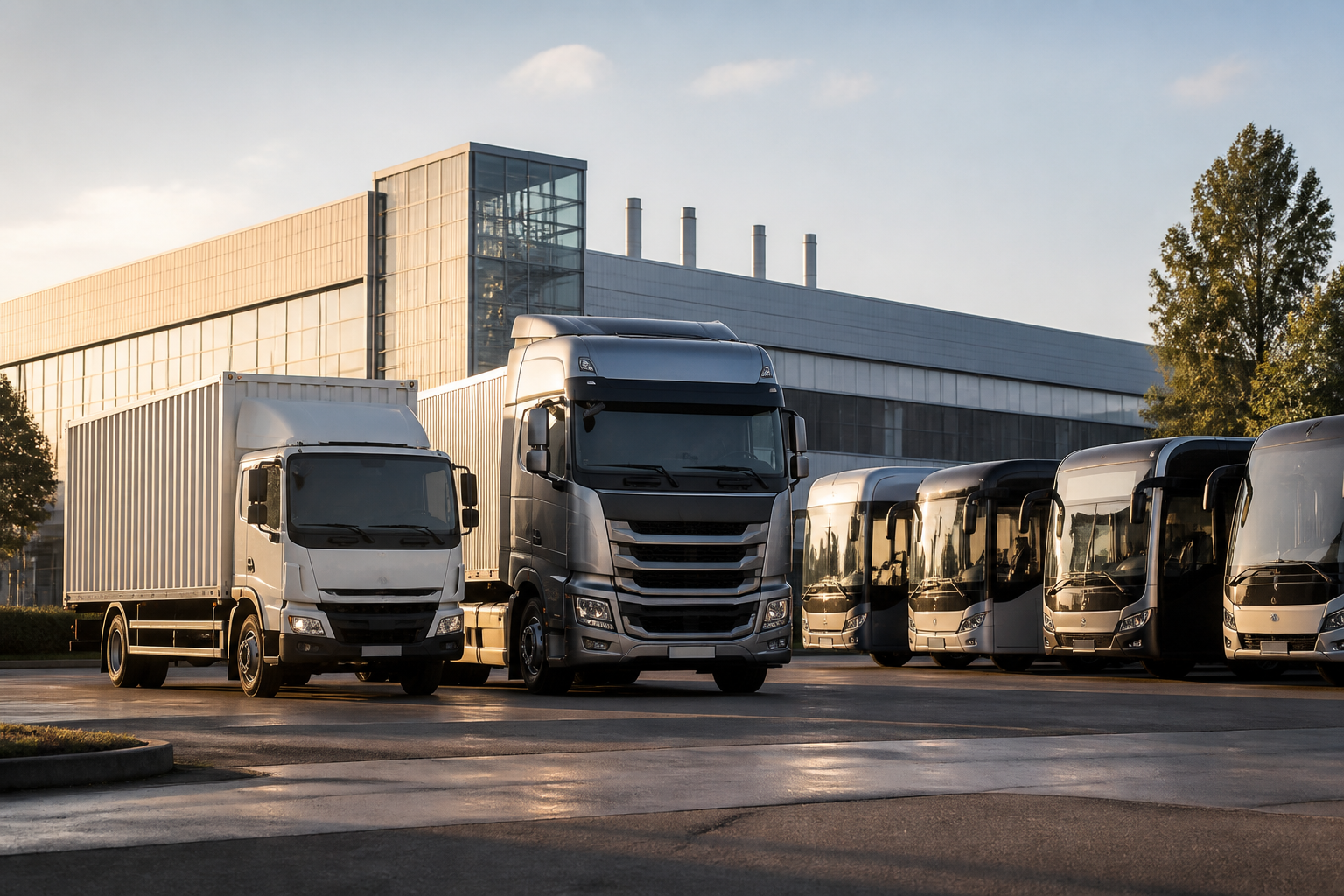
The Tata Motors-Iveco takeover has moved from regulatory approval to a more difficult test: persuading shareholders to deliver the ownership threshold needed to reshape one of Europe’s major commercial-vehicle manufacturers. Tata Motors has secured the backing of Iveco’s largest shareholder, Exor, and cleared the principal regulatory hurdles. The remaining question is whether the public shareholding will accept the €14.10-a-share tender in sufficient numbers to let Tata take Iveco private and delist it from Euronext Milan.
The shareholder arithmetic reveals why this is more than a routine tender offer. Exor has irrevocably committed its 27.06 per cent stake to Tata’s offer and agreed to vote in favour of transaction-related resolutions. That leaves 72.94 per cent of Iveco in public hands. Tata initially needs acceptances representing at least 95 per cent of Iveco’s shares to use a statutory Dutch squeeze-out mechanism. However, a separate route could lower the effective threshold to 80 per cent if shareholders approve the proposed Back-End Resolutions at an Extraordinary General Meeting on October 16.
At 80 per cent, Tata would need to secure another 52.94 percentage points beyond Exor’s holding. In practical terms, that means winning the support of nearly three out of every four shares still held by public investors. The threshold is therefore not merely a legal condition. It is the measure of whether Tata can convert a negotiated industrial combination into full operational control, even if a minority of shareholders remains.
The tender offer opens on September 7 and is scheduled to close on October 26 at 5:30 p.m. Central European Summer Time. Initial payment is expected on October 30. Subject to legal conditions, a secondary acceptance window is scheduled from November 2 to November 6, with settlement on November 13. These dates establish a defined sequence: shareholder participation first, a vote on the post-offer restructuring framework next, and the potential transition to full ownership and delisting thereafter.
The offer reaches this stage after a series of regulatory decisions. The Italian securities regulator, CONSOB, approved the offer document on September 3, according to Tata’s September 4 disclosure. Sector authorisation from the European Central Bank followed on September 1. Tata said the required competition, foreign investment, foreign subsidy and other regulatory approvals had been obtained. The transaction is supported by committed financing of up to €3.825 billion through Morgan Stanley and MUFG Bank.
The public case for the deal rests on industrial scale and complementarity. Tata Motors and Iveco together are expected to sell more than 590,000 vehicles annually and generate roughly €21 billion, equivalent to about ₹2.28 lakh crore, in revenue. The combined business would have a geographically distributed commercial-vehicle footprint, with Europe accounting for 46 per cent of revenue and India for 32 per cent, according to the transaction details reported by BusinessLine.
That geographic composition is central to the proposed industrial logic. The combination is not presented as a simple consolidation of overlapping domestic businesses. Instead, Tata and Iveco are positioning the deal around complementary market presence, capabilities and product networks. Tata Motors Managing Director and Chief Executive Officer Girish Wagh said the companies could create “a stronger, more globally competitive commercial vehicle business” capable of investing in future technologies and creating sustainable value.
Iveco Chief Executive Olof Persson similarly described the combination as creating “a major new force in global commercial vehicles”. He pointed to the complementary nature of the two businesses and the potential to accelerate innovation. These statements are strategic claims rather than evidence that the integration has already delivered efficiencies. Their significance lies in defining what the transaction must ultimately prove: that greater scale can support technology investment, wider market reach and a more competitive commercial-vehicle platform.
The shareholder recommendation strengthens Tata’s position. Iveco’s board has unanimously recommended the offer. Goldman Sachs, advising the board, issued an updated opinion on September 4 stating that the €14.10-a-share offer was fair from a financial perspective. Iveco’s independent directors, advised separately by Rothschild & Co, reached the same conclusion. The combination of board support, an irrevocable commitment from Exor and completed regulatory approvals gives Tata a favourable starting position, but it does not remove the need to secure broad public acceptance.
The transaction also carries a substantial employment and industrial footprint. Iveco employs about 33,000 people across 16 industrial sites and 22 research and development centres. Its operations span commercial vehicles, buses, financing and FPT Industrial powertrain activities. The proposed arrangement includes binding two-year non-financial covenants under which Tata has committed to preserving Iveco’s operational headquarters in Turin, maintaining capital expenditure plans and avoiding plant closures directly tied to the combination.
Those commitments matter because an industrial takeover is judged not only by ownership but also by what happens to productive capacity. Headquarters, factories, research centres and powertrain operations represent the physical and institutional infrastructure through which a commercial-vehicle company develops products and serves markets. Preserving them for two years provides a defined period of continuity, although the supplied transaction details do not establish what operational structure might follow after that period.
For India, the proposed combination places a major domestic manufacturer at the centre of a much larger commercial-vehicle platform. The reported 32 per cent share of combined revenue from India indicates the importance of the Indian market to the overall business. However, the available material does not establish how products, plants, brands, technology programmes or management responsibilities would be integrated. It also does not quantify any planned changes to Tata Motors’ existing Indian operations.
The broader urban and infrastructure relevance comes through the role of commercial vehicles in the movement of goods, public transport and industrial supply chains. Iveco’s portfolio includes trucks and buses, while Tata Motors is a major commercial-vehicle producer. A combined company would therefore operate across equipment categories linked to freight distribution, passenger mobility, construction activity and logistics. Yet the immediate transaction is a corporate ownership event; its direct effects on vehicle prices, fleet availability, employment or city transport systems remain unestablished in the supplied material.
The structure of the deal also illustrates how cross-border industrial ownership is shaped by more than a purchase price. Competition review, foreign investment rules, foreign subsidy scrutiny, sector authorisation, financing commitments and shareholder law all form part of the path to completion. Tata has cleared the regulatory stage, but the transaction still depends on investor behaviour and the October 16 vote on the proposed restructuring resolutions.
The decisive issue is therefore not whether Tata has announced an industrial rationale. It is whether the legal and financial architecture of the offer can convert that rationale into control. The 80 per cent threshold is especially important because it could allow Tata to pursue the agreed Asset Sale and Liquidation framework, secure 100 per cent operational ownership and delist Iveco even if some minority shareholders do not tender their shares.
What is confirmed is that Tata has financing, regulatory clearance, Exor’s support, a board recommendation and an offer timetable. What remains uncertain is whether the remaining public shareholders will provide the acceptance level required for the next stage. The tender opening on September 7, the October 16 Extraordinary General Meeting and the October 26 closing date are the milestones that will determine whether the €3.82-billion takeover becomes a completed restructuring of the global commercial-vehicle industry.
