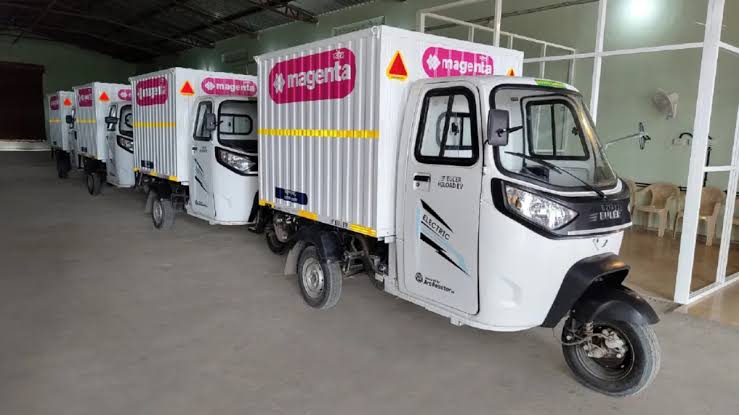
Kolkata is emerging as a potential beneficiary of India’s expanding electric-mobility ecosystem, but the city faces a key industrial challenge: converting growing demand for cleaner transport into local manufacturing and skilled employment. Nationally, the automobile Production-Linked Incentive (PLI) scheme has attracted ₹45,477 crore in investment and generated more than 67,000 jobs by June 2026, raising questions over how far eastern India can participate in the next phase of the transition.
The scale of the national programme is significant. The auto PLI scheme, approved with a ₹25,938 crore outlay, is designed to strengthen domestic production of advanced automotive products while increasing localisation. By March 2026, government data recorded ₹44,326 crore of cumulative investment and 67,820 jobs under the programme.For Kolkata, however, the opportunity comes with a notable gap. Official state-wise data released by the Centre shows 225 manufacturing units under the auto PLI scheme across India as of March 2026, but West Bengal does not appear among the states hosting approved PLI-Auto manufacturing units.That does not mean Kolkata is outside the electric-mobility transition. The city already has a growing charging network. As of July 2026, West Bengal had 482 public charging stations sanctioned under FAME-II, of which 463 were operational. Kolkata accounted for 23 sanctioned stations, with 21 operational.
The larger industrial question is whether this infrastructure can be matched by investment in manufacturing, components, maintenance and technical skills. West Bengal’s own industrial strategy identifies automobiles and auto components as areas with potential, citing access to steel, ports, engineering capabilities and a skilled workforce.The state’s EV policy also envisages skills development for drivers, mechanics, charging-station workers and entrepreneurs. Such capabilities could become increasingly important as electric buses, two-wheelers and commercial vehicles become a larger part of Kolkata’s transport system.For urban residents, the significance extends beyond factory investment. A stronger local EV ecosystem could support cleaner public transport, reduce dependence on long-distance supply chains and create technical employment. But charging reliability, grid capacity, affordability and equitable access will determine whether the transition improves everyday mobility rather than simply expanding vehicle sales.
The next phase of India’s auto PLI therefore presents Kolkata with an industrial opportunity, but capturing it will require more than charging points. Connecting manufacturing, workforce development, public transport and resilient urban infrastructure will determine whether the city becomes an active participant in India’s cleaner mobility economy.