


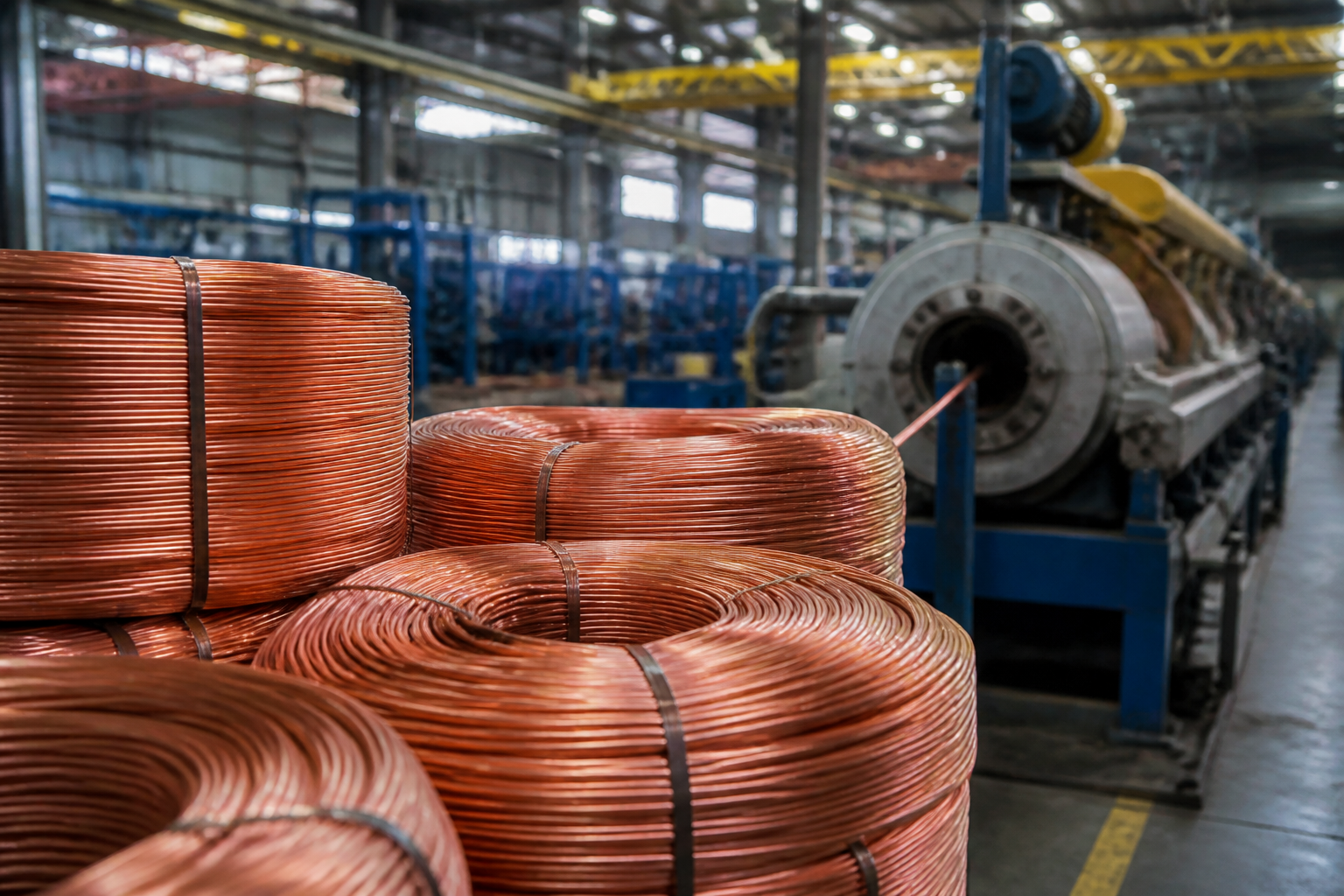
UltraTech Cement’s launch of Ultravolt, a wires and cables brand, is the latest attempt by the Aditya Birla Group to turn India’s infrastructure expansion into a new growth engine. The company is targeting the second-largest position in the wires and cables market within five years, entering a category shaped by housing construction, electrification, renewable energy, transport infrastructure and digital capacity.
The launch matters beyond the addition of another consumer brand. Wires and cables are the connective tissue of the built environment, linking homes, commercial buildings, factories, transport systems, power networks and data infrastructure. Their demand tends to rise as cities expand and buildings become more electrically intensive. UltraTech’s move therefore places a cement company, already deeply tied to construction markets, into a product category that sits further inside the building and infrastructure supply chain.
Kumar Mangalam Birla, chairman of the Aditya Birla Group, described wires and cables as being at the intersection of three major trends in India: urbanisation, electrification and digitisation. The company’s case rests on the expectation that these trends will create sustained demand rather than a short-term construction cycle. The report says India is expected to add around 100 million homes over the next decade, while rising household incomes are increasing demand for more sophisticated electrical systems.
That projected housing expansion creates a large addressable market, but it does not by itself guarantee that Ultravolt will win customers. The wires and cables sector is already served by established brands, and electrical products are often selected through a chain involving homeowners, electricians, contractors, builders, retailers and institutional buyers. The challenge for UltraTech will be to make the group’s name relevant at each of those points, especially in a category where product quality and safety may be difficult for consumers to assess before installation.
The company is positioning its proposition beyond price. It is highlighting quality, technology, availability and service, with the argument that electrical wiring is increasingly being treated as a safety and performance decision rather than an invisible component concealed behind walls. This is a significant shift in how the category is presented. It moves the product from a largely technical input to a trust-based purchase, where brand reputation and reliable availability can influence decisions alongside specifications.
The demand opportunity also extends well beyond residential construction. The supplied report identifies renewable energy projects, grid modernisation, metro rail expansion and electric vehicles as sources of demand for specialised and high-performance cables. Each of these applications has different technical requirements, but together they illustrate how the electrification of the economy is broadening the market. Power transmission, urban transport, charging infrastructure and industrial systems all require cable products suited to different voltage, durability and performance conditions.
Digital infrastructure adds another layer. Birla expects India’s established data-centre capacity to quadruple to around 8 gigawatts over the next four years. Data centres are highly cable-intensive facilities, according to the report, creating a further source of demand. The figure is a company-attributed expectation, not an independently established forecast in the supplied material, but it shows how the group is framing the opportunity: not simply as a market for household wires, but as a portfolio that could eventually include specialised products for complex infrastructure.
UltraTech’s initial product range will include wires, cables and conduits. The company plans to expand over time into higher-voltage products, specialty applications and electrical accessories. That progression would take the business from relatively familiar building products towards more technically demanding infrastructure segments. The report does not provide a timetable for those product expansions, making execution and product certification important issues to monitor as the venture develops.
The group’s strongest argument is its existing ecosystem. The Aditya Birla Group already has exposure to copper and aluminium, two critical raw materials for wires and cables. UltraTech’s cement operations also give it contact with construction markets and an understanding of builders, dealers and homeowners. These relationships do not automatically translate into cable sales, but they can provide market knowledge and potential routes to customers that a new standalone entrant would need years to build.
Distribution is central to that strategy. Ultravolt plans to operate across more than 500 districts and 6,000 pin codes, supported by more than 20 warehouses. Over time, it aims to reach over 100,000 retailers and 5,000 UltraTech Building Solutions outlets. These numbers indicate that the company sees availability as a competitive advantage. In a building-materials market, a product that is specified but unavailable at the point of purchase can quickly lose out to an established alternative.
The proposed distribution network also reveals the geographic scale of the bet. Reaching 500 districts and 6,000 pin codes would place the business in a broad mix of metropolitan, regional and smaller urban markets. The source does not break down the planned network by geography or explain how sales will be divided between residential, commercial and infrastructure customers. Even so, the ambition suggests that UltraTech is seeking national visibility from the outset rather than testing the category through a narrow city-by-city rollout.
The manufacturing base is intended to support that positioning. The company’s Bharuch facility uses German and Korean machinery, E-Beam Pro technology and an R&D laboratory. The report does not provide the plant’s production capacity, investment size or staffing levels, so the scale of the manufacturing commitment cannot be assessed from the available information. What is clear is that UltraTech is presenting the facility as evidence that Ultravolt will compete on technology and product capability, not only on distribution or brand recognition.
The strategy follows a pattern the group has used in other recent ventures. Birla cited Birla Opus, which the group says has reached double-digit market share within two years of operations; Indriya, which has expanded to 90 stores across 54 cities; and Birla Pivot, whose annualised revenue run rate has reached ₹10,000 crore in three years. These examples are being used to demonstrate the group’s ability to enter adjacent categories, deploy capital rapidly and build scale.
There are limits to the comparison. Paints, jewellery, building-material distribution and electrical products involve different buying decisions, technical requirements and competitive structures. A market-share outcome in one category cannot establish the likely outcome in another. Still, the examples clarify the organisational model behind Ultravolt. The group is attempting to combine capital strength, manufacturing capability, an established corporate brand and existing distribution rather than build a new business without institutional support.
That model reflects a broader change in how large Indian companies are approaching the built environment. Instead of remaining within one core product, groups with access to capital and customer networks are moving across related parts of the construction and infrastructure value chain. Cement, paints, building solutions, electrical products and digital procurement can be connected through the same broad development cycle, even when their manufacturing processes and customers differ.
For cities, the significance lies in the infrastructure intensity of future growth. More homes, metro systems, renewable power, electric vehicles and data centres will require not only visible structures but also the electrical systems that make them operational. As these systems become more important to safety, reliability and performance, procurement decisions will extend beyond the cheapest available product. However, the supplied material does not establish whether Ultravolt’s products will deliver better performance, lower lifecycle costs or measurable safety benefits. Those questions will require evidence from product performance, customer adoption and implementation over time.
The policy and institutional landscape is present in the demand drivers but not detailed in the report. Renewable energy, grid modernisation, metro expansion and electric mobility involve multiple public agencies, private developers and infrastructure operators. Their demand for cable products will be shaped by technical standards, project specifications and procurement processes. The report identifies these sectors as opportunities but does not state which contracts Ultravolt is pursuing or whether the company has secured infrastructure orders.
This distinction is important. Residential distribution can be built through retailers, dealers and building outlets, while infrastructure sales generally depend on qualification, technical approval and project procurement. The planned expansion into higher-voltage and specialty products could open those markets, but the company’s initial offering and its current institutional customer base are not described in enough detail to establish how quickly it can compete there.
The available numbers nevertheless show the scale of the opportunity as framed by the company. Around 100 million additional homes are expected over the next decade. Data-centre capacity is expected by Birla to rise to around 8 gigawatts over the next four years. The proposed distribution footprint covers more than 500 districts and 6,000 pin codes, with more than 20 warehouses, 100,000 retailers and 5,000 UltraTech Building Solutions outlets as longer-term targets. The Bharuch plant adds a dedicated manufacturing and research base, while the five-year objective sets a clear commercial measure: becoming the market’s second-largest player.
What remains unknown is as important as what has been announced. The report does not disclose Ultravolt’s investment, production capacity, pricing, current sales, installed distribution or market-share baseline. It also does not identify the existing brands against which the venture will compete or explain how the group will measure its progress towards the second-place target. Without those details, the launch establishes ambition and capability, but not yet market performance.
The larger urban question is whether India’s rapid physical and digital expansion will produce a new competitive landscape for the less visible components of the city. Homes and transport systems attract public attention because they are tangible. Cables, conduits and electrical systems are less visible, but they determine how safely and reliably those assets function. A company that can combine technical quality with dependable availability may find a substantial opportunity as cities become more electrified and digitally dependent.
For UltraTech, however, structural demand is only the starting point. The Ultravolt venture must convert an expected expansion in housing and infrastructure into trusted product choices across a complex network of professionals and consumers. Its progress will be measured not only by the size of its warehouse and retail network, but by product adoption, technical credibility, customer retention and the ability to move into more specialised applications.
The launch therefore represents a test of the Aditya Birla Group’s big-bet model in a category closely tied to India’s urban growth. The opportunity is supported by the company’s identified demand trends, manufacturing plans and distribution ambitions. Whether those advantages can overcome entrenched competition remains unresolved. The next milestones to watch are the rollout of the initial product range, the expansion of the distribution network, the company’s move into higher-voltage and specialty products, and evidence of progress towards its five-year market-position target.
