


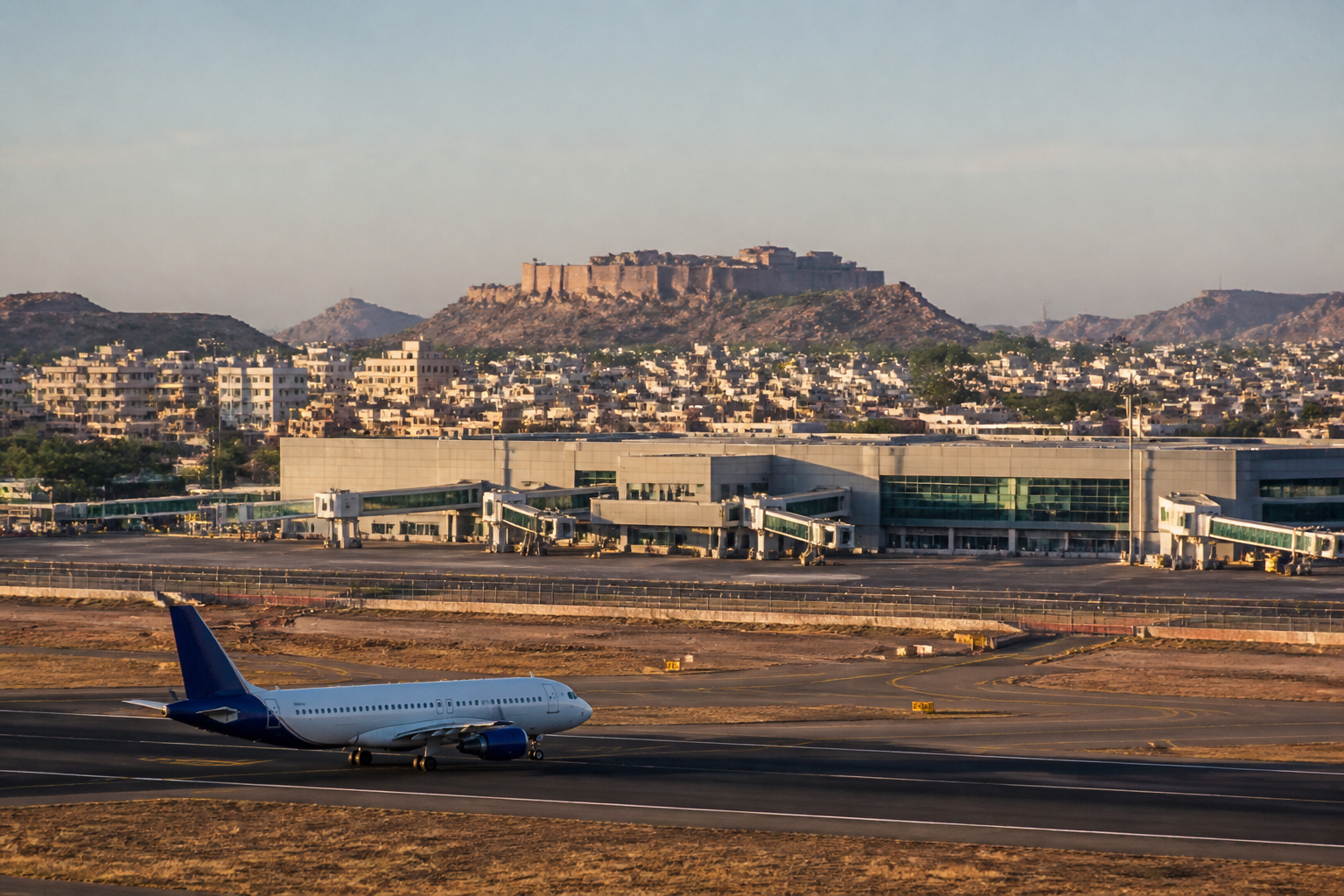
India’s plan to develop 100 new airports over the next decade is being presented as a connectivity programme. Its larger significance, however, lies in whether it can change the geography of tourism and economic activity beyond the country’s established gateways and travel circuits.
The Union Cabinet approved the launch and implementation of the Regional Connectivity Scheme Modified UDAN for 10 years from financial year 2026-27 to 2035-36. Civil Aviation Minister K Rammohan Naidu has said the government will build 100 new airports during that period, with an outlay described as around Rs 30,000 crore. The Cabinet-approved figure cited in the report is Rs 28,840 crore, supported by the Centre’s budgetary allocation.
That distinction between the rounded public figure and the approved outlay is relatively small in the context of the announcement, but it underlines the scale of the commitment. The programme is not limited to adding aviation assets. It raises a more consequential question: can new airports create dependable regional networks, or will they remain isolated facilities without enough flights, passengers and supporting infrastructure?
The answer matters because India’s tourism economy has long been shaped by accessibility. Established circuits such as Delhi-Agra-Jaipur benefit from strong recognition, existing transport links and the ability to be packaged into itineraries. Many cultural, spiritual, wildlife, heritage and experiential destinations outside these routes are more difficult to reach, particularly for international visitors working within limited travel time.
Improved regional air connectivity could allow tour operators to link Tier-2 and Tier-3 cities into multi-destination itineraries. Instead of treating smaller destinations as separate excursions from major hubs, operators could potentially build travel routes around them. The report identifies this as one way the airport programme could move tourism beyond traditional circuits.
Ravi Gosain, president of the Indian Association of Tour Operators, described the plan as a major push for regional air connectivity. From the tourism industry’s perspective, he said, an airport is not merely transport infrastructure but an economic gateway capable of supporting tourism, investment, employment and entrepreneurship across an entire region.
That argument reflects an important shift in how airport projects are evaluated. An airport can improve physical access to a place, but access by itself does not guarantee a functioning tourism market. Visitors also require accommodation, local transport, public services, attractions that are ready to receive them and information that helps convert awareness into travel. The source material does not establish how these supporting systems will be financed or delivered under Modified UDAN, leaving implementation coordination as a central issue.
The programme’s design therefore has two interconnected components. The first is the creation or development of airport infrastructure. The second is the establishment of viable air services that connect those airports to destinations and to one another. Without the second component, the first may have limited economic effect.
The tourism industry’s warning is direct: success should not be measured by the number of airports built alone. Sustainable airline operations, adequate flight frequencies and affordable fares will determine whether the infrastructure serves residents, businesses and visitors. Airports without reliable connectivity would have limited tourism and economic impact, regardless of their physical completion.
This is the familiar infrastructure problem of capacity without service. A completed facility is visible and measurable. A reliable route network is more difficult to create because it depends on recurring demand, airline capacity, fare levels and coordination among multiple institutions. The report does not provide route-wise projections, passenger targets or airline commitments, so the likely performance of individual airports cannot yet be assessed from the available information.
The regional connectivity scheme is intended to address precisely the gap between large aviation hubs and smaller cities. Modified UDAN will operate over a 10-year period beginning in FY 2026-27. That time horizon gives the government an opportunity to plan infrastructure and routes together rather than treat each airport as a standalone project. It also creates a long implementation window in which the viability of new connections can be tested.
The institutional structure will be important. The report identifies the civil aviation and tourism ministries, state governments and industry stakeholders as participants whose coordination will be needed to identify priority routes. This places route planning at the intersection of national aviation policy, state-level destination development and private-sector tourism operations.
A route chosen only because an airport is available may not produce the same outcome as a route selected around tourism potential, existing economic activity and a wider destination circuit. The source specifically states that emerging tourism circuits should be a key consideration in route planning under UDAN. That approach would connect aviation decisions to the geography of attractions, businesses and local communities.
The numbers announced provide the initial framework for evaluating the programme. There are 100 proposed airports, a 10-year implementation period, and a total Cabinet-approved outlay of Rs 28,840 crore. The minister has referred to the investment as around Rs 30,000 crore. Beyond those figures, the supplied material does not provide a breakdown by state, airport, construction phase, route or annual expenditure. Those details will be necessary to understand how the programme will be prioritised and delivered.
The absence of those details also limits what can be concluded about the programme’s tourism impact. The report says better connectivity could increase tourist spending and length of stay while distributing revenues to smaller cities, local businesses and communities. These are stated possibilities rather than established outcomes. Their realisation would depend on whether new destinations develop enough accommodation, visitor services, local mobility and promotional capacity to support sustained demand.
The same applies to international tourism. Easier access to lesser-known destinations could make them more attractive to international travellers, but airport connectivity is only one part of the decision. The quality and reliability of the full journey including transfers, local transport and destination infrastructure will influence whether a place becomes part of a viable multi-city itinerary.
For smaller cities, the potential gains extend beyond visitors. The tourism industry expects new connectivity to unlock investment, employment and entrepreneurship. Those effects could include opportunities for accommodation providers, guides, restaurants, transport operators and other local businesses. But the supplied report does not quantify these opportunities or establish how benefits will be distributed among regions and communities.
This makes the airport programme a test of integrated urban and regional planning. Aviation infrastructure can alter the relationship between a city and its surrounding region, but only when it is connected to an economic purpose and supported by other systems. A new airport may serve as a gateway to a tourism cluster, a business centre or a network of smaller destinations. It may also struggle if those relationships are not developed alongside the facility.
The policy challenge is consequently larger than airport construction. Government must align aviation funding with tourism planning, state-level infrastructure and airline operations. The report calls for an integrated approach combining aviation connectivity, destination development, tourism infrastructure and international promotion. It also emphasises coordination among ministries, states and industry stakeholders.
That coordination will determine whether Modified UDAN produces a network or simply a collection of projects. Network value comes from connections that work together: sufficient frequency, affordable fares, compatible schedules and destinations that can be reached and experienced within a coherent itinerary. The announcement establishes the infrastructure ambition, but it does not yet demonstrate that these operational conditions have been secured.
The plan also shifts attention towards places that have historically been peripheral to India’s mainstream tourism map. Tier-2 and Tier-3 cities are not only potential passenger markets; they may also become gateways to nearby cultural, spiritual, wildlife and heritage destinations. If route planning reflects those relationships, regional aviation could support a broader distribution of tourism activity.
What the evidence confirms at this stage is the scale and duration of the government’s commitment: 100 airports over 10 years under Modified UDAN, backed by a Cabinet-approved outlay of Rs 28,840 crore from FY 2026-27 to FY 2035-36. What remains uncertain is how the airports will be distributed, which routes will receive priority, how airlines will sustain services and whether destination infrastructure will keep pace.
Those implementation details will determine whether the programme redraws India’s tourism map or merely expands its list of airports. The next milestones to watch are the identification of priority routes, the allocation of funds, the sequencing of airport development and the coordination between aviation and tourism authorities.
