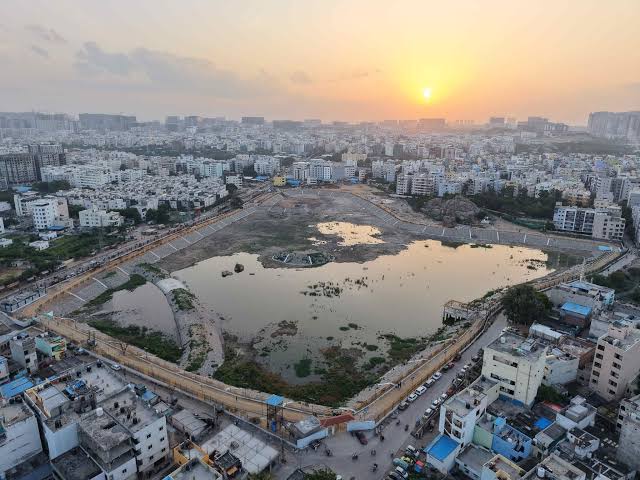
HYDERABAD: The restoration of Sunnam Cheruvu in western Hyderabad is nearing completion, with the former sewage and garbage dumping site being transformed into a larger freshwater lake and public recreational space. The project is expected to expand the water body and create a shared open space for nearby communities.
The lake, located between residential areas in Guttala Begumpet and Ayyappa Society, was previously spread across about 13 acres and had faced years of pollution and encroachment concerns. The restoration has expanded the planned lake and surrounding public area to around 30 acres. The rejuvenation work has involved clearing encroachments from the lake’s Full Tank Level and reclaiming portions of the lake bed. The process began in September 2024 and faced resistance and legal challenges before progressing with government support. The Sunnam Cheruvu restoration is already changing how residents use the area. People from nearby colonies and bastis have been visiting the lake surroundings for walking and recreation, with women and children among the regular users. Its location within a densely developed part of western Hyderabad makes the restored lake significant beyond its water-storage role. Open spaces are limited in many rapidly urbanising neighbourhoods, making accessible lakes and green areas important for everyday recreation. A functioning lake can also contribute to local ecological resilience when supported by proper catchment protection, clean inflows and regular maintenance.
The restoration has also highlighted concerns around groundwater extraction and pollution. Reports indicate that bore water from the lake bed had been extracted and supplied to nearby hostels, schools and colleges. Water testing reportedly identified heavy-metal contamination, including elevated lead and nickel levels. This raises the need for continued monitoring even after the restoration work is completed. Rejuvenating the visible lake area alone may not be sufficient if polluted inflows, groundwater extraction or waste dumping return. Long-term protection will require regular water-quality checks and effective control of activities around the lake. The Sunnam Cheruvu restoration could provide Hyderabad with both a freshwater asset and a valuable public space. However, maintaining those gains will require consistent civic oversight.
Protecting the Full Tank Level, preventing new encroachments and managing waste around the lake will be essential. Drainage connections and surrounding development also need to be planned carefully so that untreated sewage does not enter the water body. For residents, the restoration offers the possibility of a cleaner neighbourhood environment and more accessible recreational space. For the wider city, it demonstrates how degraded urban water bodies can potentially be recovered and integrated into growing communities. The project’s completion should therefore be viewed as the beginning of long-term lake management rather than the end of the restoration process. Continued monitoring and maintenance will determine whether Sunnam Cheruvu remains a healthy urban water body and public space in the years ahead.