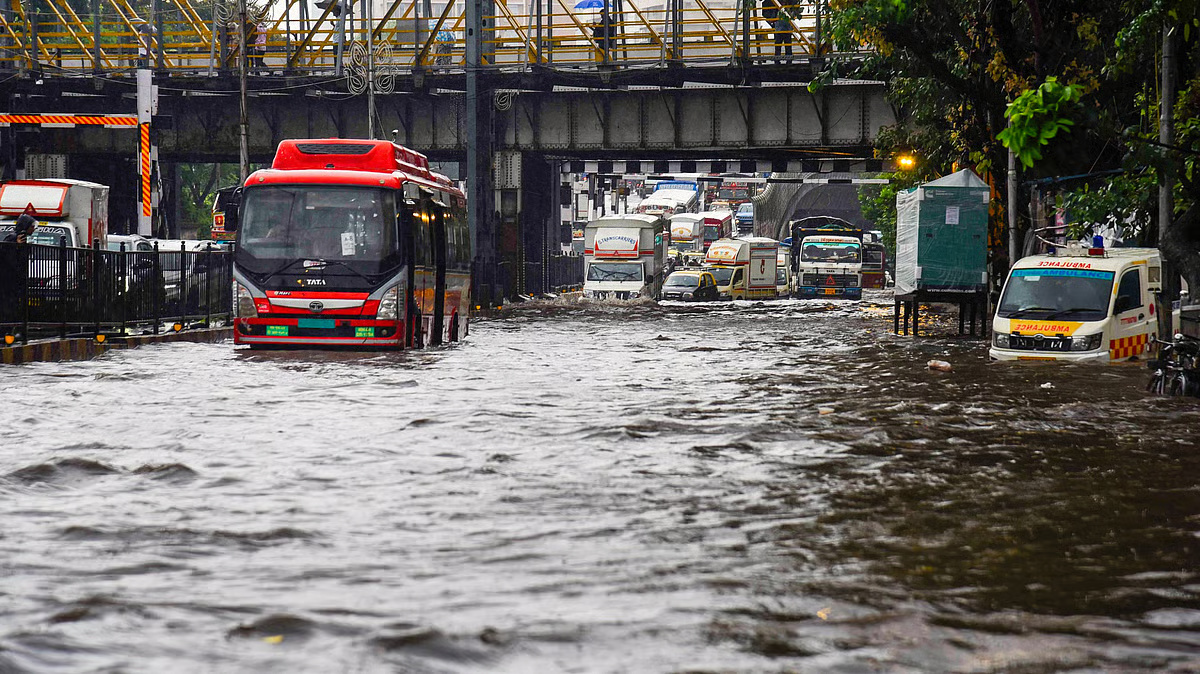
Mumbai remained warm and humid on Wednesday even as the India Meteorological Department forecast intermittent rain across the city and suburbs. The weather pattern reflects a wider shift in the monsoon’s late-season phase, with rainfall becoming more uneven after a relatively dry August. For residents, the immediate concern is less about extreme weather and more about persistent heat, humidity and unpredictable showers affecting daily travel and outdoor activity. IMD’s September 2 forecast indicated generally cloudy conditions with moderate rain possible in Mumbai, while no warning was issued for the city. Temperatures were expected to remain around 31–32°C in several parts of the metropolitan area. At Santacruz, the maximum temperature reached 31.9°C, which was 1.8°C above normal.
The warmer conditions are significant because Mumbai’s built-up environment can amplify discomfort even when temperatures are not exceptionally high. High humidity limits the body’s ability to cool itself, while extensive paved surfaces and dense construction can retain heat. For pedestrians, outdoor workers and commuters, short periods of sunshine between showers can therefore feel considerably warmer than the temperature reading suggests. The city’s air quality, however, offered a more positive signal. The supplied monitoring figures placed Mumbai’s AQI at 41, within the ‘good’ category. Thane, Kalyan and Navi Mumbai also remained in the good range. Cleaner air during a period of subdued rainfall provides some relief, although urban planners note that air quality can change quickly with traffic volumes, wind conditions and the movement of rain-bearing systems. The contrast between Mumbai and other parts of Maharashtra is becoming more pronounced.
IMD forecasts showed greater thunderstorm and rainfall activity over several districts in Vidarbha and Marathwada, with yellow alerts issued for areas including Akola, Amravati, Buldhana, Chandrapur, Gadchiroli, Nagpur, Nanded and Yavatmal. Mumbai, by comparison, faced no warning despite the possibility of moderate showers. The uneven rainfall pattern matters beyond the daily forecast. Mumbai entered September after a notably dry August, with rainfall well below normal at key observing stations. Yet the city’s reservoirs remain comfortably stocked, reducing immediate water-supply pressure. This makes rainfall distribution, rather than simply total rainfall, an important factor for urban resilience. For infrastructure managers, intermittent rain can still create operational challenges. Sudden showers can affect road visibility, drainage and traffic even when accumulated rainfall remains modest. Meanwhile, sustained warm conditions increase demand for cooling and place greater importance on shaded public spaces, tree cover and heat-sensitive urban design.
Mumbai weather is therefore likely to remain variable through the coming days. IMD’s outlook indicates further cloudy periods and light to moderate rain, but without a current warning for the city. The focus now shifts towards managing the combined effects of heat, humidity and increasingly uneven monsoon rainfall as Mumbai moves towards the end of the season.