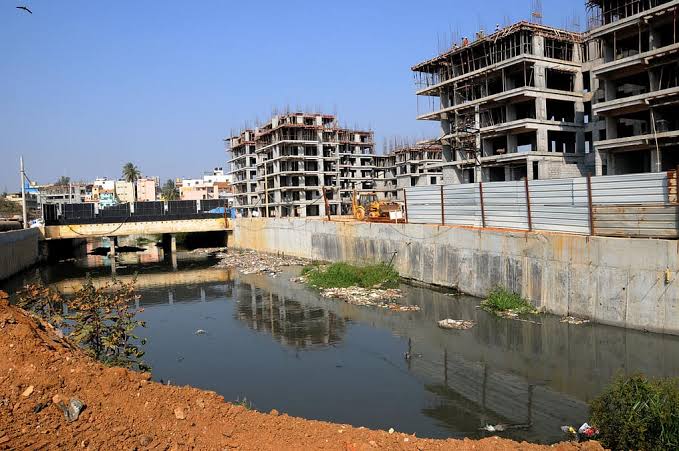
Bengaluru South Lakes Face Growing Encroachment Pressure
Bengaluru South’s expanding pressure on its water bodies has come under scrutiny after the Karnataka Lokayukta flagged slow progress in removing lake encroachments across the district. The findings point to a wider urban-planning challenge: as development spreads along Bengaluru’s southern and southwestern edges, protecting lakes and their catchments is becoming increasingly important for flood management, groundwater recharge and long-term water security.
The scale of the problem varies across the district’s taluks. In Channapatna, 207 of 413 lakes with reported encroachments are yet to be cleared. Harohalli has 115 affected lakes out of 181, with only 13 encroachments removed. Kanakapura has reported encroachment on 180 of its 313 lakes, while 42 have been cleared. Ramanagara has 190 affected lakes among 265, with action completed on 35. Magadi presents a comparatively smaller backlog, with encroachments remaining on 25 of 220 lakes. The figures matter beyond the boundaries of individual water bodies. Lakes form part of interconnected drainage and groundwater systems. When their storage areas, feeder channels or surrounding land are occupied, the impact can extend downstream, increasing the vulnerability of settlements to waterlogging during intense rainfall while reducing the landscape’s ability to retain water during dry periods. The administrative delay is also significant. Cases involving lake encroachments in areas adjoining Bengaluru Urban district were registered as far back as 2018, but the Lokayukta found that officials had not demonstrated sufficient progress despite notices being issued.
Revenue authorities were specifically identified as an area where action had lagged. The issue comes at a time when Bengaluru’s wider metropolitan region is undergoing sustained expansion. The Bengaluru South district administration currently covers five taluks — Ramanagara, Channapatna, Kanakapura, Magadi and Harohalli — and serves a largely rural-urban transition zone adjoining the metropolitan area. For planners, the lake backlog underscores why Bengaluru South lake encroachments cannot be treated only as revenue or land-record disputes. Their resolution also affects flood resilience, local ecology and the availability of natural water-storage infrastructure as surrounding settlements become denser. Officials appearing before the Lokayukta have committed to submitting compliance reports and taking further action. The next test will be whether those commitments translate into verified removal of encroachments and protection against fresh occupation.
For a rapidly changing metropolitan region, Bengaluru South lake encroachments represent a test of whether land management can keep pace with urban growth. Protecting existing water systems could prove considerably more economical and resilient than trying to rebuild lost drainage and storage capacity later.