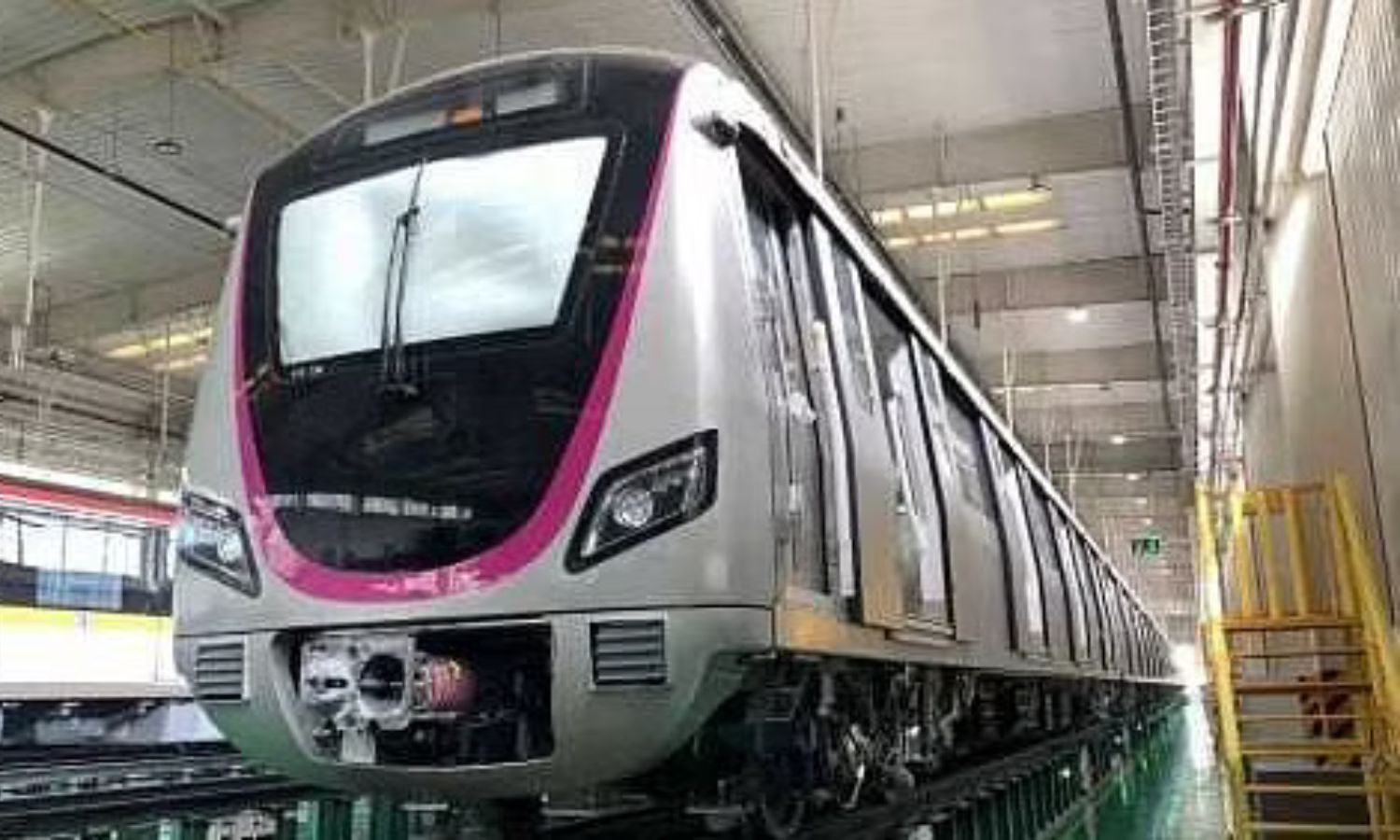
Bengaluru Pink Line Faces Access Challenge Before Opening
Bengaluru’s Pink Line is approaching its planned September opening, but inadequate access around several stations could limit its immediate usefulness to commuters. The approximately 21-km corridor connecting Kalena Agrahara with Nagawara is expected to strengthen north-south connectivity, yet gaps in roads, pedestrian links and feeder transport could make reaching stations difficult for many residents.
The Bengaluru Pink Line is being positioned as an important addition to the city’s expanding Metro network, particularly for neighbourhoods that currently depend heavily on buses, autos and private vehicles. Its benefits, however, will depend on what happens outside station gates as much as on trains operating inside the corridor. Several stations are located in areas where surrounding road infrastructure remains constrained. Limited approach roads, traffic congestion and inadequate pedestrian facilities can increase the time and effort required to access a Metro station. For commuters making short journeys to and from stations, these seemingly small barriers can determine whether public transport is genuinely convenient. Urban transport experts have consistently stressed the importance of the first and last mile. A Metro journey is only one part of a passenger’s trip. If a commuter cannot safely walk to a station, find an affordable feeder service or transfer easily to a bus, the overall journey can remain inconvenient despite a faster rail connection.The challenge is particularly relevant for Bengaluru because the city’s growth has frequently outpaced supporting infrastructure.
New residential developments and commercial activity have expanded around transport corridors, while footpaths, crossings, cycling infrastructure and local road networks have not always developed at the same pace. The Bengaluru Pink Line could nevertheless produce substantial mobility benefits once supporting systems mature. Better interchange facilities with buses, organised feeder services and continuous pedestrian routes could extend the effective catchment area of stations without requiring additional road widening. Station-area planning will also influence the corridor’s environmental impact. If passengers can comfortably reach stations on foot, by bicycle or through efficient feeder services, the Metro can replace a larger number of short private-vehicle trips. Conversely, poorly connected stations can encourage passengers to arrive by two-wheelers and cars, increasing congestion around station entrances. The opening therefore represents more than a construction milestone. It is a test of whether Bengaluru can integrate major mass-transit investment with the surrounding urban fabric.
Ensuring safe crossings, usable footpaths, reliable feeder connectivity and sensible traffic management should remain a priority as operations begin. For commuters, the real measure of the Bengaluru Pink Line will not simply be how quickly trains travel between stations. It will be whether passengers can reach those trains safely, affordably and without adding another difficult leg to their daily journey.