


Bengaluru | August 31, 2026
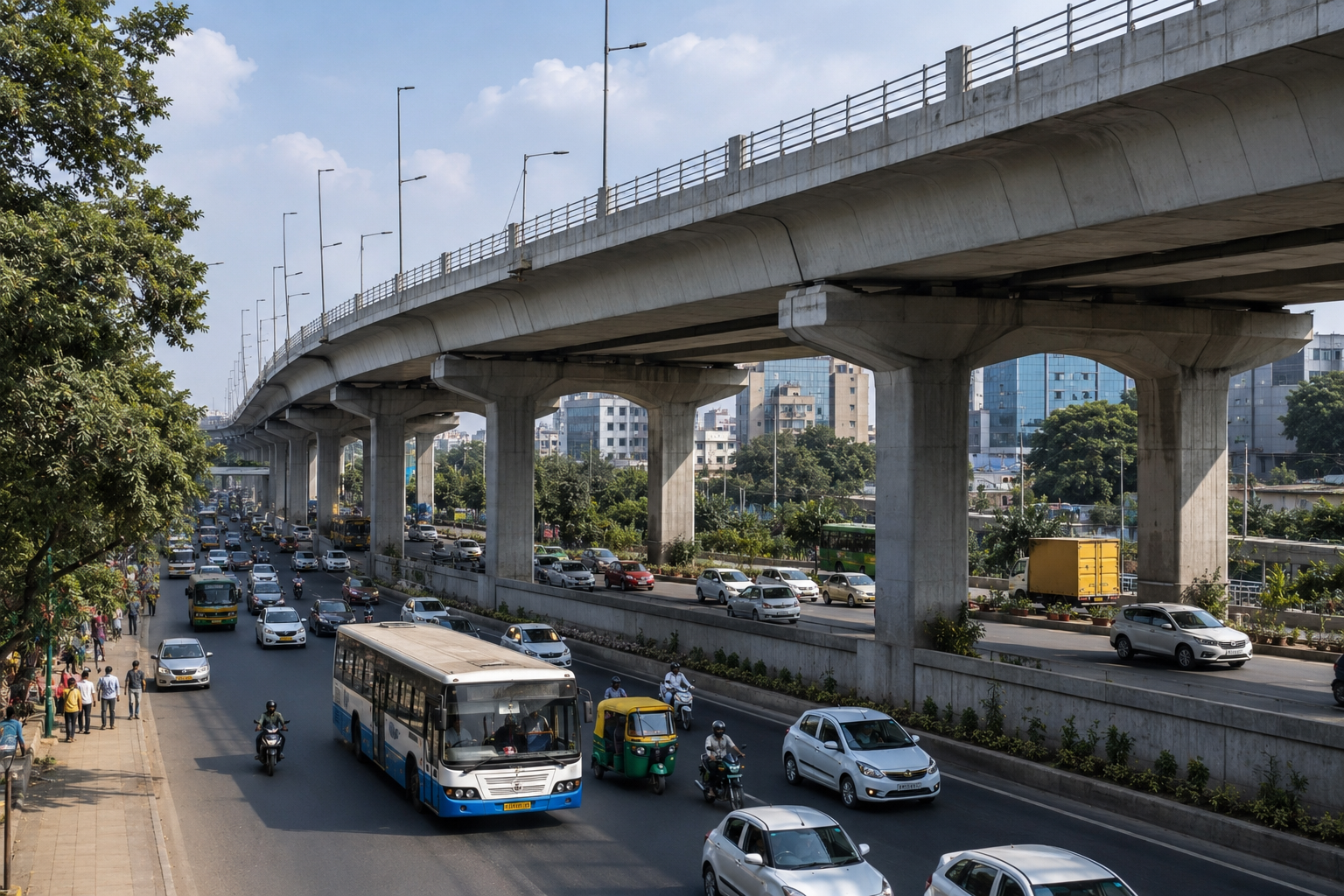
Bengaluru traffic police have restricted the movement of two-wheelers, passenger autorickshaws and goods vehicles on several major flyovers and elevated corridors to improve road safety, reduce congestion and manage emergencies, according to a report by Vijay Karnataka.
The restrictions cover the BGS Flyover on Mysuru Road, the Peenya Elevated Corridor, the Electronic City Elevated Corridor, the double-decker flyover between Silk Board and Ragigudda, and a section of the KIA access corridor between Sanjeev Nagar Cross and Vidyashilp Junction. The timings and categories of affected vehicles vary by location.
On the BGS Flyover, heavy goods vehicles and all categories of goods-carrying vehicles, including three-wheeler goods autos, are barred during the morning peak from 7 am to 11 am and the evening period from 4 pm to 10 pm. Passenger autos and two-wheelers are not listed among the vehicles restricted on this flyover in the supplied police information.
At the Peenya Elevated Corridor, passenger autos, three-wheeler goods autos, and heavy and medium goods vehicles are restricted between 7 am and 11 am and again from 4 pm to 10 pm. The report does not specify restrictions on two-wheelers at this location.
The Electronic City Elevated Corridor has broader restrictions. Heavy, medium and light goods vehicles, two-wheelers, passenger autos and three-wheeler goods autos are restricted from 6 am to 10 pm. The report describes this as a daily restriction rather than a full 24-hour ban.
Heavy goods vehicles face a 24-hour restriction on the double-decker flyover running from Silk Board to Ragigudda. On the KIA corridor section from Sanjeev Nagar Cross to Vidyashilp Junction, two-wheelers, passenger autos and all goods vehicles are restricted from 6 am to 10 pm.
The traffic police cited the design and width of the flyovers, the potential severity of crashes on elevated structures, and congestion caused by vehicle breakdowns as reasons for the restrictions. They also referred to traffic build-up at entry and exit points, emergency traffic management, and the safety of pedestrians and two-wheeler riders.
The measures could require affected commuters and commercial operators to use surface roads or alternative routes during the specified periods. The supplied report does not provide details of diversion plans, penalties, the date on which enforcement began, or whether the restrictions are temporary or permanent.
The traffic police’s next steps, including enforcement arrangements and route guidance for affected road users, were not specified in the information available in the report.
