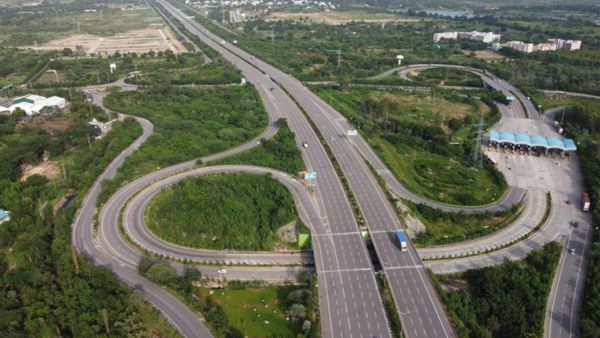
HYDERABAD, August 31: Planning for Hyderabad’s proposed Regional Ring Rail project has advanced, with the Detailed Project Report for the northern section submitted and the southern alignment nearing finalisation. The development could reshape regional connectivity around the city by linking peripheral areas with rail infrastructure and creating an alternative to road-based travel.
Union Minister for Coal and Mines G. Kishan Reddy said the LiDAR survey for the proposed rail corridor has been completed. The Final Location Survey for the project was sanctioned in 2023 for a corridor of about 400 km, broadly planned along the outer periphery of the Regional Ring Road. The progress comes as Hyderabad and its surrounding districts experience continued expansion in housing, industry and commercial activity. Better rail connectivity around the metropolitan edge could help distribute future growth beyond the core city and reduce dependence on road corridors. The northern section has now reached the Detailed Project Report stage. The southern section remains under alignment finalisation. Further planning will determine the exact route, land requirements and integration with existing railway infrastructure.
For the wider region, the project has potential significance beyond passenger travel. Peripheral rail connectivity can improve access to employment centres, markets and industrial locations. It may also support more compact development around transport nodes when land-use planning and public transport are coordinated. The proposed corridor is being developed alongside a broader expansion of railway infrastructure in Telangana. The Minister said railway projects worth nearly ₹80,000 crore are progressing across the State, including track doubling, tripling and quadrupling works. Vikarabad is among the locations receiving infrastructure investment. Redevelopment of its railway station is underway under the Amrit Bharat Station Scheme at a reported cost of ₹24.35 crore. Planned works include a new foot overbridge, station upgrades, platform improvements, escalators, parking facilities and an expanded circulating area. The station handles nearly 15,000 passengers a day and around 60 trains operate through it, according to officials. The scale of passenger movement underlines the importance of improving station access as rail networks expand.
Railway investment could also influence the development pattern around Hyderabad. Faster and more reliable connections can make peripheral locations more accessible without relying entirely on private vehicles. This could help limit some of the congestion and emissions associated with increasingly long road journeys. However, the benefits of a ring rail system will depend on more than track construction. Interchange facilities, last-mile connectivity, service frequency and integration with existing urban transport will determine whether commuters find the network genuinely convenient. The northern DPR and progress on the southern alignment mark important planning milestones. The next phase will require detailed assessments of land, engineering, financing and environmental considerations before construction can move forward. If these elements are coordinated effectively, the Regional Ring Rail could become an important part of a more connected and resilient transport system around Hyderabad, supporting regional growth while offering an alternative to road-dependent mobility.