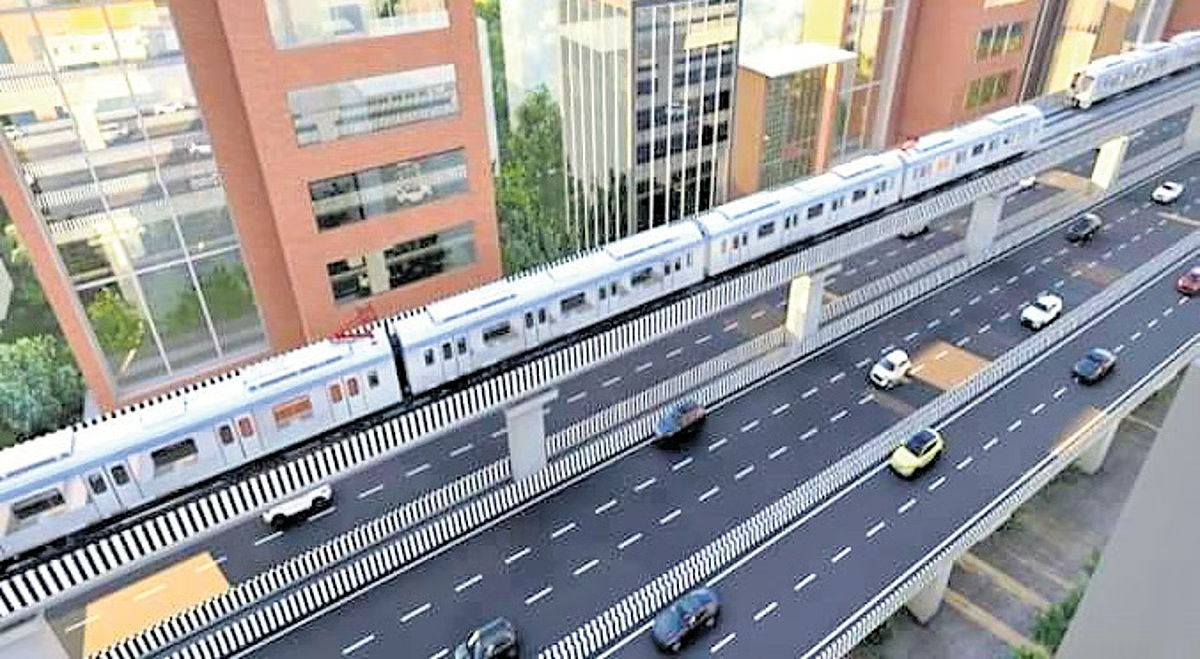
HYDERABAD, August 31: The Old City Metro corridor has moved closer to construction readiness, with most properties required for the 7.5-km Darulshifa–Chandrayangutta stretch acquired and road-widening works progressing. The latest push highlights the importance of resolving land, utility and right-of-way issues before major public transport infrastructure can advance on a densely built urban corridor.
Hyderabad Metro Rail Limited officials reviewed the works during a field inspection on Saturday. Of the 888 properties identified as affected by the corridor, 833 have reportedly been acquired. The remaining 55 include heritage structures and older buildings, creating additional planning challenges for the alignment. The unresolved properties are significant because the Old City contains a dense mix of residential, commercial and historic structures. Any adjustment to the Metro alignment therefore needs to balance construction requirements with the protection of buildings that carry local heritage value. Officials are examining options for maintaining the planned corridor around these properties. Such decisions can influence both project timelines and the eventual impact on neighbourhoods along the route.
Utility relocation is another immediate priority. Electricity poles, power lines and water pipelines need to be shifted where land acquisition has been completed. Clearing these assets can allow construction teams to enter sites without waiting for separate infrastructure works. Right-of-way, or RoW, is equally important. It refers to the land legally available for building and operating transport infrastructure. Coordinating different government departments to secure uninterrupted RoW can prevent construction from becoming fragmented across the corridor. The project has wider implications for mobility in Hyderabad’s Old City. The area has high pedestrian activity, narrow roads and significant commercial movement. A reliable Metro connection could provide residents with an alternative to private vehicles and reduce pressure on busy road corridors. Better public transport access could also improve connections to employment, education and commercial centres. For residents without private vehicles, dependable mass transit can have a direct effect on access to economic opportunities.
The construction phase, however, will need careful traffic management. Road widening, utility shifting and eventual Metro works are likely to affect movement along parts of the corridor. Maintaining pedestrian access and business activity during construction will be important for limiting disruption. The heritage buildings among the remaining properties add another layer to the project. Urban transport expansion in historic areas requires solutions that protect cultural assets while allowing cities to improve mobility. The latest inspection suggests that land acquisition has crossed a major milestone, but several tasks remain before full-scale construction can proceed smoothly. Utility relocation, site clearance, road widening and coordination between agencies will determine how quickly the corridor can move from preparation to execution. For Hyderabad, the Old City Metro is therefore not simply a transport project. Its success will depend on whether infrastructure expansion can be delivered while protecting neighbourhood character, maintaining access and creating a more inclusive public transport network.