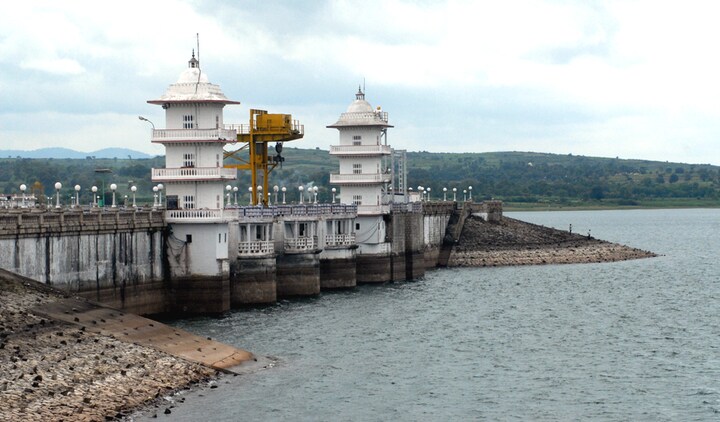
Karnataka Kabini Levels Fall As Farmers Raise Water Concerns
Water levels at the Kabini reservoir in Karnataka have fallen sharply, triggering concern among farmers dependent on the irrigation system and prompting plans for a demonstration over water management. The decline comes as the region moves through the later stages of the southwest monsoon, putting renewed attention on reservoir planning, agricultural water security and the need for more resilient management of seasonal supplies.
The Kabini reservoir, located in the Cauvery basin, is an important source of irrigation water for agricultural areas in parts of Mysuru and surrounding districts. A reduction in storage therefore has consequences beyond the reservoir itself, particularly for farmers planning crops around expected irrigation releases. The latest decline has been attributed to reduced inflows and continuing water releases. Reports indicate that the reservoir’s water level has dropped by around 10 feet from its recent high, prompting farmers to question whether sufficient water will remain available for agricultural requirements. The concern highlights the difficulty of managing reservoirs when inflows fluctuate rapidly. Karnataka’s water systems are influenced by rainfall across catchment areas, upstream releases and demand from agriculture and urban centres. A reservoir that receives strong inflows during one period can experience a rapid reduction in storage when rainfall weakens or releases increase. For farming communities, uncertainty can be as disruptive as an outright shortage. Irrigation decisions determine crop choices, sowing schedules and expected yields. If water availability becomes difficult to predict, farmers may face higher production risks and increased dependence on groundwater. That makes the Kabini water level an important indicator not only of reservoir conditions but also of agricultural resilience.
Over-reliance on surface reservoirs without strengthening local water conservation can leave farming systems vulnerable when monsoon rainfall becomes more variable. Water managers and agricultural experts have increasingly stressed the importance of combining reservoir management with groundwater recharge, efficient irrigation and protection of local tanks and wetlands. Such measures can reduce pressure on major reservoirs while giving farmers additional buffers during periods of uncertain rainfall.The issue also has a wider economic dimension. Agriculture supports rural employment and local consumption, meaning disruptions to irrigation can eventually affect supply chains and household incomes. At the same time, water allocations must be balanced across agriculture, drinking-water needs and downstream ecological requirements. The planned farmer mobilisation is therefore likely to keep attention on how available storage is being managed and what safeguards are in place for the remainder of the agricultural season. Rather than responding only after reservoir levels become critical, Karnataka’s longer-term water strategy will need to account for increasingly uneven rainfall patterns.
For the Kabini basin, maintaining reliable irrigation will depend on both careful reservoir operations and stronger local water resilience. Protecting catchments, improving irrigation efficiency and expanding decentralised water storage could help make agricultural communities less exposed to the next sharp swing in monsoon conditions.