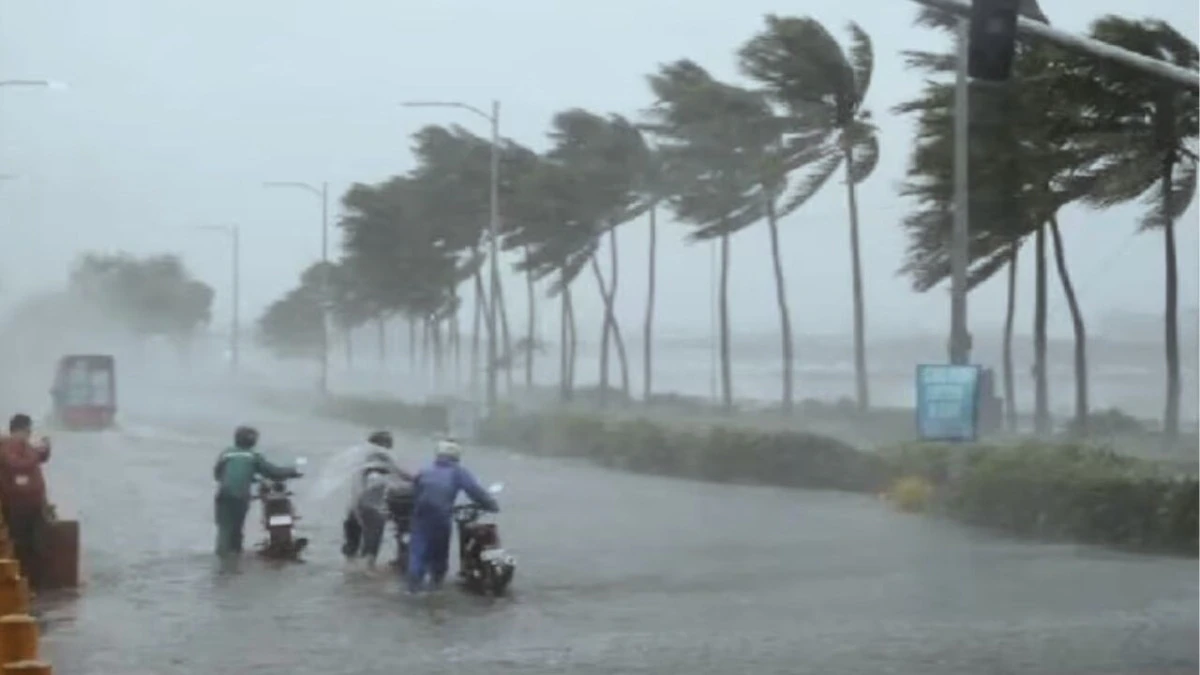
A fresh spell of unsettled monsoon weather is set to affect Kolkata as a low-pressure area is expected to develop over the northwest Bay of Bengal and adjoining West Bengal–north Odisha coast around August 29. The system could sustain rainfall across Gangetic West Bengal, putting renewed pressure on Kolkata’s drainage network, roads and daily urban mobility.
The India Meteorological Department (IMD) has warned of heavy rain, thunderstorms and lightning across Gangetic West Bengal from August 29 through August 31. Kolkata’s city forecasts also point to spells of rain or thundershowers, with heavy rainfall and thunderstorms accompanied by gusty winds possible on August 29.The developing system is linked to an upper-air cyclonic circulation over the northwest Bay and adjoining coastal areas. A low-pressure area is a broad zone of relatively lower atmospheric pressure that can draw in moist air and strengthen rainfall, although its eventual intensity and movement remain dependent on changing atmospheric conditions.For Kolkata, the immediate concern is less about the weather system itself than how effectively the city absorbs and moves excess rainwater. Heavy bursts can overwhelm local drainage capacity, particularly in low-lying neighbourhoods and areas where storm-water channels are obstructed or have limited carrying capacity.
Urban planners note that rainfall risk is increasingly a question of infrastructure resilience. Roads, drains, pumping stations and public transport systems have to function as a connected network during intense weather rather than as isolated projects. Short-duration cloudbursts can create disruption even when total daily rainfall is not exceptionally high.The economic impact can also extend beyond visible waterlogging. Flooded streets can slow buses, taxis, deliveries and emergency services, while prolonged disruption affects workers and small businesses that depend on predictable movement through the city. Repeated rainfall-related interruptions therefore carry a wider productivity cost for a dense metropolitan economy.The Kolkata rainfall alert also highlights a longer-term planning challenge. As extreme rainfall becomes harder for cities to manage, drainage upgrades need to be paired with permeable surfaces, protection of natural water-retention areas and better maintenance of existing storm-water infrastructure. Such measures can reduce pressure on engineered drainage systems while improving urban climate resilience.
For residents, the immediate priority remains monitoring official weather advisories and allowing additional travel time during heavy showers. For city authorities, the coming spell provides another test of whether drainage, traffic management and emergency response systems can keep essential urban services moving as rainfall intensifies.