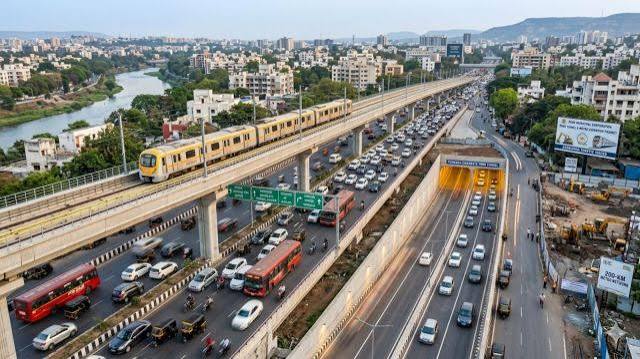
Pune Traffic Data Pushes Smarter Mobility Planning
Pune is preparing to make traffic data a central part of how it plans and manages its roads, as the civic administration moves to establish a dedicated urban mobility cell. The proposed system will combine information from traffic, public transport, road assets and citizen complaints, allowing authorities to identify recurring congestion and infrastructure failures before committing public money to new interventions.
The Pune Municipal Corporation (PMC) standing committee has approved the creation of the Pune Urban Mobility Cell, with Ernst & Young LLP proposed as its consultant for three years. The consultancy is expected to cost ₹2.37 crore annually, excluding taxes. A separate integrated traffic management facility is also planned around Dhole Patil Road to improve coordination between the civic body and traffic police. The proposed platform will draw data from several existing systems. These include traffic information services, telecom networks, CCTV feeds, GPS-enabled public transport, parking systems and citizen grievance platforms. Road Asset Management System (RAMS), geographic information system (GIS), road construction records and the trenching portal are also expected to feed into the system. The significance lies less in collecting more data and more in connecting information that currently sits across different departments. For example, repeated congestion could be examined alongside potholes, utility excavation, road closures or construction activity. This could help officials distinguish between a traffic problem caused by demand and one created by poor road management.
For commuters, the approach could eventually influence everyday decisions such as signal timings, junction design, parking arrangements and public transport movement. The proposed system is also expected to support planning for footpaths and cycling infrastructure. That matters in a city where mobility needs extend beyond private vehicles and where safe access for pedestrians, cyclists and public transport users can determine whether new development remains accessible. The financial implications are equally important. Data-led planning could help the PMC rank road repairs and strengthening works according to need rather than relying only on complaints or isolated inspections. It could also provide evidence before larger projects such as flyovers or grade separators are considered.
Urban planners, however, caution that technology alone will not resolve congestion. Its value will depend on data quality, regular maintenance, inter-agency coordination and whether findings translate into timely action. Privacy safeguards will also matter as telecom and surveillance-derived information becomes part of mobility planning. If implemented effectively, the Pune urban mobility cell could shift the city from reactive traffic management towards forecasting and prevention. The real test will be whether better information produces safer streets, more reliable journeys and more efficient use of limited urban infrastructure funds.