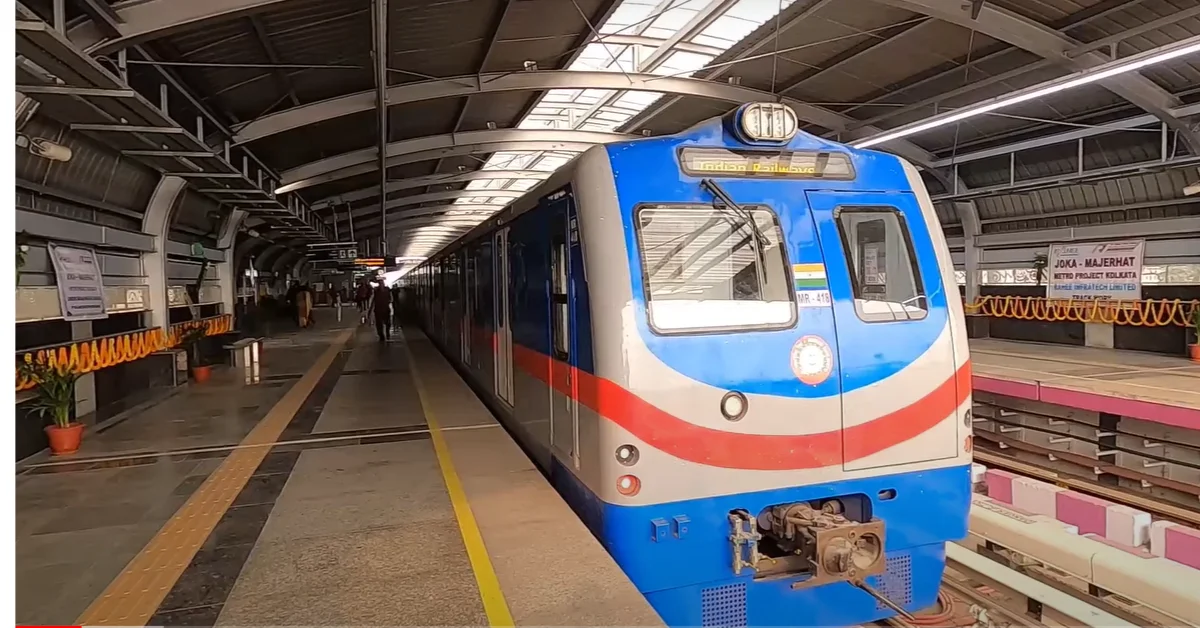
Eastern Railway is preparing a major expansion of rail capacity across the region, with projects worth around ₹12,000 crore planned over the next four to five years. The programme covers additional tracks, bypasses, railway-yard upgrades and terminal development, signalling a shift towards removing network bottlenecks rather than relying only on more trains to meet Kolkata’s growing passenger and freight demand.
Around ₹10,000 crore of the planned investment is expected to support 563 km of line expansion, while a further ₹2,000 crore is earmarked for 10 bypass projects. The focus is significant for Kolkata because the city sits at the centre of a dense rail network connecting residential districts, industrial areas, ports, markets and major economic corridors across eastern India.For passengers, the immediate importance of Kolkata rail capacity is less about headline investment and more about whether additional infrastructure can translate into more reliable services. Heavily used routes can face constraints when passenger, freight and long-distance services compete for limited track and terminal space. Increasing line capacity can allow more trains to operate without simply adding pressure to already crowded sections.The proposed multi-tracking programme is therefore important from a city-planning perspective. Additional tracks can separate or better accommodate different types of railway traffic, reducing conflicts between services. Bypass projects could also help divert selected movements away from congested sections, potentially improving journey reliability and reducing operational delays.
The economic implications extend beyond commuters. Railways are a major link between Kolkata’s manufacturing base, surrounding industrial centres and national markets. Better network capacity can reduce freight delays and transport costs, while stronger connections can improve access to jobs and services for people living beyond the metropolitan core. The railway administration has also identified lower logistics costs and more efficient supply chains as wider benefits of a stronger network.Urban planners note that infrastructure expansion needs to be judged not only by kilometres of track added, but by how effectively it improves everyday mobility. For Kolkata, that means considering suburban reliability, interchange capacity, station access, pedestrian movement and the relationship between rail infrastructure and surrounding neighbourhoods.A stronger rail system could also support more sustainable urban growth if improved capacity helps shift passengers and freight towards rail rather than road-based travel. However, construction will need careful phasing to minimise disruption, while new terminals and railway land must be integrated with surrounding communities.
The next test will be execution. The scale of the proposed programme gives Kolkata an opportunity to address long-standing network constraints, but its success will ultimately depend on whether investment produces measurable improvements in capacity, reliability, accessibility and connect