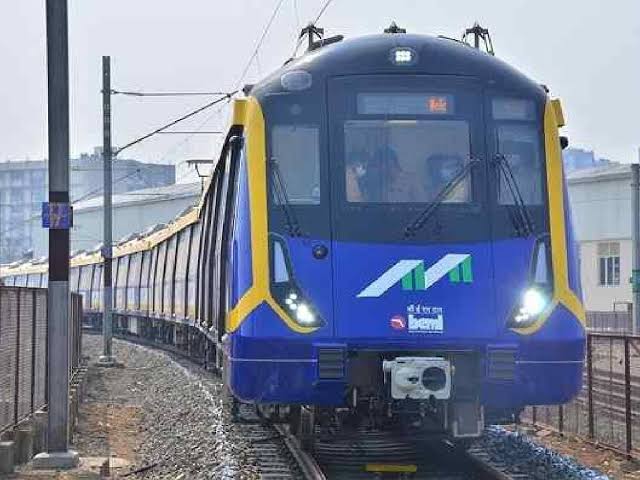
Mumbai Metro 7A Faces Major Airport Clearance Setback
Mumbai’s Metro Line 7A has run into a major design and aviation-clearance problem near Vile Parle East, putting nearly 1 km of completed elevated infrastructure at risk of reconstruction. The issue concerns the height needed for overhead electrification within the airport’s funnel zone. If engineers cannot secure a compliant technical solution, infrastructure estimated at about ₹250 crore could require substantial rework, adding another delay to an already long-awaited airport connection. The affected section forms part of the 3.4-km corridor linking Andheri East with Chhatrapati Shivaji Maharaj International Airport. The line is planned to connect with Metro Line 3 at the airport, creating a wider interchange for passengers travelling between the northern suburbs, the airport and south Mumbai. Its alignment combines underground and elevated construction, with the elevated portion including the Airport Colony station, viaduct and ramp.
The immediate concern is the overhead electrification equipment, commonly called OHE. The equipment requires additional vertical space, but that requirement was not adequately incorporated when the relevant design was prepared. The resulting discrepancy is reported at around 2.5 metres against the clearance applicable in the airport funnel area. Aviation safety restrictions cannot simply be overridden because the structure has already been built, leaving project authorities dependent on a technically acceptable resolution. The timing makes the setback particularly costly. MMRDA records showed the elevated viaduct activities had reached 100% completion across major structural components by February 2026. The elevated ramp was also substantially advanced, while work on Airport Colony station had progressed considerably. Reworking finished infrastructure would therefore mean more than a construction delay: it could involve additional public expenditure, material use, labour and disruption around an already developed urban corridor.
The clearance issue was identified in 2025, after earlier aviation permissions had been obtained. Authorities subsequently sought a way to reconcile the metro’s operating requirements with airport safety limits. Recent reports indicate that the Airports Authority of India has yet to approve the additional height being sought. The consultant involved in the design has also disputed responsibility for the problem, adding an accountability dimension to the engineering dispute. For Mumbai, the wider concern is not simply when Metro 7A opens. Rebuilding infrastructure after substantial completion raises questions about design coordination, regulatory checks and how airport-sensitive projects are evaluated before construction begins. Urban infrastructure needs to deliver faster mobility without transferring avoidable costs to taxpayers or increasing construction waste.
The next decision will depend on whether a safe, technically workable modification can satisfy aviation requirements. If not, reconstruction could become necessary, making stronger design-stage coordination between transport and aviation authorities an immediate priority.