Mumbai Water Stock Nears Full Capacity As Lakes Rise
Mumbai’s drinking-water reserves have moved closer to full capacity, with the city’s seven supply reservoirs holding 95.84% of their combined useful storage as of August 27. The latest stock of 13,87,210 million litres gives the city a substantial water buffer, although the remaining monsoon weeks will remain important for managing inflows, storage and distribution through the year. The latest figure represents a marginal increase from 95.83% recorded a day earlier. The seven reservoirs have a combined useful storage capacity of 14,47,363 million litres, leaving only a relatively small portion of the available capacity unfilled. The position is also stronger than the 94.87% recorded on the same date in 2024, although it remains below the 96.74% reported on August 27 last year.
The distribution of water across individual reservoirs is relatively strong. Vihar is completely full, while Modak Sagar is at 99.99%. Tansa has reached 98.45%, Tulsi 98.53% and Middle Vaitarna 97.34%. Bhatsa, the largest of the seven reservoirs, stands at 95.91%, while Upper Vaitarna is the lowest at 89.76%. For Mumbai, the significance of these levels extends beyond the headline percentage. High reservoir storage reduces the immediate risk of water shortages and gives the civic administration greater flexibility in planning supply during the drier months. It can also reduce pressure for emergency interventions if rainfall weakens towards the end of the monsoon. However, a near-full storage position does not automatically translate into uninterrupted water security. Mumbai’s water system depends on the efficient treatment, transmission and distribution of stored water.
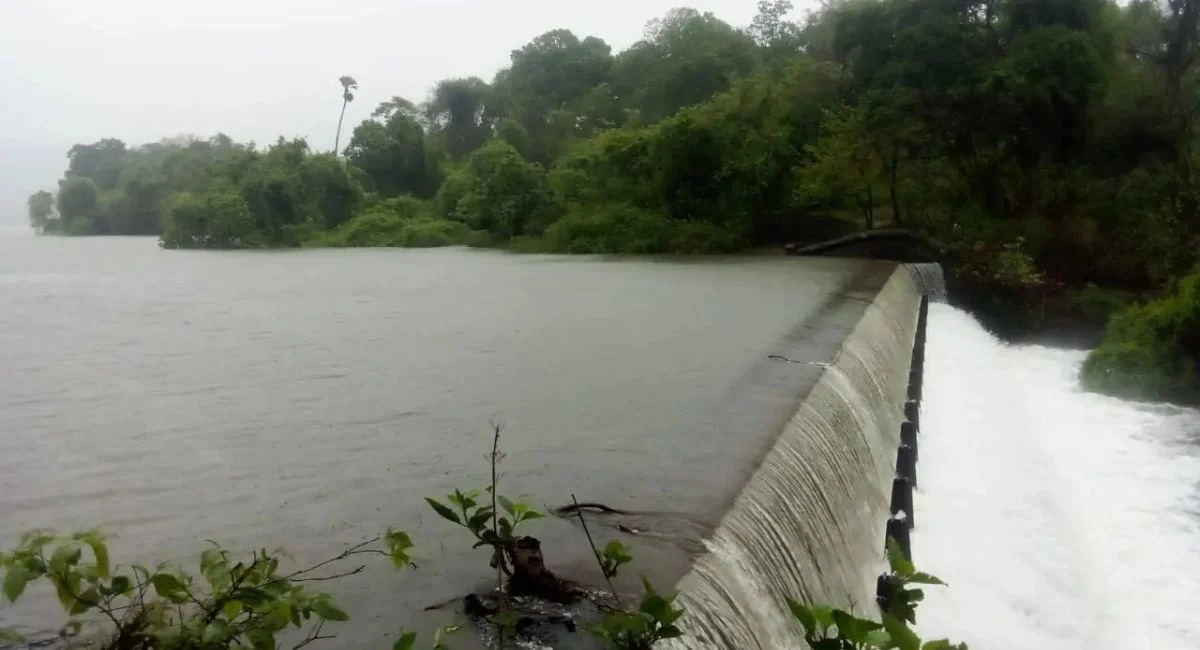
Losses in the network, demand growth and uneven access across neighbourhoods remain separate challenges that reservoir levels alone cannot resolve. The catchment pattern also shows why continued monitoring is necessary. On August 27, rainfall varied considerably between reservoirs, with Tulsi receiving 16 mm and Upper Vaitarna 5 mm, while several other catchments recorded no rain during the preceding 24 hours. Such variation is typical of a large regional water system and makes reservoir management as important as total seasonal rainfall. Several reservoirs had already reached overflow earlier in the monsoon. Vihar and Tulsi began overflowing on July 7, followed by Tansa on July 22 and Modak Sagar on July 23.
The immediate outlook for Mumbai’s water stock is therefore comfortable, but the longer-term task is more demanding. Maintaining reliable supply will require the city to pair strong reservoir reserves with efficient distribution, demand management and climate-resilient water planning as rainfall patterns become increasingly uneven.