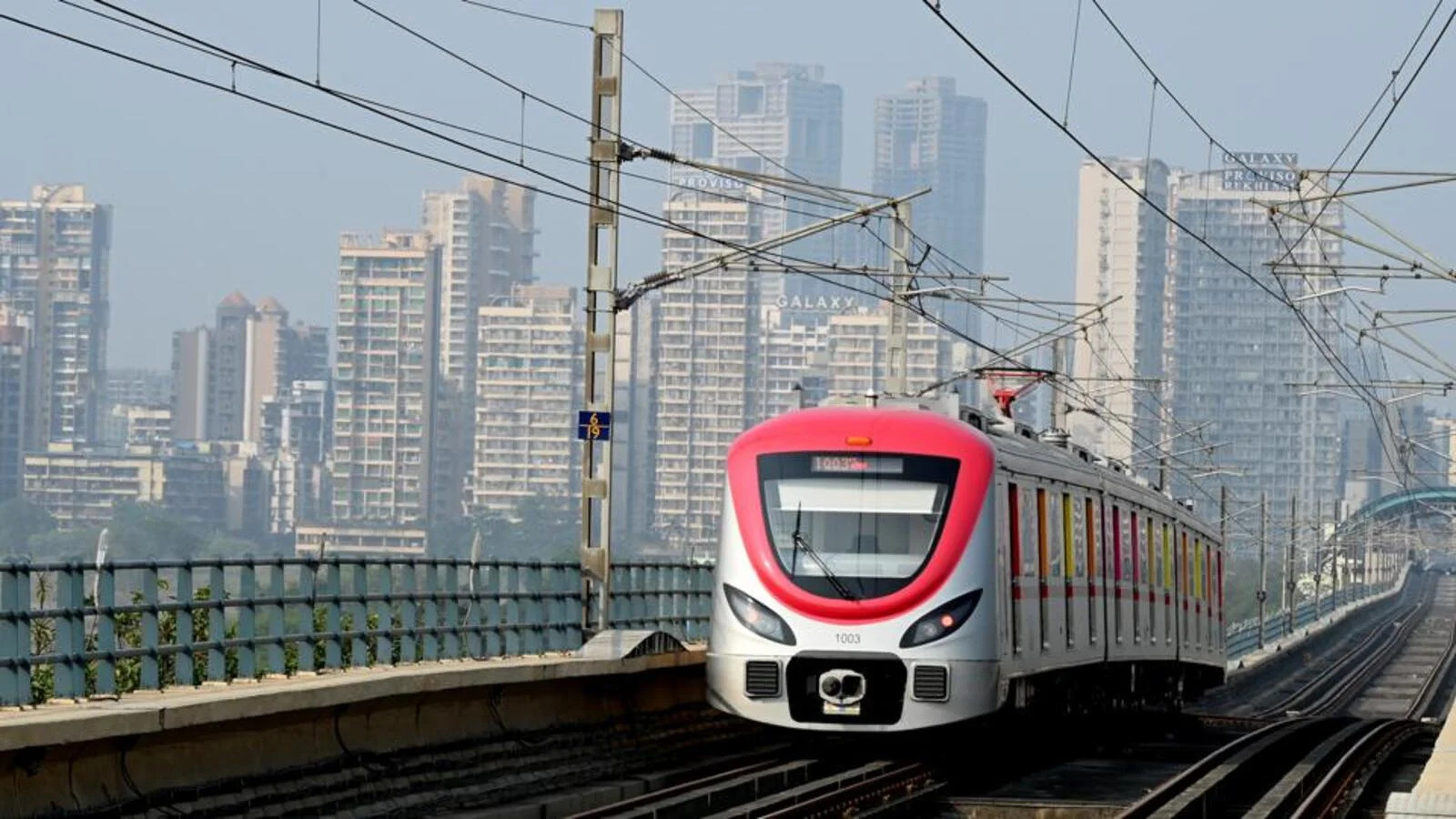
Mumbai Metro Line 7A has encountered a fresh construction hurdle in Vile Parle East, where nearly one kilometre of completed elevated viaduct could require reconstruction because of a clearance conflict with airport regulations. The problem has stalled work on the 3.4-kilometre airport corridor and could put roughly ₹250 crore of completed infrastructure at risk if engineers cannot develop an alternative solution. The Mumbai Metro Line 7A corridor is planned to connect Andheri East with Chhatrapati Shivaji Maharaj International Airport, providing a direct rapid-transit link for passengers and residents in the surrounding eastern suburbs. The line is being developed in a particularly constrained environment, where metro structures must coexist with existing roads, buildings and aviation safety requirements.
The immediate issue concerns the airport funnel zone, an area around an airport where restrictions are imposed on the height of structures and other obstacles to protect aircraft operations. Authorities have identified a mismatch of approximately 2.5 metres between the required clearance for overhead electrical equipment and the available height on part of the elevated alignment. Because the viaduct is already substantially constructed, correcting the problem could involve dismantling and rebuilding a significant section. The alternative is to find a technical modification that can satisfy aviation requirements without removing the existing structure. A decision will determine whether the project absorbs additional cost and construction time or avoids large-scale rework. The setback also raises questions about project coordination. Airport-linked metro systems require transport planners, civil engineers and aviation authorities to resolve spatial constraints before construction reaches advanced stages. Industry experts note that late-stage design conflicts can have disproportionate financial consequences because dismantling completed structures adds labour, material and equipment costs while tying up infrastructure that cannot yet generate public benefit.
The Mumbai Metro Line 7A has already experienced delays from its original schedule. The line was initially expected to open in 2021, but successive setbacks have pushed delivery further into the future. The latest engineering problem could make an opening during the 2026-27 financial year increasingly difficult. For commuters, the delay has a wider significance. The airport corridor is intended to improve connections between the metro network and one of Mumbai’s busiest transport hubs. Better rail access can reduce dependence on private vehicles and taxis for airport journeys, while improving connectivity for workers and neighbourhoods around the route. There is also a sustainability cost to rework. Rebuilding nearly a kilometre of viaduct would require additional construction materials, machinery and labour for infrastructure that has already been produced. Avoiding unnecessary demolition would therefore have both financial and environmental advantages, provided safety standards are not compromised.
The immediate priority is a technically sound resolution that meets aviation requirements without weakening structural safety. Until that is established, the Mumbai Metro Line 7A remains a reminder that major urban infrastructure depends not only on construction speed, but on accurate coordination between interconnected systems.