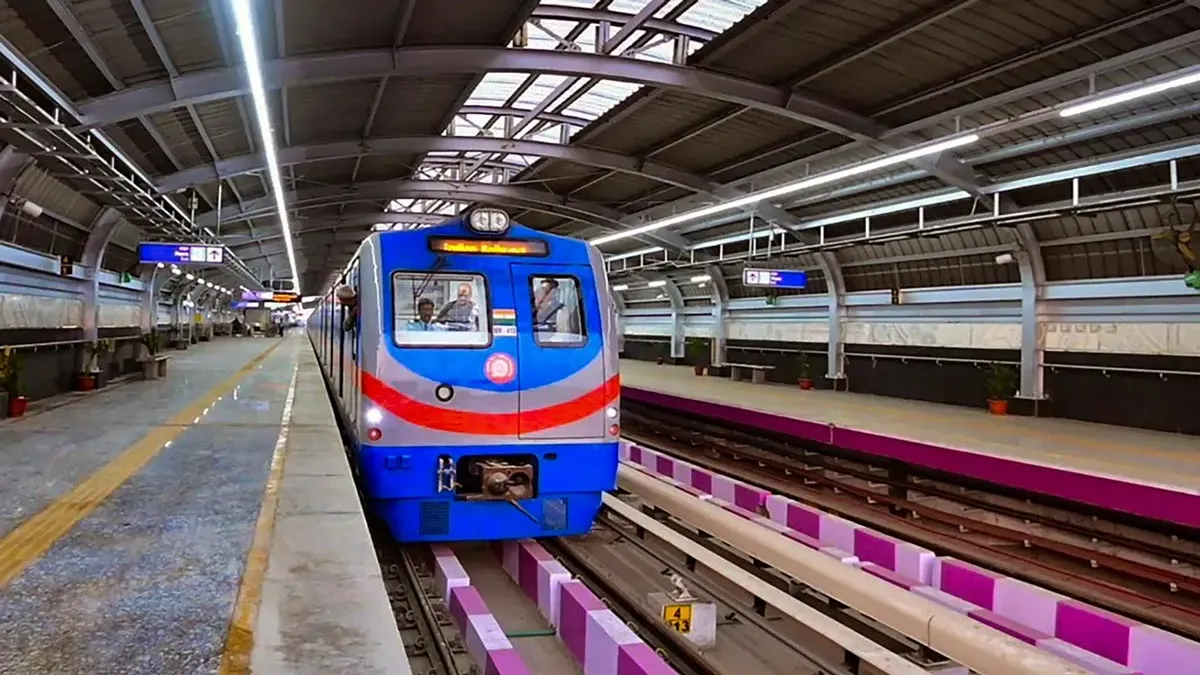
Kolkata is set to gain from a wider Indian Railways capacity expansion aimed at adding tracks across the country’s busiest rail corridors. The programme covers about 11,000 km of high-density routes that carry roughly 41% of India’s railway traffic. For the Kolkata region, the move could create more room for passenger and freight services while easing pressure on heavily used routes linking Howrah with major economic centres.
The Howrah side is particularly significant because several high-density corridors converge around the Kolkata metropolitan region. The Howrah-Delhi and Howrah-Mumbai routes form part of the national high-density network, where capacity is already under considerable pressure. Nationally, high-density routes account for only about 16% of the railway network but carry 41% of total traffic, highlighting the disproportionate load placed on these corridors.For Kolkata, additional rail capacity is not simply a matter of running more trains. Howrah and Sealdah handle a mix of suburban, long-distance and freight operations, meaning improvements to the underlying network can influence the reliability and flexibility of several services at once. Railway data has previously noted that suburban and long-distance trains share parts of the same network serving these terminals.Recent works around the Howrah-Dankuni corridor show how this approach is being applied locally. The Railways has sanctioned yard remodelling at Howrah, including platform extensions and signalling-related works, while Dankuni is undergoing yard improvements and a detailed project report is being prepared for a coaching terminal.
The corridor currently supports more than 100 regular and special train services, making capacity management increasingly important as passenger and freight demand grows.The proposed Kolkata rail capacity expansion could also have wider economic implications. Better separation of passenger and freight movements can reduce operational conflicts, improve schedule resilience and strengthen connections between eastern India’s industrial, logistics and consumption centres. Faster and more dependable rail movement can also reduce pressure on roads, particularly where freight currently competes for already congested urban and regional transport space.There is an environmental dimension as well. Expanding rail capacity can support a greater shift of people and goods towards mass and shared transport, provided the additional infrastructure is matched with efficient services and strong last-mile connections. Kolkata’s recent experience with Metro expansion shows the potential of rail-based mobility: daily ridership on the fully operational Green Line rose from about 78,000 to 2.04 lakh after the Esplanade-Sealdah section opened.
For the city, the key test will be how quickly capacity improvements translate into dependable services, safer stations and better connections for commuters. Track expansion can create the physical headroom, but its civic value will ultimately depend on how effectively Kolkata uses that capacity.