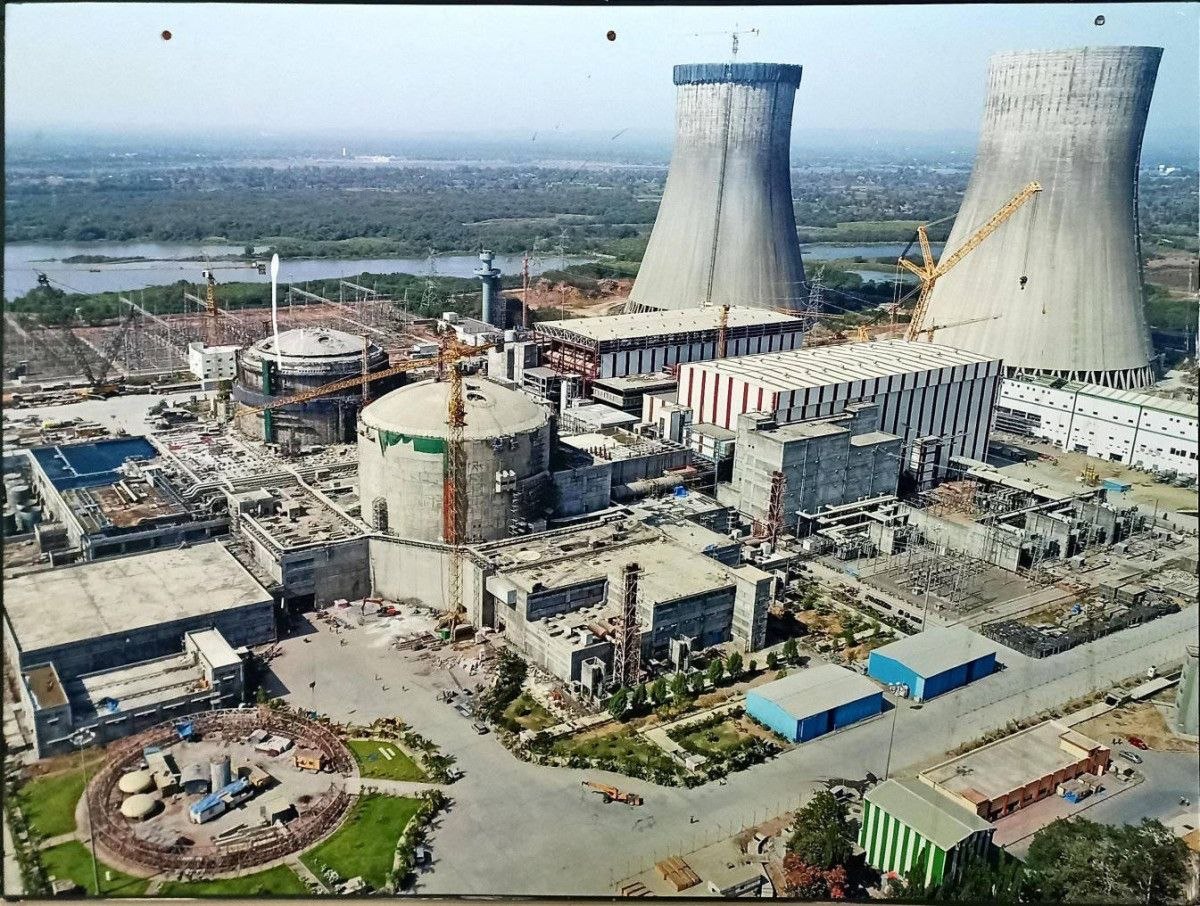
Gujarat Infrastructure Faces New Nuclear Power Test
Gujarat is examining a major nuclear power complex at Dhuvaran in Anand district, a proposal that could reshape the state’s long-term energy infrastructure as electricity demand rises from data centres, semiconductor manufacturing, green hydrogen and electric mobility. The project is still at the assessment stage, but its potential scale puts land, water, connectivity and environmental safeguards at the centre of Gujarat’s next infrastructure cycle.
The proposed facility is being studied at Khambhat taluka, where around 1,100 hectares has reportedly been identified for the development. Current assessments are examining seismic conditions, ground characteristics and cooling-water availability before the project can move towards firm technical and regulatory decisions.The proposed capacity is understood to be between 4,200 MW and 7,000 MW. At an estimated capital requirement of roughly ₹35 crore per MW, the investment could range from about ₹1.47 lakh crore to ₹2.45 lakh crore, depending on the final configuration. These figures remain indicative and could change as technology, financing and project design are settled.For Gujarat infrastructure planning, the significance goes beyond electricity generation. Reliable round-the-clock power is increasingly becoming a basic requirement for industrial clusters, digital infrastructure and new manufacturing facilities. Gujarat already has 1,840 MW of operating nuclear capacity at Kakrapar, including two 220 MW reactors and two 700 MW units.
The proposed Dhuvaran development would therefore represent a substantial expansion of the state’s firm-power base. However, large energy projects also create infrastructure demands of their own. Roads, transmission networks, water systems, emergency services and local public facilities would need to expand in step with construction and eventual operations.The Centre and Gujarat are also discussing the institutional structure for the project, with a proposed partnership involving the Nuclear Power Corporation of India and the state electricity utility. Technology choices remain open, with indigenous pressurised heavy water reactors, pressurised water reactors and regulated foreign designs among the options being examined.The wider national nuclear programme is expanding as well. India had 8,780 MW of installed nuclear capacity in 2025-26, accounting for about 3.1% of electricity generation, according to the Department of Atomic Energy. Gujarat’s Kakrapar units are already part of that growing base.
For Gujarat infrastructure, the next test will be whether the Dhuvaran proposal can progress while balancing industrial energy needs with land, water, ecological and community considerations. Detailed site studies, environmental assessment, public safeguards and transparent planning will determine how effectively the project can support the state’s next phase of urban and economic growth.